
Last updated October 16, 2026
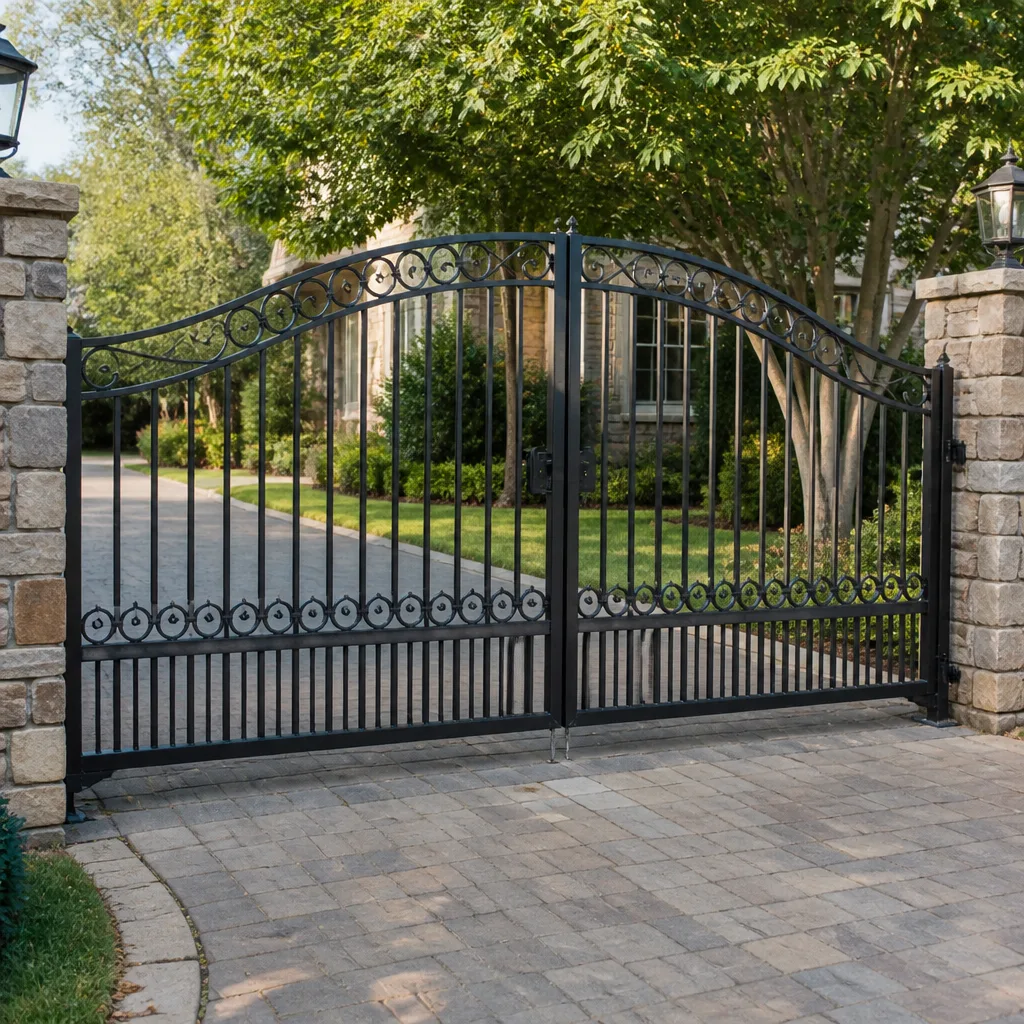 Wrought iron
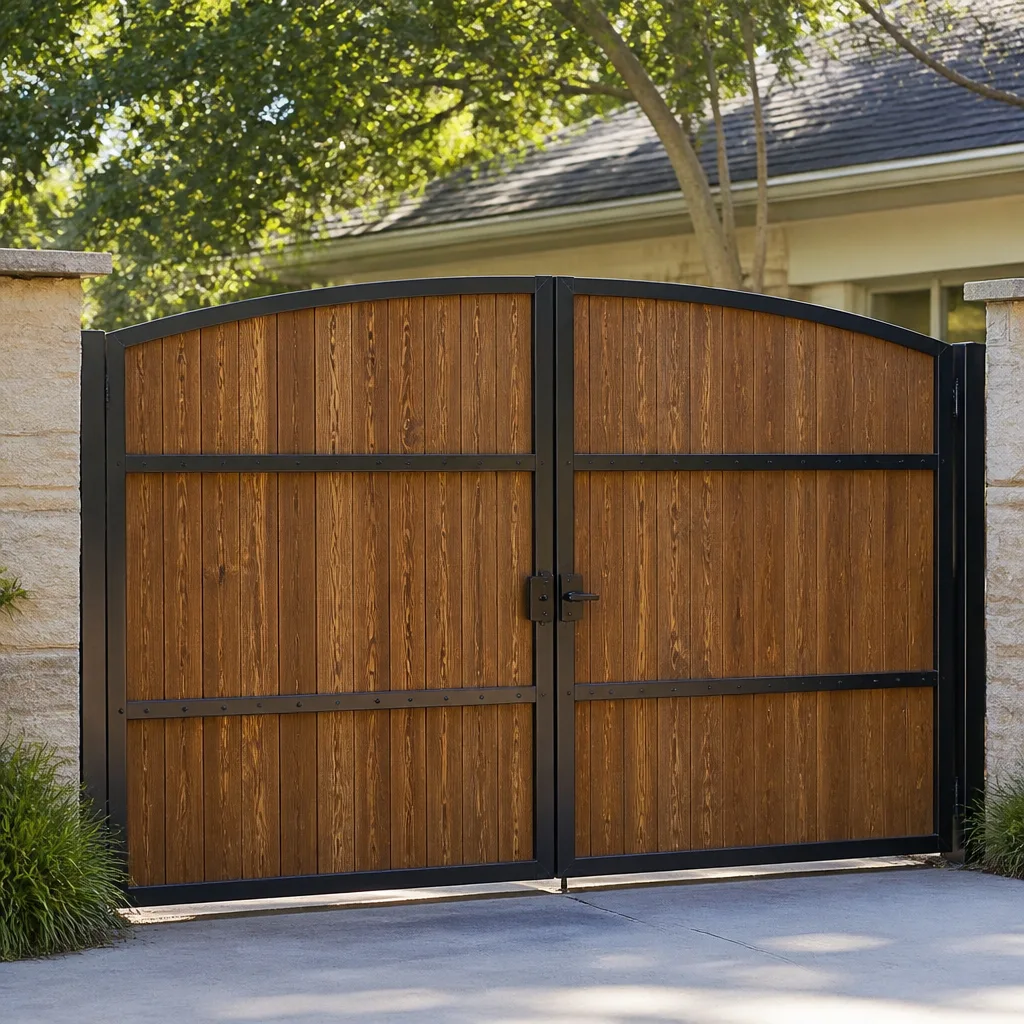 Wood & steel frame
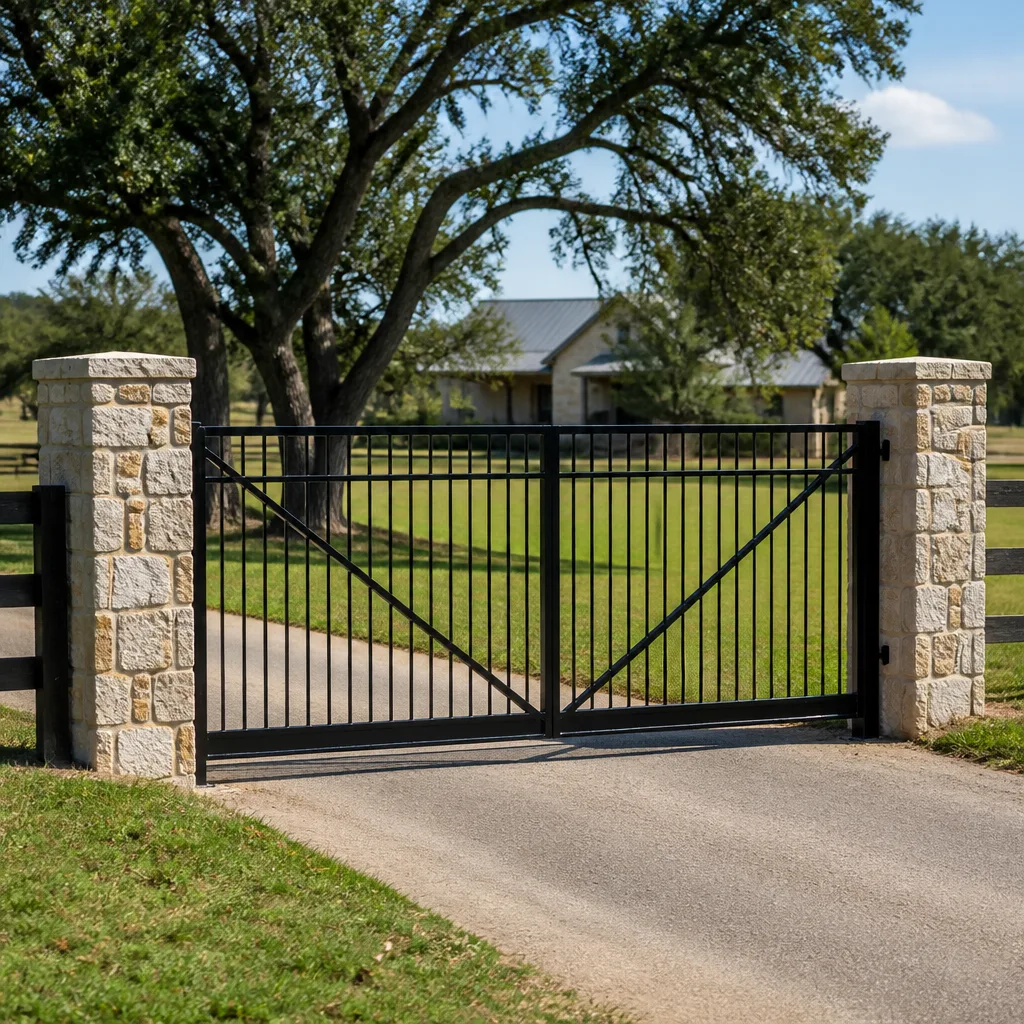 Farm & ranch
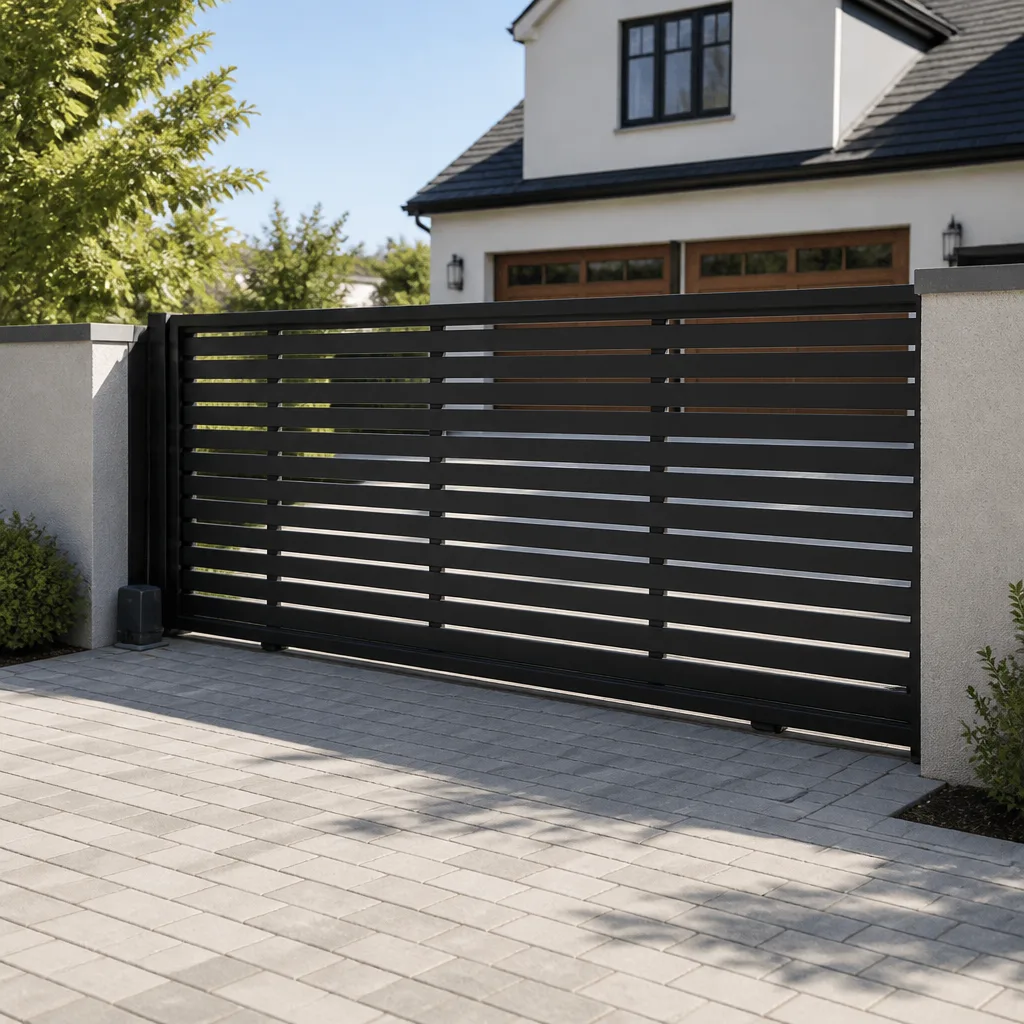 Sliding driveway gates
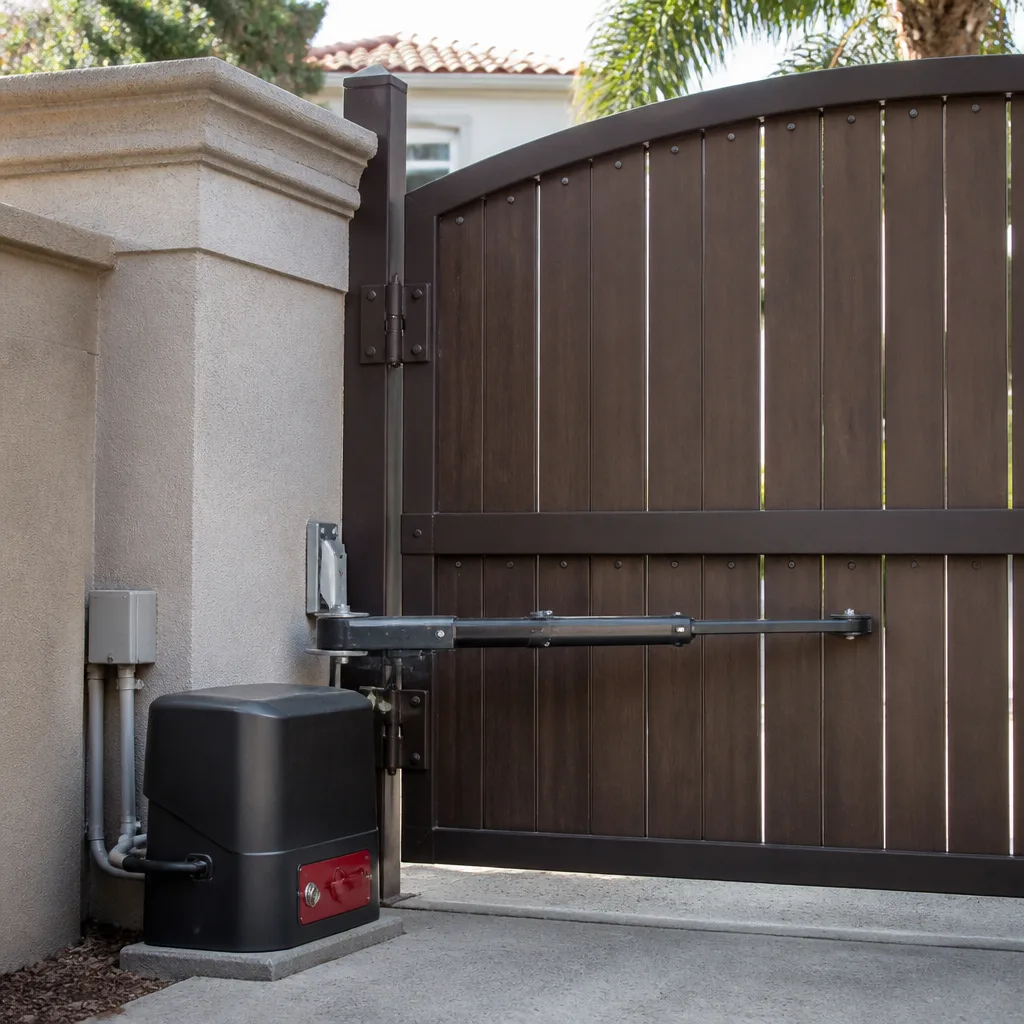 LiftMaster operators
Free on-site gate assessment - hinges, posts, and your LiftMaster or Nice gate operator checked before anything is quoted
The assessment is free and the quote is the invoice.
Get your free estimateGate Repair Maintenance Checklist for Austin Homeowners
Most Austin garages hold a $12 can of WD-40 that is quietly wrecking the gate it’s meant to protect. That spray strips the protective coating that keeps iron and steel from oxidizing in Central Texas humidity, and the residue it leaves behind collects cedar pollen every December through February. That pollen then gums up photo-eye sensors so badly that gates refuse to close, and the owner calls us convinced the motor is dead. A maintenance checklist written for a generic climate misses all of this. The one below is built around what Austin weather actually does to gates: clay soil that heaves after rain, summers that bake lubricant off hinge pins, cedar season, spring storms, and the occasional hard freeze. You’ll learn what to check, what to buy, what to photograph, and what to leave alone.
Quick Answer
A smart Austin gate maintenance routine runs on a quarterly rhythm, not a monthly one: lubricate hinges and chains with a dry PTFE or white lithium product in March, June, September, and December; check gate alignment after every stretch of heavy rain when clay soil shifts; photograph the gate, hinges, and control board once per season; test the battery backup twice a year; and inspect photo-eye sensors weekly during cedar season. Most gates in Austin need a professional Gate Repair tune-up every 18 to 24 months, and many repairs run $150 to $450 when caught early versus $800 to $2,500 once a hinge or motor fails completely.
Styles & brands we work with
Table of Contents
- The Austin Gate Climate: What You’re Actually Fighting
- Lubrication the Austin Way: The Right Products for Each Component
- Post-Rain Hinge Inspection: Clay Soil and Gate Shift
- Cedar Season Photo-Eye Care: December Through March
- Summer Heat and Gate Motors: The 100°F Problem
- Battery Backup Testing: Don’t Discover a Dead Backup During an Outage
- Photo Documentation: The Habit That Protects Your Warranty
- The Austin Seasonal Calendar: A Month-by-Month Reference
- Common Mistakes to Avoid
- When to Call a Professional
- Frequently Asked Questions
The Austin Gate Climate: What You’re Actually Fighting
An automatic gate in Austin is an outdoor machine that runs on electricity, sits in direct sunlight for roughly 300 days a year, and gets rained on by some of the most violent thunderstorms in the country. The three forces that damage gates here more than anything else are expansive clay soil, ultraviolet radiation, and airborne pollen. The soil under most of Austin, from Allandale to Circle C, is a heavy black clay that swells when wet and contracts when dry. A gate post set in that soil can move a quarter inch after a single soaking rain. That small shift changes the geometry of the hinge, which forces the motor to work harder on every cycle, which shortens the motor’s life by years if nobody corrects it.
UV radiation is the second enemy. A gate that faces west gets hammered by afternoon sun from May through September. That sun breaks down rubber weather seals, fades powder coating, and evaporates whatever lubricant was applied in the spring. Austin’s pollen, especially mountain cedar from December through February, is the third problem. It’s fine enough to get into photo-eye sensor housings and sticky enough to coat chain drives. Our gate repair in Austin work picks up noticeably during cedar season, and a good portion of those calls are sensor-related false alarms rather than actual motor failures.
The good news is that all three of these forces are manageable with the right products and the right timing. The bad news is that most national maintenance guides ignore them entirely because they were written for a different climate.
Lubrication the Austin Way: The Right Products for Each Component
Here is the core rule: different gate parts need different lubricants, and using the wrong one is worse than using none. A hinge pin needs a lubricant that stays in place under pressure and heat. A chain needs something that penetrates the links without flinging off. A slide gate roller needs a light coating that does not collect dust. A photo-eye sensor needs no lubricant at all, just a clean, dry lens.
For hinge pins on swing gates, use a dry PTFE spray or a white lithium grease applied sparingly. The product names we recommend most often in Austin are Blaster Dry Lube with PTFE, Super Lube, or Liquid Wrench White Lithium. The key word is dry. Dry lubricants coat the metal and then cure, leaving a film that does not attract dust. Wet lubricants like WD-40 or 3-in-One Oil stay wet, attract grit, and wash off in rain.
For chain drives on slide gates, a motorcycle chain wax or a dedicated chain lubricant works far better than spray grease. Maxima Chain Wax is what we see perform best through Austin summers. Apply it to the inside run of the chain while the gate is moving, then let it cure for 30 minutes before running the gate again.
For slide gate rollers and track wheels, a silicone spray or the same dry PTFE is fine. These parts are usually sealed bearings, so lubrication is less about the bearing and more about preventing rust on the exposed wheel surfaces.
Austin-specific note: whatever you apply in April will be gone by August. Plan to reapply hinge lubricant quarterly, not annually. The summer heat here bakes lubricant off faster than any manufacturer’s label suggests.
Post-Rain Hinge Inspection: Clay Soil and Gate Shift
The black gumbo clay under Austin expands when it rains and shrinks when it dries. A gate post poured in concrete can still shift if the concrete pad was not deep enough, and the gate itself will move with it. The result is a gate that sags, scrapes, or strikes the closer post when it swings. Left uncorrected, the motor pushes against that extra resistance on every cycle and eventually burns out its capacitor or strips its gears.
Run this inspection after any rain event over two inches, which happens routinely in April, May, and October in Austin. Here is the sequence:
- Check the gap. Stand at the latch post and measure the gap between the gate’s leading edge and the post when closed. Write it down. If the gap has changed by more than an eighth of an inch since the last check, the gate has shifted.
- Check the arc. Open the gate manually (release the operator first) and watch the bottom edge as it swings. If the gap between the gate and the ground changes through the swing, the hinge post is tilting.
- Listen for scraping. Any new metal-on-metal or metal-on-concrete sound during operation is a shift symptom, not just an annoyance.
- Test the motor effort. Run the gate with the opener and time the full travel. If it takes noticeably longer than it did three months ago, the motor is working harder against resistance.
- Check hinge bolts. With the gate still, try to tighten each hinge bolt gently with a wrench. Do not crank hard. If a bolt turns easily, it was loosening.
If you catch a quarter-inch shift early, a hinge adjustment or post shim is a $150 to $300 repair, as detailed in our guide on Gate Repair Warning Signs: A Austin Homeowner’s Reference Guide. If the gate sags for a year, the repair becomes a hinge replacement, a post re-set, or a new operator, and those run from $800 to $2,500 in the Austin market. This is the single highest-value maintenance habit on this entire page.
Cedar Season Photo-Eye Care: December Through March
From mid-December through early March, mountain cedar pollen blows through Austin in clouds visible from the highway. That pollen is fine enough to get inside the small opening on a photo-eye sensor housing and sticky enough to coat the lens. The sensor then fails to see the reflector or the opposing beam, and the gate refuses to close because it thinks something is in the path. Homeowners assume the gate is broken and call for service, when the actual fix is a damp rag and 60 seconds of attention.
Photo-eye sensors are the small round or square devices mounted on each side of the gate opening, usually about 18 inches off the ground. Here is the cedar-season routine we recommend, especially for homes near the greenbelt in neighborhoods like Barton Hills or Lost Creek where cedar counts run highest:
- Wipe the lenses every week from December through February using a damp microfiber cloth. Do not use a dry cloth, which can scratch the plastic lens.
- Do not spray anything on the lens. Glass cleaner is fine in a pinch, but spray it onto the cloth first, not the sensor. WD-40 or silicone spray on a photo-eye is a guaranteed false signal.
- Check the sensor housing for pollen buildup. If pollen has packed into the seam around the lens, a soft brush or canned air removes it. Do not pry at the housing.
- Watch for spider webs. Cedar season overlaps with spider season in Austin. A single web across a photo-eye beam can scatter the infrared signal and cause the gate to reverse or refuse to close.
If the gate beeps, reverses, or flashes its warning light during cedar season, clean the sensors before you call anyone. In our experience, roughly a third of winter electric gate repair in Austin calls turn out to be dirty photo-eyes, not mechanical failures.
Summer Heat and Gate Motors: The 100°F Problem
Austin summers push surface temperatures well past 140°F on metal gates and past 100°F on the ambient air around the motor. Gate motors generate their own heat during operation, and when the outside air is already over 100°F, the motor’s thermal overload protection can trip more easily. That is the safety circuit that shuts the motor down before it burns itself out, and it is working correctly when it does so. The problem is that the homeowner experiences a gate that stops working on a July afternoon and does not know whether it is a temporary overheat or a permanent failure.
Here is what actually happens: a gate motor draws more current as it works harder, and it works harder when hinges are dry, rollers are bound, or the gate has shifted. The added heat from that effort, plus the ambient heat, pushes the internal temperature past the threshold where the overload trips. The motor is not broken. It is protecting itself. The fix is to reduce the workload, which brings you back to lubrication and hinge adjustment.
Three summer-specific maintenance tasks matter in Austin:
- Re-lubricate in June. The heat will evaporate any spring lubricant within 60 days. A June application carries the gate through August.
- Check the motor housing vents. Many operators have small ventilation slots. If those are clogged with dust, dead insects, or mud dauber nests, the motor cannot shed heat. Clear them gently with a soft brush, never compressed air aimed directly at electronics.
- Listen for a slower gate in August. If the gate cycles more slowly in August than it did in May, the motor is laboring. That is the early warning sign that a hinge adjustment is needed before the overload trips.
The good news about Austin heat is that it is predictable. You can plan your maintenance around it the same way you plan your lawn watering schedule. June lubrication and a post-summer hinge check in September will prevent most heat-related motor problems.
Battery Backup Testing: Don’t Discover a Dead Backup During an Outage
Most automatic gates in Austin have either a battery backup built into the control board or an aftermarket battery kit wired into the operator. The purpose is simple: keep the gate opening and closing during a power outage. Austin’s outages come from several directions: summer thunderstorms, ice storms like the 2021 freeze, and occasional grid events. A gate with a dead battery during one of those outages leaves you either locked inside or unable to close the gate, depending on how the system is configured.
Batteries in gate operators are almost always sealed lead-acid (SLA) units that last two to four years in Austin’s heat. The heat is the problem. An SLA battery that sits inside a metal control box in direct sun ages faster than the same battery in a climate-controlled environment. Here is the testing routine:
- Locate the battery. It is inside the operator housing or in a separate battery box wired to the control board. It looks like a small motorcycle battery with two spade or screw terminals.
- Check the date code. Most batteries have a sticker with a manufacture date and a “replace by” date. If the date is more than three years old, replace the battery even if it still tests okay.
- Test under load, not just voltage. A multimeter reading of 12.6 volts on a battery that is not doing anything tells you little. The better test is to cut power to the gate (usually a dedicated breaker or a switch on the outlet) and run the gate five full open-close cycles on battery. If it slows noticeably by cycle three, the battery is dying.
- Log the results. Note the test date and the number of cycles completed in a notebook or a note on your phone. When you test again six months later, compare. A battery that lost a cycle between tests is aging predictably.
- Replace proactively every three years. A replacement SLA battery for a gate operator costs $60 to $150 in Austin and takes about 20 minutes to swap. That is dramatically cheaper than discovering a dead backup during a February ice storm and paying for an emergency service call.
Different brands integrate battery backup differently. Ghost Controls and Mighty Mule units often have a battery tray built into the operator housing. DoorKing and Elite systems typically use a separate battery box mounted nearby. If you are not sure where your battery lives or how to test it, a gate motor repair in Austin technician can show you in one visit, and the knowledge is yours forever.
Photo Documentation: The Habit That Protects Your Warranty
The most useful maintenance task in Austin costs nothing and takes 90 seconds per season. Photograph your gate. All of it. The hinges, the latch, the control board, the chain or belt, the wheels, the photo-eyes, the battery, and the motor nameplate with the model and serial number. Store the photos in a dedicated album on your phone with dates and notes.
Here is why this habit matters more than most homeowners realize. When a gate fails, the failure is typically a gradual process: a hinge wears loose, the gate sags, the motor strains, and then something breaks. If you have photos from six months before the failure showing the hinge already sagging, you have documentation of the progression. That helps with manufacturer warranty claims, which often ask for proof that the gate was maintained, and it helps you navigate Gate Repair Permits, Codes & Inspections in TX: What You Need to Know. That helps with homeowners insurance claims after a storm, when an adjuster wants to compare damage to pre-storm condition. And it helps when you call a repair company, because you can describe the problem with references instead of guesses.
Austin-specific note: hurricane season officially runs June through November, but the Texas coast sees its heaviest storm activity in August and September. That is also when the ground is driest and gate posts are most mobile. Photograph your gate in early June before storm season begins, then again in late September. The comparison shows any movement that happened over the summer.
The Austin Seasonal Calendar: A Month-by-Month Reference
Here is the maintenance rhythm we recommend for Austin homeowners, organized around what the weather actually does each month. This is the calendar version of everything above.
December through February: Cedar Season
- Wipe photo-eye lenses weekly with a damp microfiber cloth.
- Check sensor housings for packed pollen and spider webs.
- Test the battery backup once, in January, and log the result.
- After any freeze event, check the gate for ice-induced binding. Never force a frozen gate open; let it thaw.
March through May: Spring Rains
- Apply dry PTFE or white lithium to hinge pins in early March.
- After any two-inch rain, run the post-rain hinge inspection sequence from above.
- Check slide gate track for debris washed in by storms.
- Photograph the gate in April as your spring baseline.
June through August: Heat Peak
- Re-lubricate hinges and chains in early June.
- Clear motor housing vents of dust and mud dauber nests.
- Watch for slower gate cycles in August as a sign of motor strain.
- Check gate after any August storm for movement on the dry, shrunken soil.
September through November: Transition and Storm Tail
- Re-lubricate in September to carry through fall.
- Photograph the gate in late September and compare with April photos.
- Check hinge bolts and tighten any that have loosened.
- Schedule a professional tune-up if the gate is over two years old and has never had one.
Common Mistakes to Avoid
- Using WD-40 on hinges. WD-40 is a water displacement product, not a lubricant. It washes out existing grease and leaves the pin exposed to Austin humidity. Use dry PTFE or white lithium instead.
- Ignoring a sagging gate. A quarter-inch sag today becomes a hinge replacement in 18 months. The clay soil under Austin will not correct itself, and neither will the gate.
- Lubricating photo-eye sensors. Sensors need to be clean and dry. Any lubricant or cleaner sprayed directly on the lens can cloud it and cause the gate to refuse to close.
- Testing the battery backup by checking voltage only. A battery can show full voltage and still fail under load. Cut the power and run the gate to get a real reading.
- Waiting for a failure to call for help. Austin gate repair prices rise sharply once a motor has burned out versus when a hinge is first showing wear. Early intervention saves hundreds.
- Treating all gates as the same. A Ghost Controls swing gate and an Elite slide gate have different lubrication points, different wear patterns, and different failure modes. Use the calendar above as a baseline, but learn your specific gate.
- Forgetting that the gate is an outdoor machine. A gate that sits in Austin sun and rain is not like an appliance in your garage. It needs seasonal attention the same way your irrigation system does.
When to Call a Professional
Some gate problems are maintenance items you can handle with a rag and the right lubricant. Others require a trained technician with brand-specific parts. Call a professional when the gate has shifted more than a quarter inch and adjusting the hinge is beyond your comfort level, when the motor trips its overload repeatedly even after lubrication, when the control board shows error codes you cannot identify, when the gate reverses unexpectedly even with clean sensors, or when any repair involves the high-tension springs or cables on a counterweight system. Those components are under enough tension to cause serious injury if released incorrectly, and they belong in the hands of someone trained for the job.
Warden Gate Repair Austin offers free estimates in Austin and service across the metro. Call (361) 268-6253 and a live person answers, not a voicemail or a chatbot. We service LiftMaster, FAAC, BFT, Linear, Viking, Ghost Controls, DoorKing, Elite, and Mighty Mule, and we will give you a written price before any work starts. Learn more about our Warden Gate Repair Austin home services or contact us directly through our Austin service page.
Frequently Asked Questions
A professional gate tune-up in Austin typically runs $120 to $250 depending on the gate type and number of moving parts. A simple lubrication and sensor cleaning on a single swing gate costs less than $150, while a full service on a slide gate with chain adjustment, roller inspection, and battery testing runs closer to $250. Most Austin homeowners need this service every 18 to 24 months. Call (361) 268-6253 for an exact quote; estimates are free.
Most of the maintenance on this page is DIY-friendly: lubricating hinges, cleaning photo-eyes, testing the battery, and photographing the gate are all safe for a homeowner. One exception is anything involving high-tension springs or counterweight cables, which can cause serious injury if handled incorrectly and should always go to a trained technician.
Every three months. Austin heat bakes lubricant off hinge pins faster than the manufacturer’s label suggests, so a March application will be gone by June and a June application will be gone by September. Dry PTFE or white lithium applied quarterly keeps hinges protected year-round.
Mountain cedar pollen from December through March coats photo-eye sensor lenses and blocks the infrared beam, making the gate think something is in the path and refuse to close. Wipe the lenses weekly with a damp cloth during cedar season and the problem usually disappears without any repair.
Warden Gate Repair Austin services LiftMaster, FAAC, BFT, Linear, Viking, Ghost Controls, DoorKing, Elite, and Mighty Mule. If you have a gate motor repair in Austin question about a specific brand, call us and we will tell you directly whether we can help before you schedule anything.
Cut power to the gate and run it through five full open-close cycles. If the gate slows noticeably by cycle three or fails before cycle five, the battery is dying. Sealed lead-acid gate batteries in Austin’s heat typically last two to four years, and replacing one costs $60 to $150 before installation. If you are unsure how to test yours, call (361) 268-6253 and we will walk you through it.
The Bottom Line
An automatic gate in Austin is an outdoor machine under constant attack from clay soil, UV radiation, cedar pollen, and thunderstorms. The maintenance that actually matters here is specific: dry PTFE lubricant quarterly, photo-eye cleaning weekly during cedar season, hinge inspection after every heavy rain, battery testing twice a year, and season-by-season photo documentation. None of these tasks takes more than an hour per month, and together they prevent most of the expensive failures we see on Austin gates. For anything beyond routine care, Warden Gate Repair Austin provides free estimates, written pricing before any work begins, and a 365-Day Done Right Promise on every repair. Call (361) 268-6253 any time, 24/7, and a live person will answer.
Written by Cole Rafferty, Owner at Warden Gate Repair Austin, serving Austin since 2008. For more guides & resources, visit our blog.
See the difference
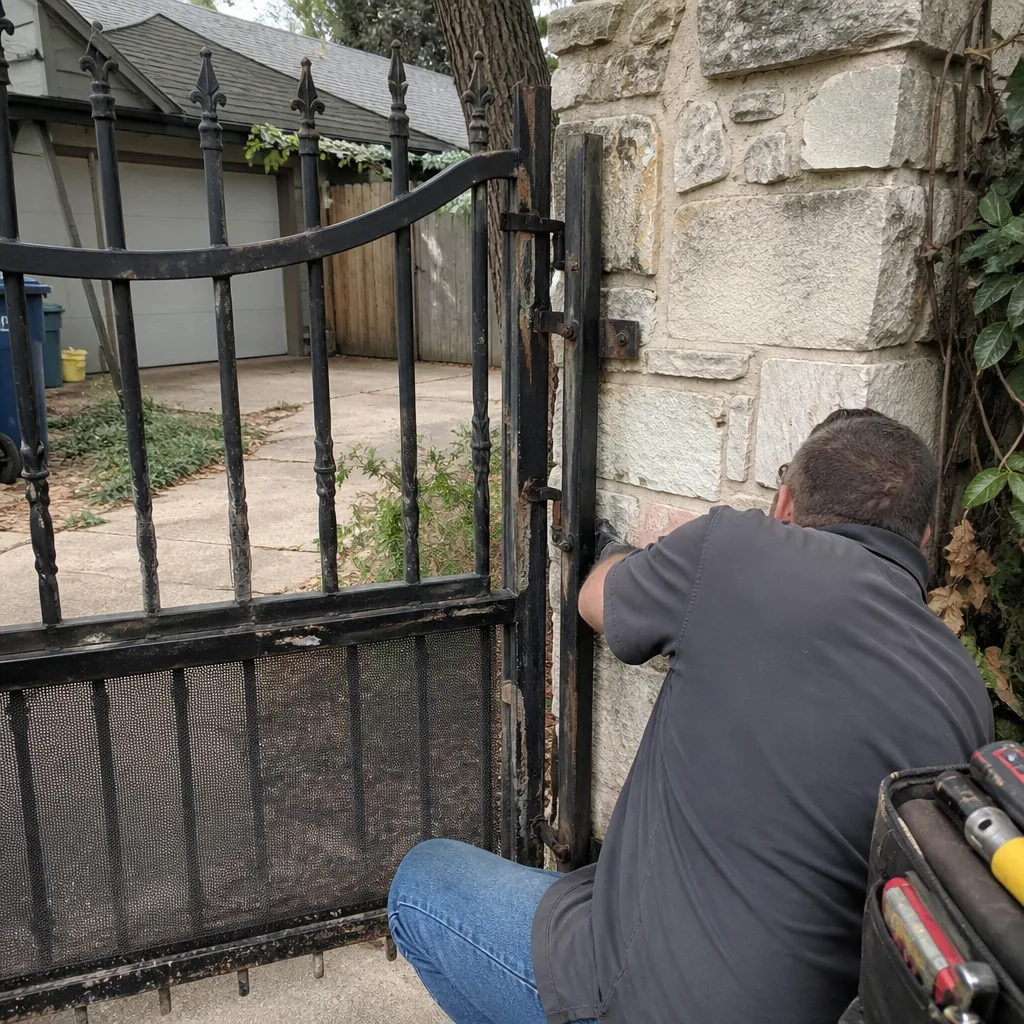 Before
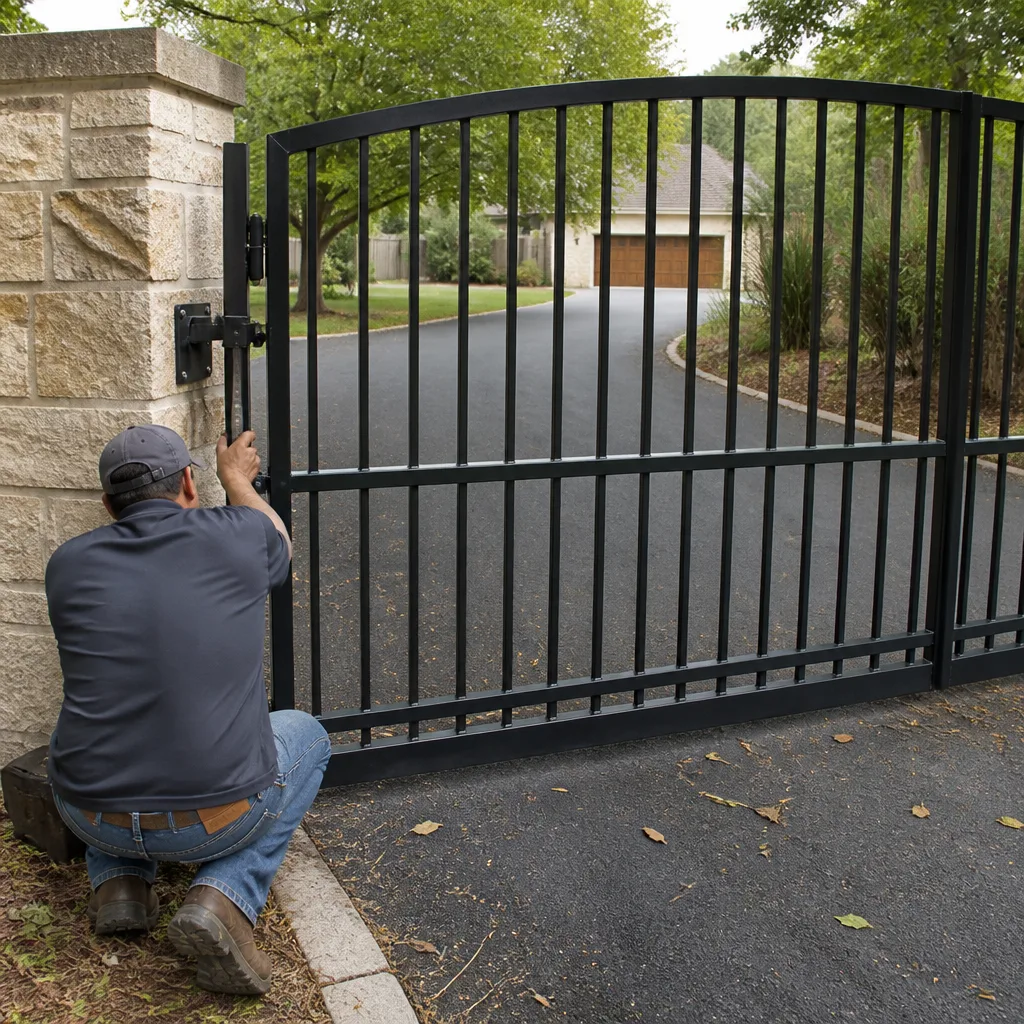 After
After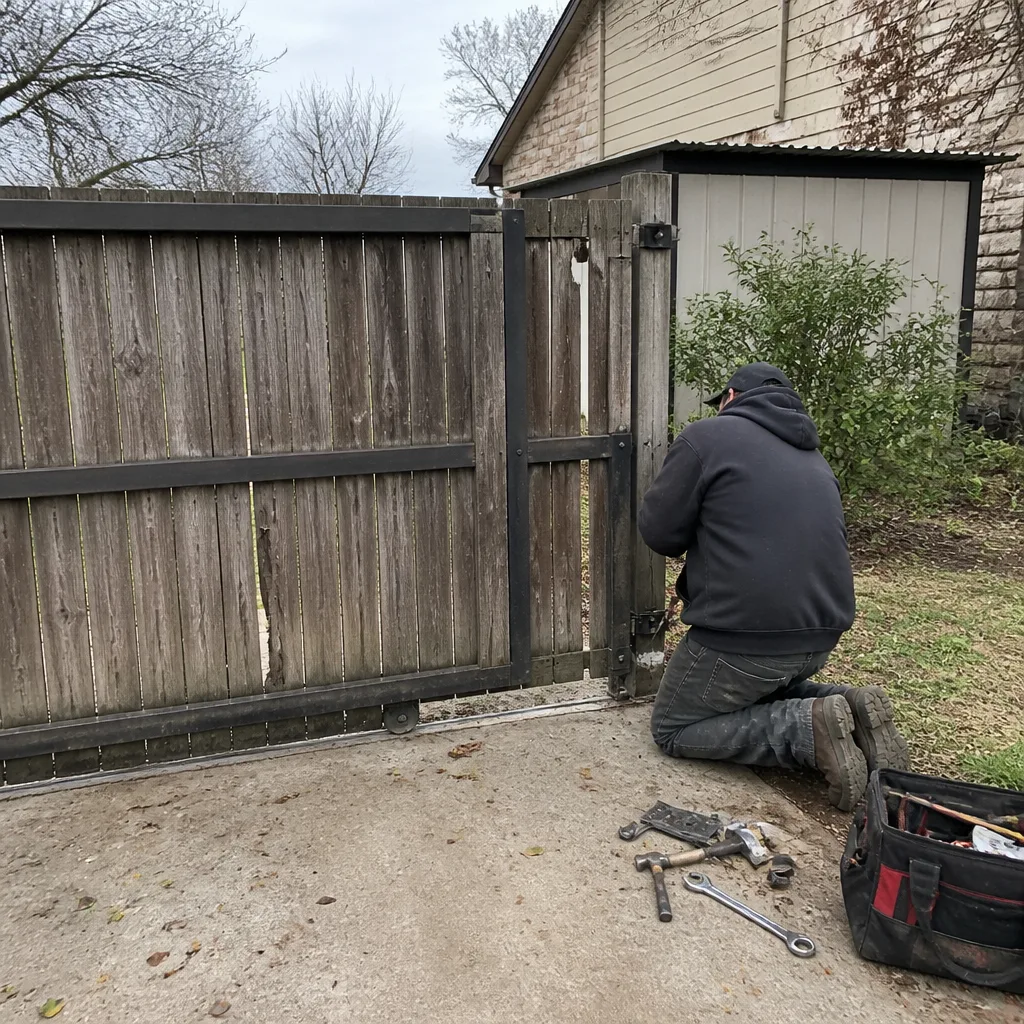 Before
 After
After Before
 After
After