
Last updated October 16, 2026
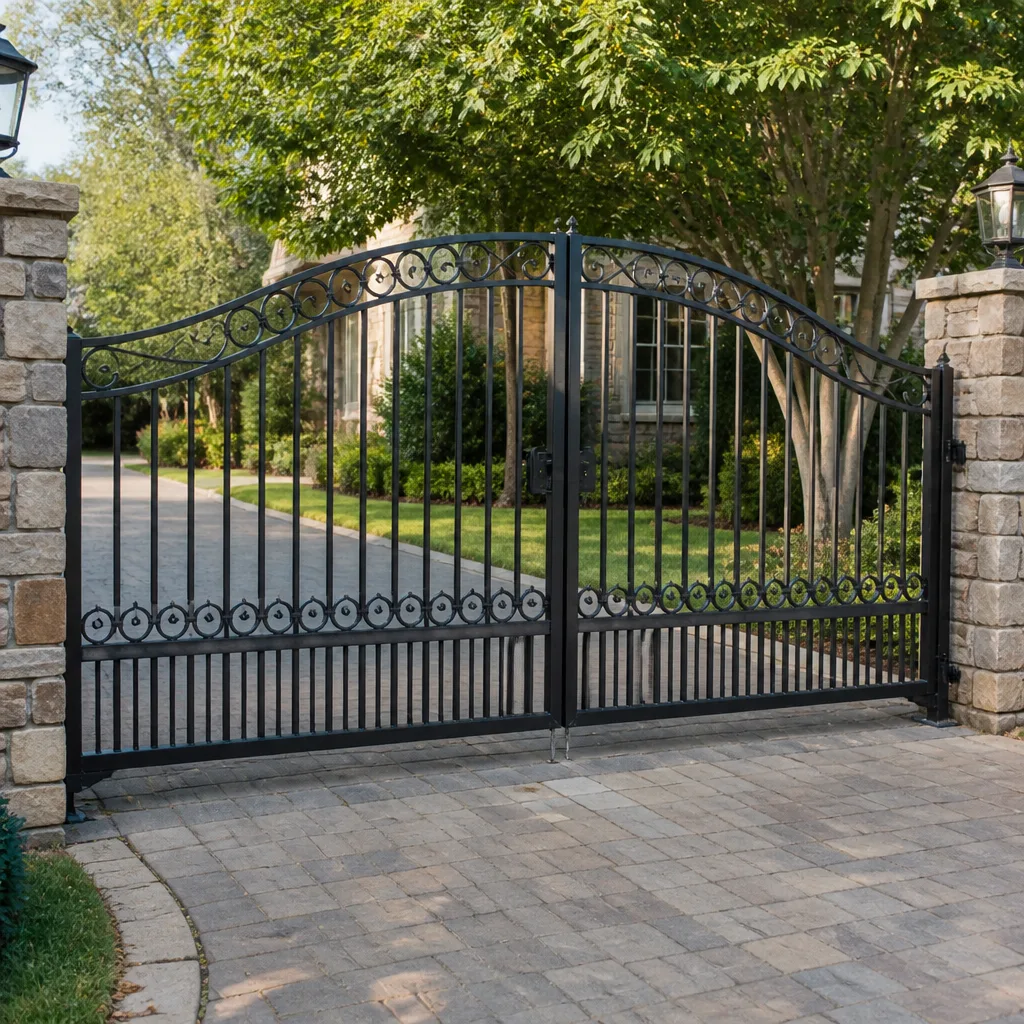 Wrought iron
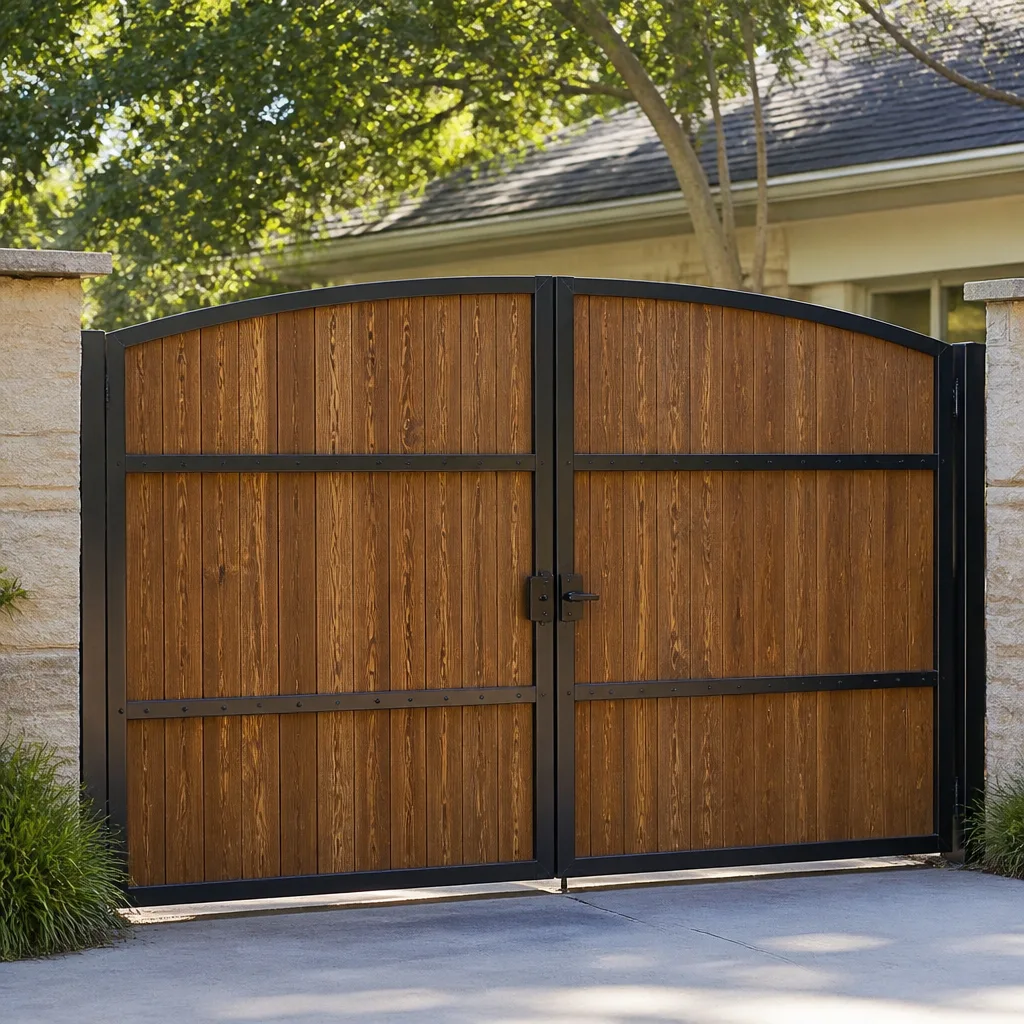 Wood & steel frame
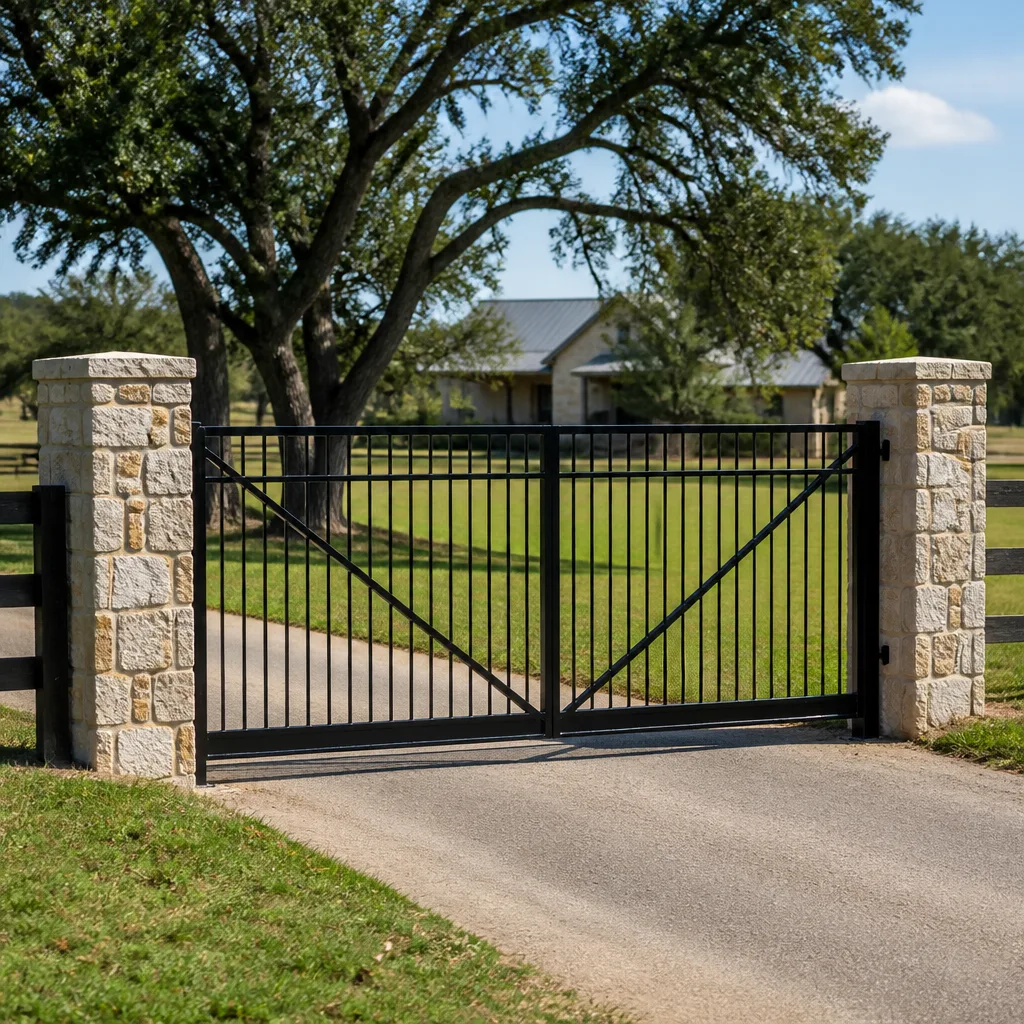 Farm & ranch
 Sliding driveway gates
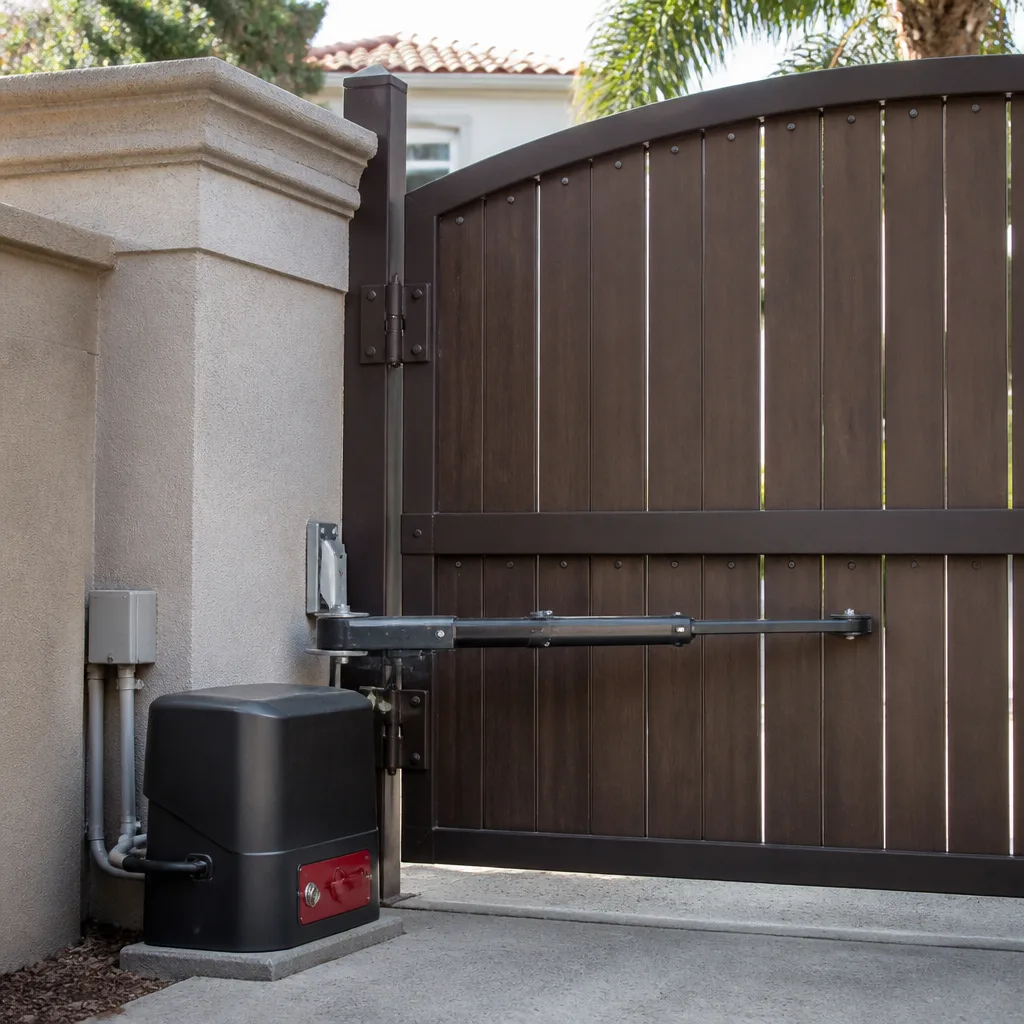 LiftMaster operators
Free on-site gate assessment - hinges, posts, and your LiftMaster or Nice gate operator checked before anything is quoted
The assessment is free and the quote is the invoice.
Get your free estimateGate Repair Permits, Codes & Inspections in TX: What You Need to Know
Here’s the uncomfortable truth most Austin homeowners discover too late: a gate is the only part of your property that the City regulates as both a fence and a potential traffic obstruction. A sliding driveway gate that crosses the sidewalk line, a wrought-iron gate welded to an 8-foot fence, a gate motor wired into a new circuit – each can pull a different permitting trigger, and none of them are obvious from the curb. What makes Austin uniquely tricky is that the municipal code changed its fence and gate thresholds in 2017, while HOA covenants in neighborhoods like Circle C Ranch, Avery Ranch, and Steiner Ranch often impose stricter rules than the City does. This guide maps the real permitting triggers, the inspection checklist, and the liability that lands on the homeowner when work is done without a permit in Austin. For related reading, see our Gate Repair Warning Signs: A Austin Homeowner’s Reference Guide.
Styles & brands we work with
Quick Answer
In Austin, a Gate Repair or replacement generally does NOT require a City permit if you are repairing an existing gate in place and not changing its height, footprint, or electrical wiring. A permit IS typically required if the gate is part of a fence taller than 8 feet, if the gate crosses or adjoins a public right-of-way or easement, if new electrical wiring is run, or if the gate is part of a new fence installation over 6 feet high. HOAs in many Austin communities layer additional approval requirements on top of city permitting, with their own application and inspection process.
Table of Contents
- When Austin Actually Requires a Gate Permit
- Who Pulls the Permit: Contractor vs. Homeowner
- The HOA Layer: Circle C Ranch, Falconhead, and Parallel Approvals
- What an Austin Gate Inspection Actually Checks
- How to Retroactively Permit Unpermitted Gate Work
- What Permits and Inspections Cost in Austin
- Common Mistakes to Avoid
- When to Call a Professional
- Frequently Asked Questions
- The Bottom Line
When Austin Actually Requires a Gate Permit
The short answer: most gate repairs in Austin do not need a permit. Replacing a hinge, welding a broken picket, swapping a gate motor of the same voltage, or realigning a sagging gate on its existing posts are all repair activities that fall outside the City’s fence permit requirements. What changes the math is height, location, and electrical scope.
Austin’s Development Services Department regulates residential fences and gates under the 2021 International Residential Code as adopted by the City, with local amendments. Here are the specific triggers that require a permit for gate work:
- Gate attached to a fence over 8 feet tall: Any fence or gate assembly exceeding 8 feet measured from grade requires a site plan and permit. Gates attached to 8-foot masonry or wrought-iron fences are common in West Austin and Tarrytown, and the permit applies to the entire assembly, not just the gate.
- Gate within a public right-of-way or visibility easement: Austin’s Transportation Criteria Manual restricts obstruction within sight triangles at driveway entrances. If your driveway gate sits closer than 15 feet from the curb line, the City may require a permit and possibly a variance. This applies to many 1960s-era neighborhoods like Allandale and Brentwood where front setbacks are shallow.
- New electrical run for a gate motor: If the gate motor requires a new circuit, a licensed electrician must pull an electrical permit. This is the one most homeowners miss. Replacing a gate motor with the same voltage and using the existing wiring is a repair. Running a new 120V circuit from the panel to a gate 80 feet from the house is an electrical install and requires inspection by Austin’s Electrical Review division.
- Entirely new gate installation over 6 feet: Austin treats a new gate on a new fence line the same as a fence. If the total fence height exceeds 6 feet, a fence permit is required.
- Gate on a retaining wall or slope condition: Gates built on retaining walls over 4 feet high, or gates requiring grade alteration, trigger a building permit because of the structural connection. This is common in the hillside neighborhoods of Westlake and Northwest Hills.
If a contractor tells you a gate repair “never needs a permit,” ask them to put that in writing. In Austin, the answer depends on where your gate sits, how tall the fence is, and whether anyone is touching the electrical. The Warden Gate Repair Austin home page outlines the scope of work we handle, which includes helping homeowners identify whether their gate repair falls under a repair category or a permit-triggering installation.
Who Pulls the Permit: Contractor vs. Homeowner
In Austin, the person or company who performs the work is legally responsible for pulling the permit, but the liability for unpermitted work always lands on the homeowner. Here is how the flow works in practice.
If a licensed contractor does the work
Texas law requires a contractor performing work that triggers a permit to obtain that permit from the City of Austin before starting. The permit holder is listed on the permit, and the permit must be posted at the job site. When a contractor pulls the permit, their bond and insurance cover the work, and the City’s inspection record ties back to that contractor’s license. Most legitimate gate and fence contractors in Austin handle this routinely. It becomes part of the written quote. For help choosing one, read our How to Hire a Gate Repair Contractor in Austin: A Step-by-Step Guide.
If a homeowner does the work themselves
Austin allows homeowners to pull their own permits for work on their primary residence, under what is called a Homestead Permit. The homeowner effectively becomes the contractor of record, signing an affidavit that they are doing the work themselves, that they understand the code requirements, and that they will schedule inspections. If the work fails inspection, the homeowner is responsible for corrections. If the work is done without a permit and later discovered during a home sale, the homeowner is liable for the retroactive permit fees, any inspection corrections, and in some cases a penalty fee equal to twice the original permit cost.
The liability question
Here is what most Austin homeowners do not know: if you hire a contractor who skips the permit and the work later fails, your home insurance claim can be denied for unpermitted work. The Texas Department of Insurance allows insurers to deny claims where unpermitted work caused or contributed to a loss. For a gate this is rare but real – a driveway gate that falls onto a vehicle, or a gate motor fire from improper wiring. The contractor may disappear, but the homeowner’s address is still on the deed. Pulling the permit is not bureaucratic theater. It creates a paper trail that protects you.
We bring this up because we’ve been called out to Austin homes where a previous owner or a fly-by-night handyman installed a gate motor with no permit, and the new owner only discovered it during a home inspection. The repair was simple. The retroactive permitting was not.
The HOA Layer: Circle C Ranch, Falconhead, and Parallel Approvals
City permits and HOA approvals are entirely separate systems that do not talk to each other. A City of Austin permit does not satisfy an HOA architectural review, and an HOA approval does not satisfy the City. Homeowners in master-planned communities across Austin and its suburbs deal with both.
In Circle C Ranch in Southwest Austin, any exterior modification to a gate that faces a public street, a private street, or a greenbelt requires an Architectural Control Committee (ACC) application. The committee reviews gate material, height, color, and motor placement. A black chain-link gate that would be perfectly legal under city code might be rejected by the ACC because it does not match the neighborhood aesthetic. The ACC application typically takes 2 to 4 weeks to process, which means a homeowner who needs a gate motor replaced urgently may have to repair the motor now and file the ACC application after the fact for retroactive approval.
Falconhead, in Bee Cave just west of Austin, operates similarly but with a stricter landscape screening requirement. Any gate installation or significant modification requires a landscape plan showing what vegetation will screen the gate from the street. The HOA’s review is tied to the community’s design standards, not safety code. A gate that meets every City of Austin structural requirement can still be rejected by Falconhead’s committee if it does not match neighboring properties.
Steiner Ranch, Avery Ranch, and the Villages of Western Oaks all operate comparable systems. The practical implication: before you approve any gate work, check two boxes – city permit applicability and HOA architectural review. Skipping either one creates a separate kind of liability. The HOA can impose fines, require removal or modification of the gate at your expense, or place a lien on the home if compliance is not resolved. None of that involves the City, and none of it is covered by a contractor’s workmanship guarantee.
What an Austin Gate Inspection Actually Checks
If your gate project does require a permit, the City of Austin will schedule one or more inspections depending on the scope. Electrical work requires an electrical rough-in and final inspection. Structural work (post footings, gate frame connections) requires a building inspection. In our experience, Austin inspectors focus on three specific things when they come out for a residential gate inspection:
- Post footings and depth: Austin’s frost line is less of a concern than its expansive clay soil, but inspectors still check that gate posts are set at least 24 to 30 inches deep with concrete footings sized for the gate’s weight and width. A 12-foot sliding gate needs a substantially deeper and wider footing than a 4-foot pedestrian gate. The inspector will look for the concrete collar around the post and verify that the post itself is plumb.
- Gate swing and clearance: The inspector verifies that a swinging gate does not encroach onto a public sidewalk or street when fully open, and that the gate has adequate clearance from the ground for drainage. Austin’s heavy rain events mean a gate that drags on the ground after a storm is a real safety issue, and inspectors know to check for it. They also verify that self-closing mechanisms required by pool code are present where applicable.
- Electrical connections and grounding: For automated gates, the inspector checks that the motor is on a GFCI-protected circuit, that the low-voltage wiring is properly run and protected from physical damage, and that the system has a UL-listed entrapment protection device – typically photo eyes, safety edges, or both. Since 2018, UL 325 compliance is mandatory for all residential gate operators, and Austin inspectors have become more rigorous about this specific check.
These inspections are not designed to trip up homeowners. They exist because gates are heavy moving objects that fail in predictable ways, and Austin’s building stock includes tens of thousands of gates installed before current code. The inspection creates a record that the work met the standard at the time it was done.
For homeowners curious about how gate automation is wired and installed in Austin specifically, our Electric Gate Repair in Austin page covers the technical side in more detail.
How to Retroactively Permit Unpermitted Gate Work
This is the scenario we see more often than we would like in Austin: a homeowner buys a house, and the inspection report notes that the driveway gate motor was installed without a permit, or the gate was added to the fence after the original fence permit was closed. The previous owner is gone. The title company may or may not have flagged it. And now the current owner must deal with it.
Austin’s Development Services Department has a formal process for retroactive permits, called a “Permit for Work Commenced Without a Permit.” Here is how it works, step by step:
- Confirm the scope of the unpermitted work. Determine exactly what was installed or modified without a permit. For a gate, this usually means the gate structure itself, the motor, or the electrical run. If you are not sure, a licensed contractor or home inspector can assess it. The Gate Motor Repair in Austin page explains how motors are installed and what a compliant installation looks like.
- Contact Austin Development Services. The department’s residential team can look up the address and confirm what permits, if any, exist for the property. They can also tell you whether the work falls under a retroactive permit path or whether it would have been exempt from permitting in the first place.
- Prepare the retroactive permit application. You will need a site plan showing the gate location in relation to property lines and the street, photos of the existing gate, and a scope of work description. Austin typically charges the standard permit fee plus a penalty equal to the original permit fee for work done without a permit.
- Schedule an inspection. The City will send an inspector to verify that the existing gate meets current code. Here is the hard part: if the gate does not meet current code, the inspector can require corrections before the retroactive permit is approved. That can mean resetting posts, adding entrapment protection devices to a gate motor, or relocating a gate that encroaches on a right-of-way.
- Close the permit. Once the inspection passes, the permit is issued retroactively, and the work becomes part of the property’s legal record. This matters at resale, when a buyer’s lender or the title company checks for open permit issues.
The timeline for a retroactive permit in Austin typically runs 3 to 6 weeks, depending on inspection backlog. It is not an emergency process. If a gate is currently failing and you know it was installed without a permit, the practical sequence is to repair the gate first, then run the retroactive permit for the historical work, then close out the new repair under the same inspection where possible.
What Permits and Inspections Cost in Austin
Permit fees in Austin are based on the valuation of the work. For residential gate and fence work, the valuation is usually the cost of materials and labor as stated on the permit application. Austin’s current fee schedule for residential fence and gate permits falls into these ranges:
- Simple repair (no permit required): $0. Replacing hinges, pickets, gate motors with same-voltage swaps, and realignment all fall into repair territory.
- Fence permit for new construction over 6 feet: $75 to $250, depending on the declared valuation. This covers the gate as part of the fence assembly.
- Electrical permit for a new gate motor circuit: $50 to $150 for the permit, plus the electrician’s labor. A new dedicated 120V circuit run to a driveway gate 50 to 100 feet from the house typically runs $300 to $800 in Austin, including materials and labor.
- Retroactive permit penalty: An additional fee equal to the original permit fee is standard. On a $200 fence permit, expect to pay $400 total.
- HOA architectural review application: Fees vary by community. Circle C Ranch charges $25 to $75 for ACC review. Falconhead’s application fee is comparable. These fees are independent of the city and non-refundable.
None of these numbers are secret. The City of Austin publishes its fee schedule online, and HOA management offices will provide their current fee table on request. If a contractor quotes you a permit fee that seems high, ask for the breakdown. The permit fee goes to the City. The contractor should not be marking it up.
For homeowners exploring what a full Gate Repair in Austin project costs, including parts, labor, and any applicable permits, our repair page gives real dollar ranges so the numbers are not a surprise.
Common Mistakes to Avoid
- Believing the contractor who says “nothing here needs a permit.” In Austin, the height of the fence, the proximity of the gate to the street, and the electrical wiring are what matter. A contractor who dismisses permitting without checking those three factors is guessing. Ask for the statement in writing. If they won’t provide it, that is your answer.
- Confusing an HOA approval with a city permit. These are separate systems. Getting your gate approved by the Circle C Ranch ACC does nothing to satisfy the City of Austin, and a city permit does not satisfy the HOA. Homeowners who assume one covers the other end up with an open violation they did not know about.
- Running new electrical wire without a permit because “it’s just a gate motor.” A gate motor drawing from a new circuit is electrical work, and Austin’s inspection division treats it that way. Unpermitted electrical is the single most common retroactive permit we encounter in Austin. The fix is rarely free.
- Replacing a gate motor with a more powerful model that needs a different circuit. This happens more often than homeowners expect. Upgrading from a basic swing motor to a high-torque sliding gate motor for a heavy iron gate can require a 20-amp dedicated circuit where a 15-amp shared circuit existed. The new circuit is the permit trigger.
- Assuming the seller’s disclosure covers unpermitted gate work. Texas sellers are required to disclose known unpermitted work, but “known” does most of the lifting. If the previous owner never knew the gate motor install skipped a permit, the disclosure is clean and the new owner inherits the problem. A thorough home inspection that specifically checks for gate and fence compliance is worth the line item.
- Ignoring a gate that encroaches on a sight triangle. Austin’s transportation code restricts obstructions at driveway entrances. A gate that blocks visibility when a vehicle exits the driveway is both a safety hazard and a code violation. The City can require the gate to be relocated or removed. This is not a theoretical risk in older Austin neighborhoods with narrow setbacks.
When to Call a Professional
Most gate repairs do not need a permit, but all gate repairs benefit from someone who knows the difference. If your gate is binding, sagging, or making noise at the motor, and it is attached to a fence over 6 feet tall, or it sits within 15 feet of the street, call before you start disassembling anything. A professional can tell you in ten minutes whether the repair is a repair or a permit-triggering modification. If the gate motor needs a new circuit, that is an electrician’s scope, and it should be permitted. If you discovered unpermitted work from a previous owner, do not try to quietly fix it. Run the retroactive permit so the property record is clean when you sell.
Warden Gate Repair Austin offers free estimates in Austin – call (361) 268-6253. We service BFT, Linear, Viking, and Ghost Controls gate motors across the Austin area, and we can tell you before any work starts whether your repair crosses a permit line.
Frequently Asked Questions
No permit is required if you are replacing a gate motor with the same voltage and using the existing wiring. A permit is required if the replacement requires a new electrical circuit, a voltage change, or relocation of the motor. Call (361) 268-6253 and we can confirm which category your motor replacement falls into before you commit.
Yes. Any fence or gate assembly over 8 feet tall measured from grade requires a City of Austin permit, regardless of whether the gate itself is a minor component of the fence. The permit covers the structural connection between the gate and the fence, the post footings, and the overall height compliance.
The contractor is responsible for pulling the permit if the work requires one. But the homeowner carries the long-term liability. Unpermitted work can complicate a home sale, trigger insurance claim denials, and require a retroactive permit with penalties. Austin allows homeowners to report unpermitted work by a contractor to Development Services, and the department can issue citations.
An Austin gate inspection checks three primary items: post footings and depth, gate swing and clearance from public right-of-way, and electrical connections including GFCI protection and UL 325 entrapment protection devices on automated gates. The inspection is pass/fail, and corrections must be made before the permit is closed.
Circle C Ranch requires ACC approval for exterior modifications that change the appearance, height, or footprint of a gate. A like-for-like repair that does not change the gate’s appearance typically does not require ACC review, but a replacement gate in a different material or color does. ACC applications take 2 to 4 weeks and carry a non-refundable fee.
Austin has a formal retroactive permit process. You submit an application with a site plan and photos, pay the standard permit fee plus a penalty equal to the original fee, and schedule an inspection. If the gate meets current code, the permit is issued retroactively. If not, the City requires corrections first. The process typically takes 3 to 6 weeks.
The Bottom Line
Most gate repairs in Austin do not need a permit. The ones that do are defined by height, location, and electrical scope. Learn the triggers, or find a professional who knows them cold, and explore more guides & resources on our blog. Check your HOA covenants if you live in a master-planned community. If you discover unpermitted work, handle it through Austin’s retroactive process before it becomes a resale problem. And when the gate needs attention, call a specialist who can tell you what is a repair and what is not before any tools come out.
Written by Cole Rafferty, Owner at Warden Gate Repair Austin, serving Austin since 2008.
See the difference
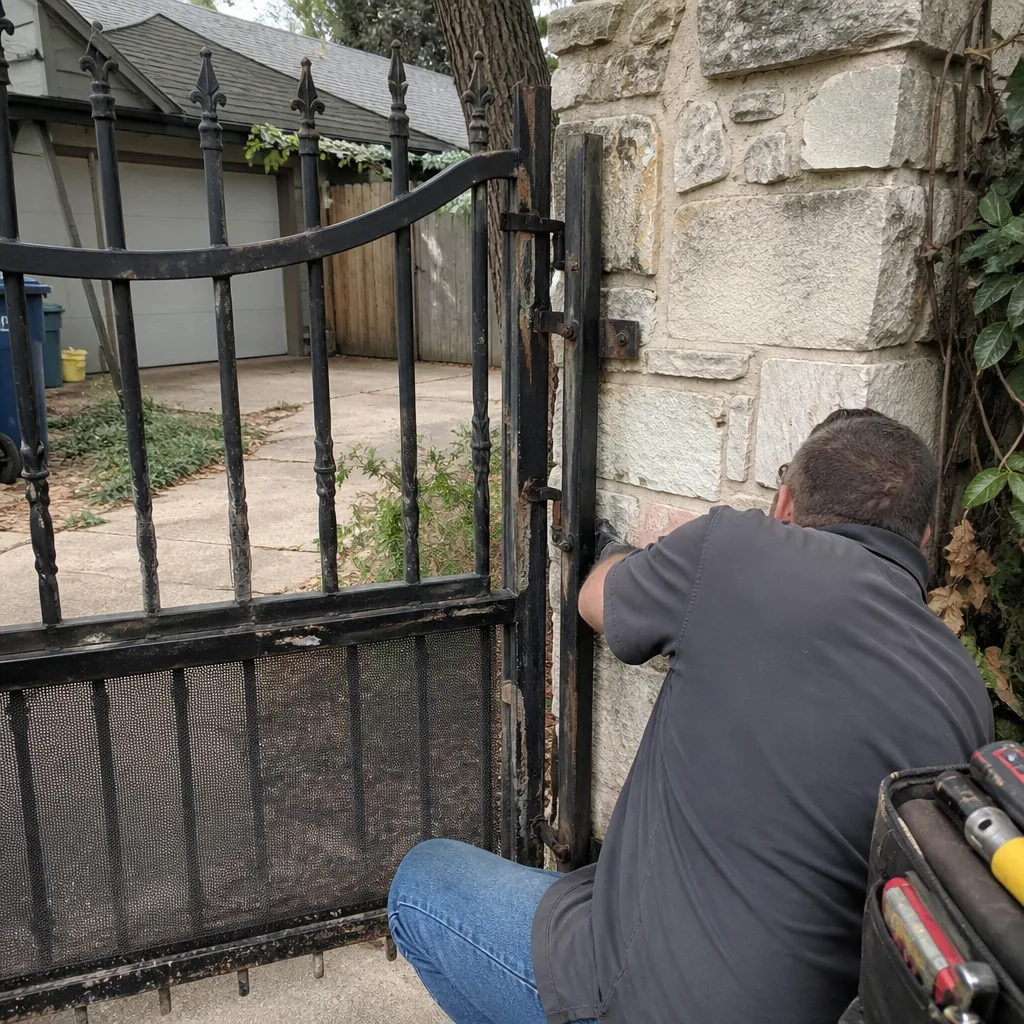 Before
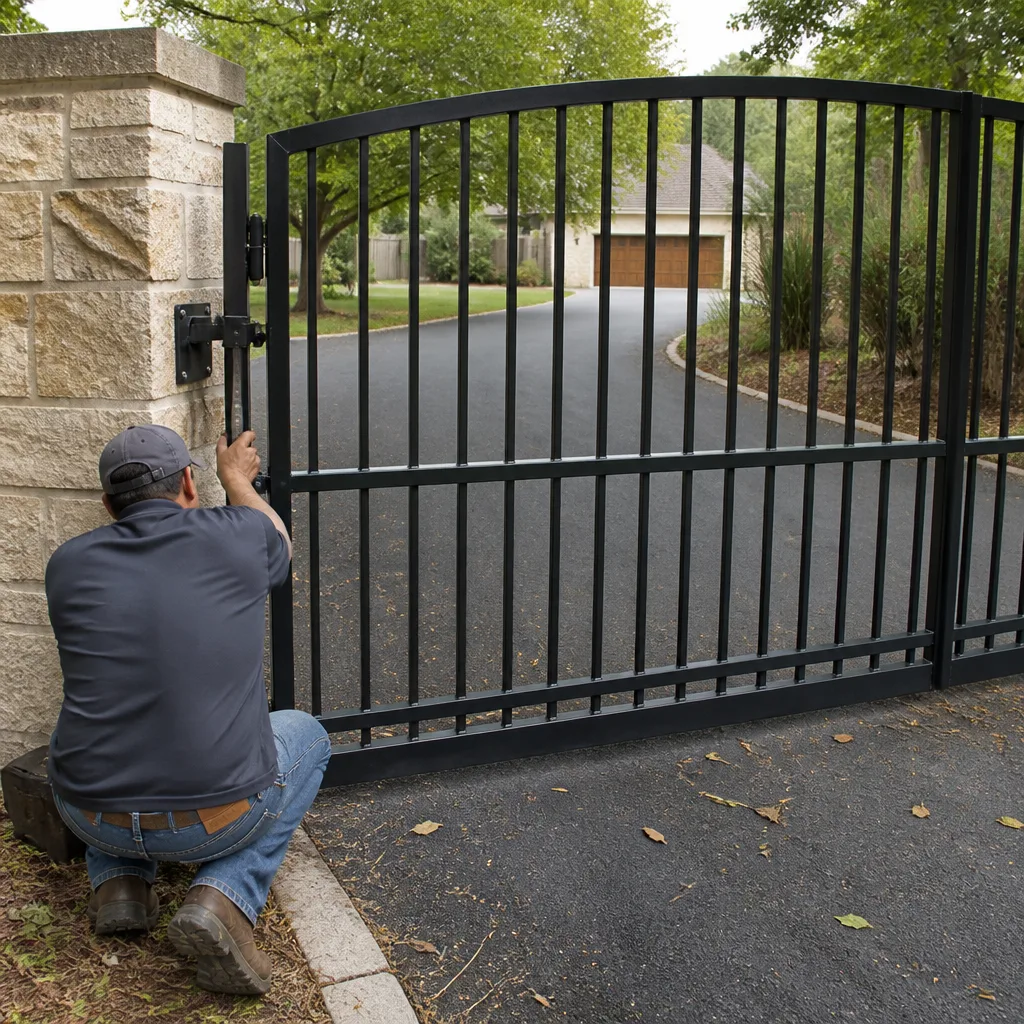 After
After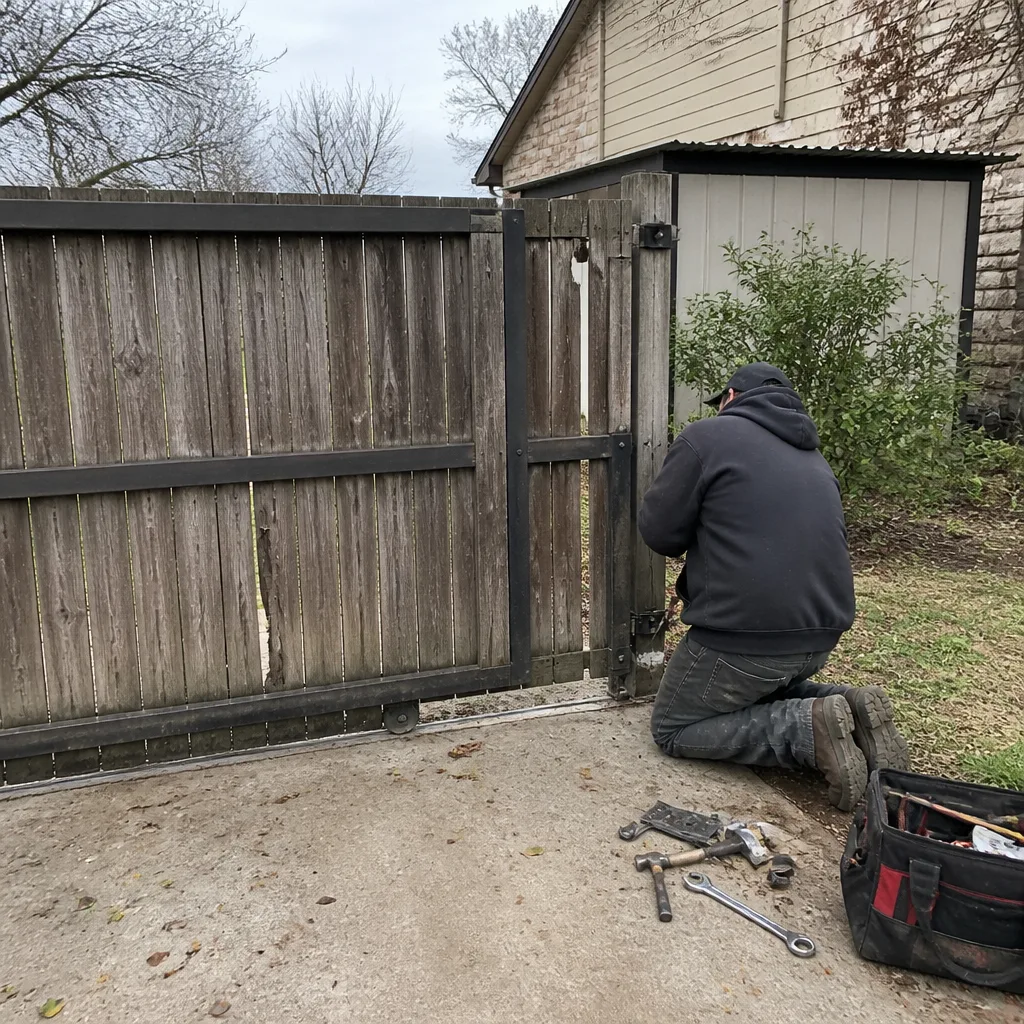 Before
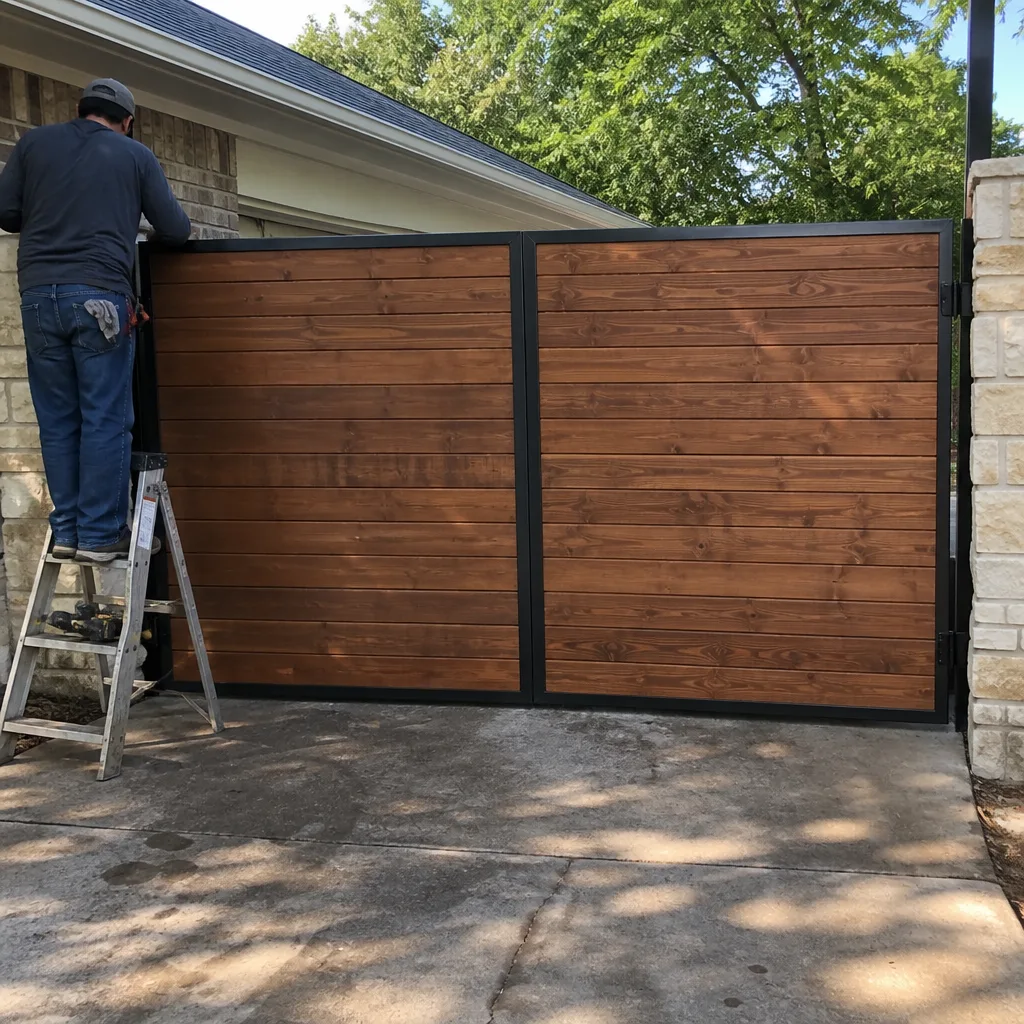 After
After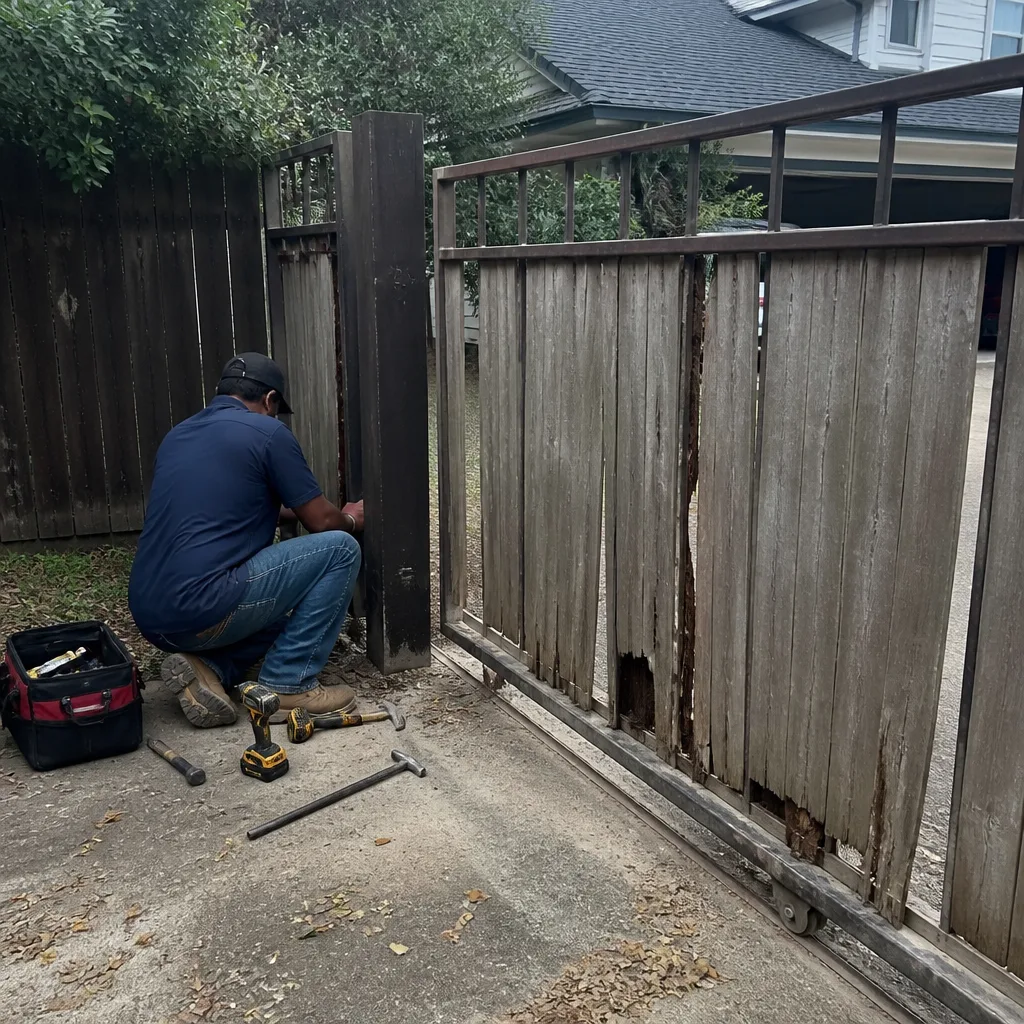 Before
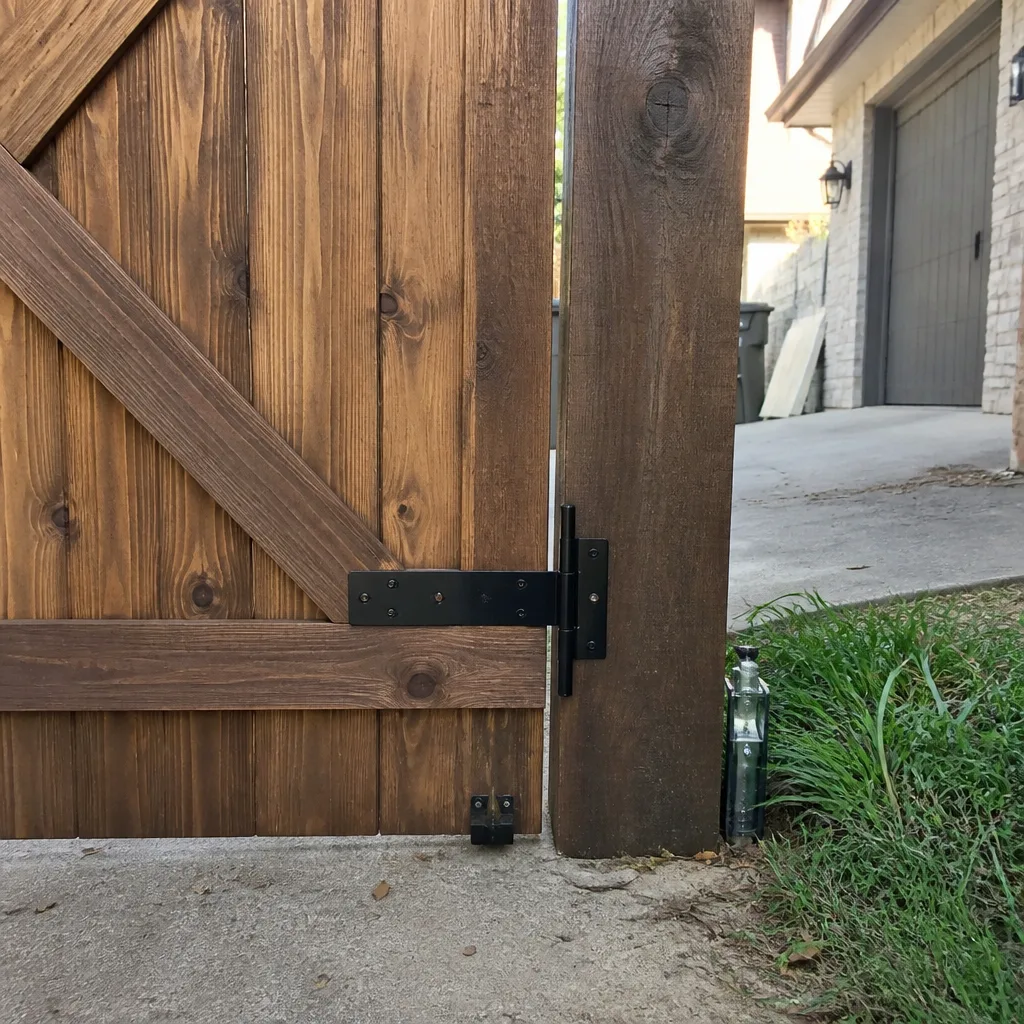 After
After