
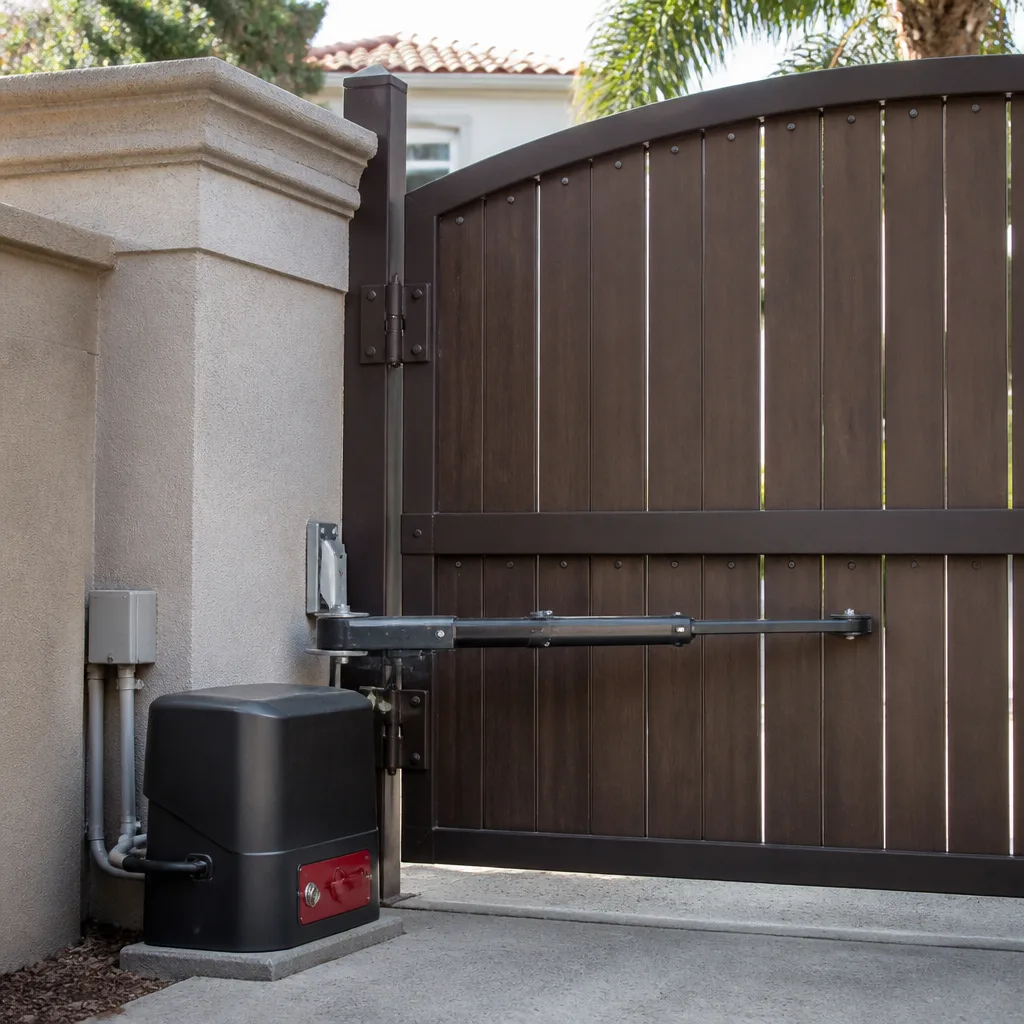
 LiftMaster operators
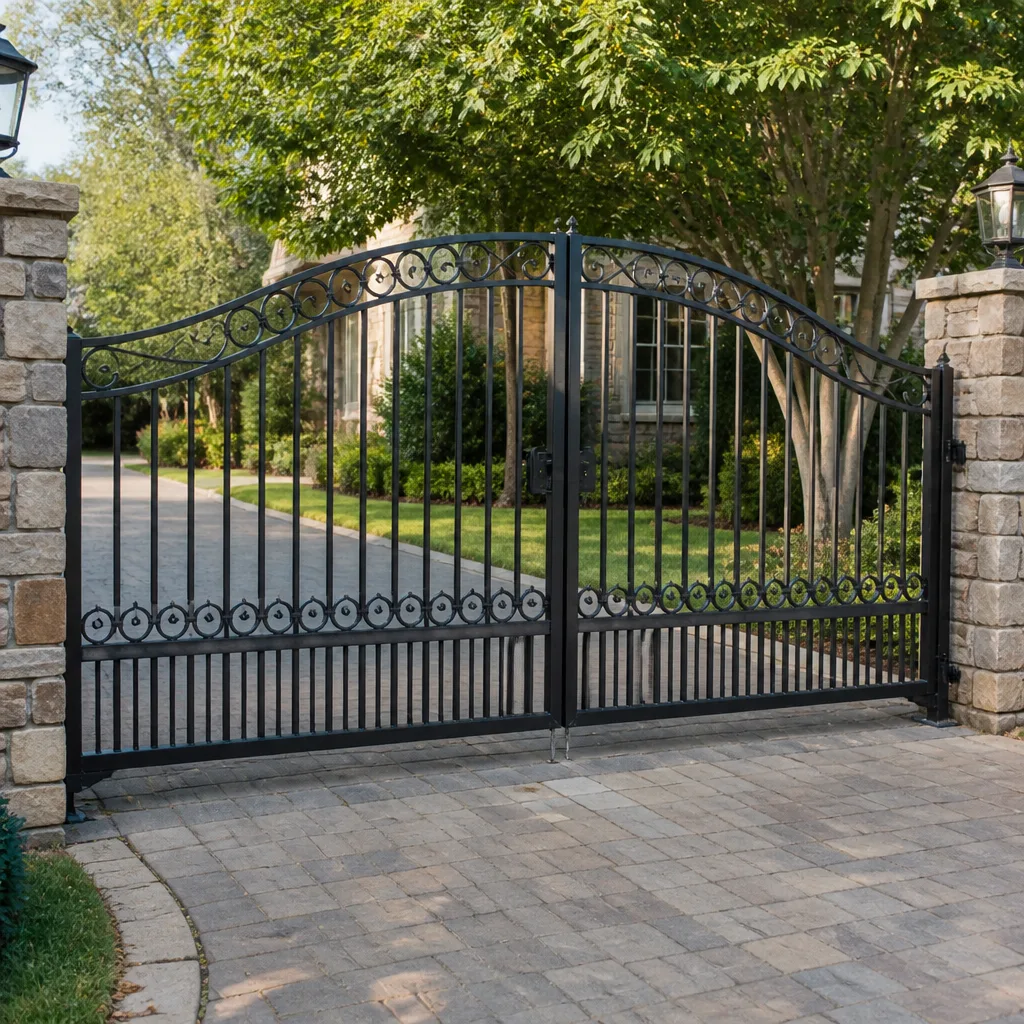 Wrought iron
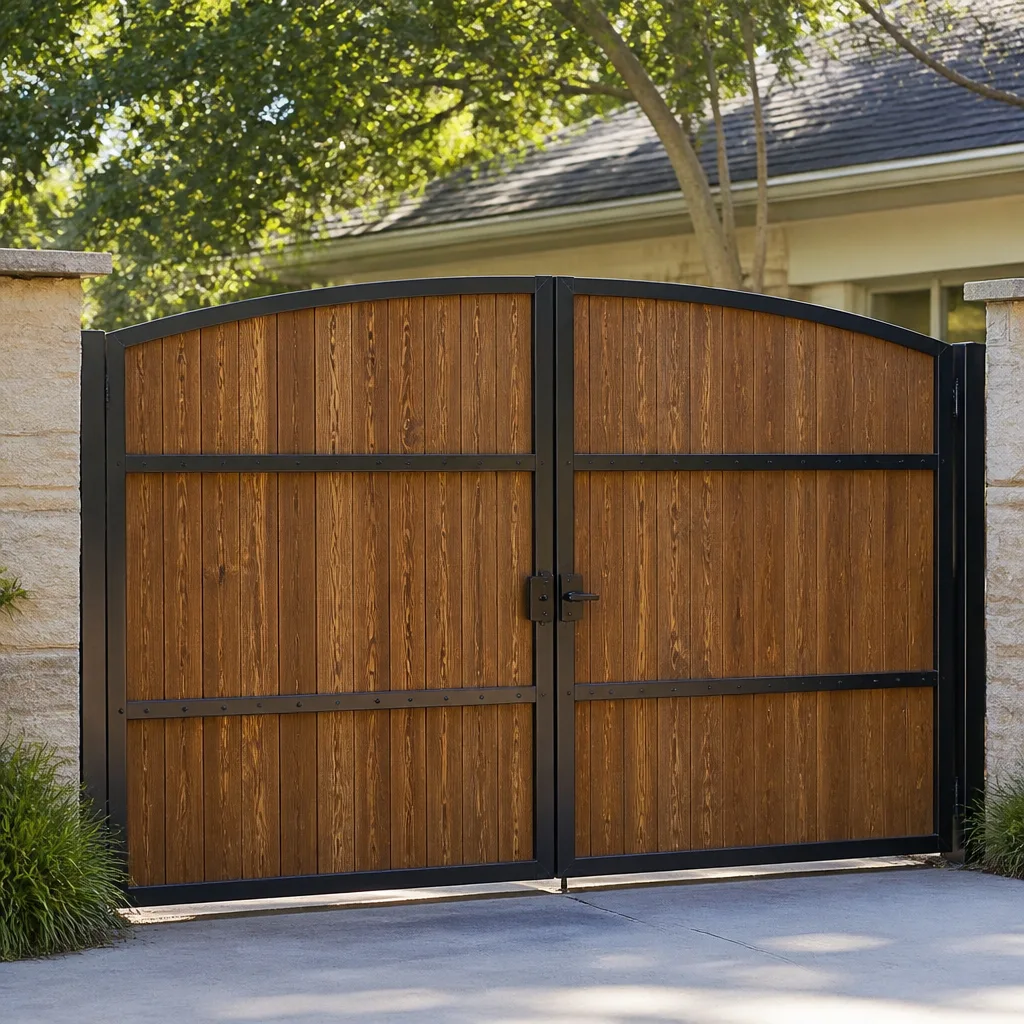 Wood & steel frame
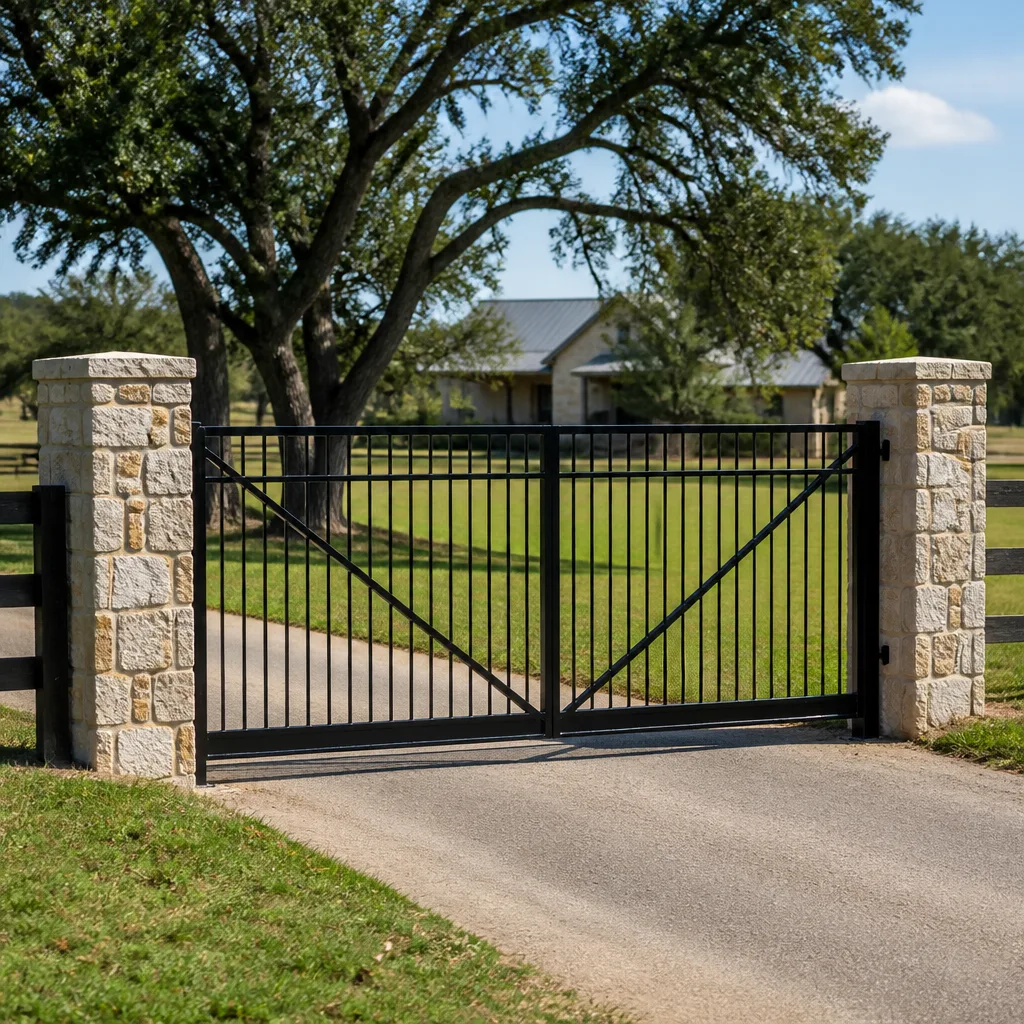 Farm & ranch
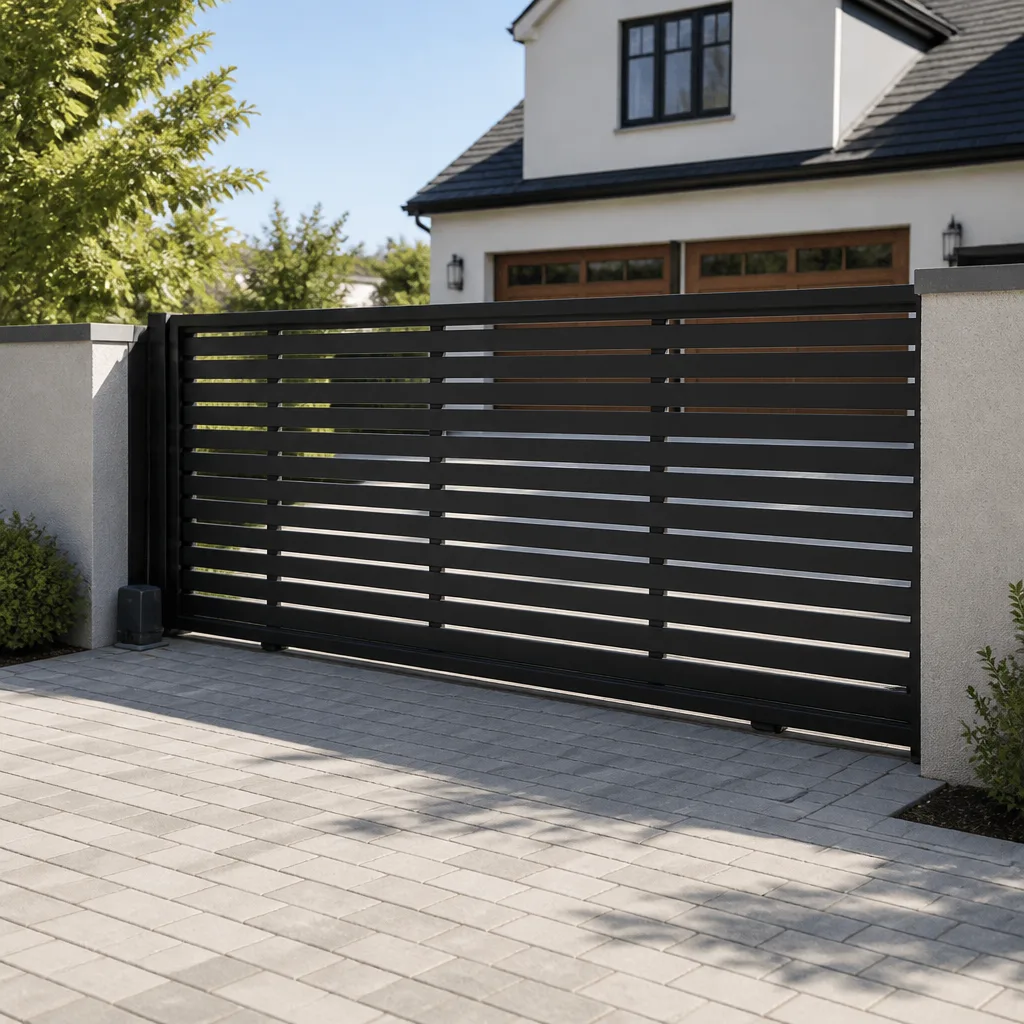 Sliding driveway gates
Free on-site gate assessment - hinges, posts, and your LiftMaster or Nice gate operator checked before anything is quoted
The assessment is free and the quote is the invoice.
Get your free estimateLiftMaster Welding & Fabrication: The Austin Owner’s Guide
We stock and install weld-and-fabricate components for LiftMaster gate systems across Austin, with most jobs running $220 – $480 installed including parts, labor, and our written warranty. If your LiftMaster gate has a cracked hinge, a broken post bracket, or a bent arm that keeps the operator from closing properly, we can usually get it welded or refabricated the same day we see it. What you’ll notice first is the gate hanging slightly off-level, dragging at the latch point, or the operator groaning like it’s working twice as hard as it should.
Here’s the thing about welded steel in central Texas: the heat, the humidity swings, and the occasional ice storm all work against the metal. A weld that held fine for eight years lets go during a cold snap because the steel contracted just enough to finish what corrosion started. We see it on residential driveway gates, ranch entrances, and commercial swing gates all over town. And when it fails, it tends to fail at the worst possible moment, usually right after you’ve left for work.
Key Takeaways
- Typical installed cost in Austin: $220 – $480, quoted in writing before we start.
- Most common failures: hinge weld cracks, post bracket stress fractures, bent operator arms after a vehicle strike.
- Same-day welding is available for most residential jobs when we can access both sides of the gate.
- We’re an independent LiftMaster service provider, not a corporate affiliate, so we match OEM specs without the OEM parts markup.
Which LiftMaster Models This Applies To
LiftMaster builds three main residential gate operator lines that depend on welded steel hardware: the LA400 and LA412 swing-arm models, the SL3000 and SL585 slide operators, and the CSL24V commercial slide line that shows up on larger Austin properties and HOA entrances. The welding and fabrication work we do falls into two buckets. First, the operator mounting plate and post brackets that hold the motor box to the column or pad. Second, the gate itself: hinge plates, clevis brackets, the operator arm attachment point, and any structural rails that carry the gate’s weight.
Here’s the compatibility gotcha most Austin owners don’t know until it bites them. The LA400 uses an articulated arm with a specific clevis pin diameter of 5/8 inch, while the SL3000 uses a drive chain that bolts to a welded lug on the gate frame. If someone welds a generic lug on there without matching the chain pitch, you get a gate that jerks every time it moves because the chain can’t seat properly. We match replacement fabrication to the exact operator model, not just the gate. That means measuring the arm attachment point, verifying the bolt pattern on the mounting plate, and checking the gate frame’s wall thickness before any weld goes down.
On the OEM versus aftermarket question: LiftMaster’s OEM replacement brackets are fine, but they’re priced like they’re the only option. For welded steel brackets and plates, a quality local fabrication using the same gauge steel and the same hole spacing performs identically, often outlasting the original because we can add a gusset where the OEM part was flat. Cole Rafferty will tell you the same thing he tells every customer at the quote stage: “Tell me exactly what it’s doing and I’ll tell you exactly what it costs.”
Styles & brands we work with
Signs Your LiftMaster Welding & Fabrication Is Failing
- The gate leans or sags toward the latch side. A cracked hinge weld lets the gate settle a half-inch or more, which throws the latch alignment off and puts extra load on the operator. We’ve measured gates in West Austin leaning as much as 2 inches at the free end before the hinge finally tore loose.
- The operator arm makes a metallic creak or pop near the attachment point. That’s the clevis bracket flexing against a failing weld. The noise happens at the same spot in the travel every time, which is how you know it’s structural rather than a lubrication issue.
- You see rust staining, flaking paint, or hairline cracks at any weld joint. Texas humidity plus Austin’s clay soil holding moisture near the post base means the lower hinge welds rust from the inside out. By the time you see the crack, the top weld is carrying more weight than it was built for.
- The gate scrapes or drags at the outermost edge. If the post brackets have pulled loose, the entire gate shifts slightly. The wear mark on the concrete tells you how long it’s been happening.
- The operator runs but the gate barely moves, or moves in jerks. On slide gates, a failed weld on the drive rail or chain lug means the operator is trying to push a gate that’s no longer connected the way it should be. The motor’s working. The steel isn’t.
Replacement Cost & What’s Included
In Austin, you’re looking at $220 – $480 for a typical weld repair or bracket refabrication on a LiftMaster-equipped gate. The low end covers a single hinge re-weld or a small crack repair with grinding, welding, and a cold-galvanize finish coat. The high end covers removing a bent operator arm, straightening or refabricating it, welding in a new gusset, and reinstalling everything to spec. Most jobs fall in the middle, around $300 – $375.
What drives the range is access and urgency. If the gate post is embedded in limestone, which is half the new construction in the Hill Country, the prep work takes longer and the weld has to be sequenced to avoid pulling the post out of position. If the operator arm is bent past a certain angle, we’d rather fab a new one than bondo a bad bend and hope it holds. Every quote includes the part, the labor, the finish treatment, and a written price delivered before any work starts. You’ll also get our 365-Day Done Right Promise: if the weld fails, the return visit is free.
See the difference
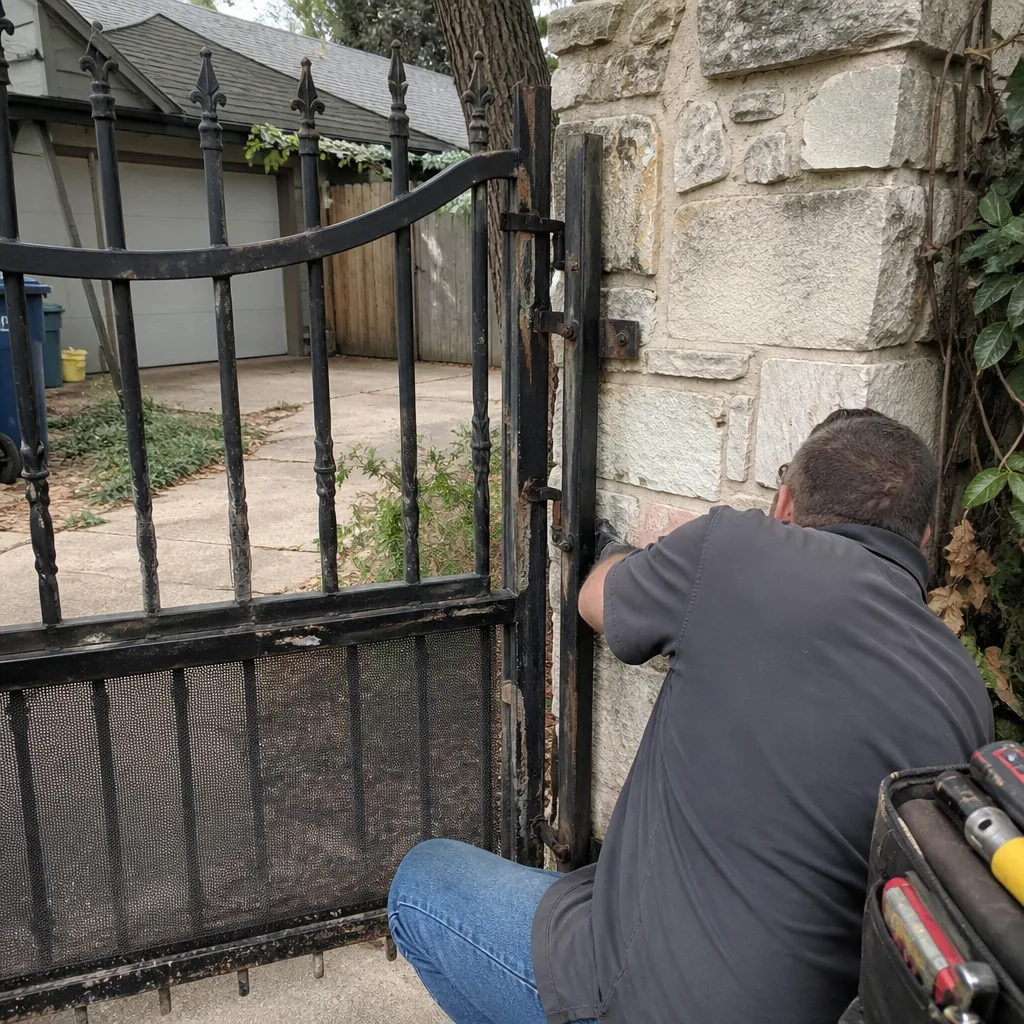 Before
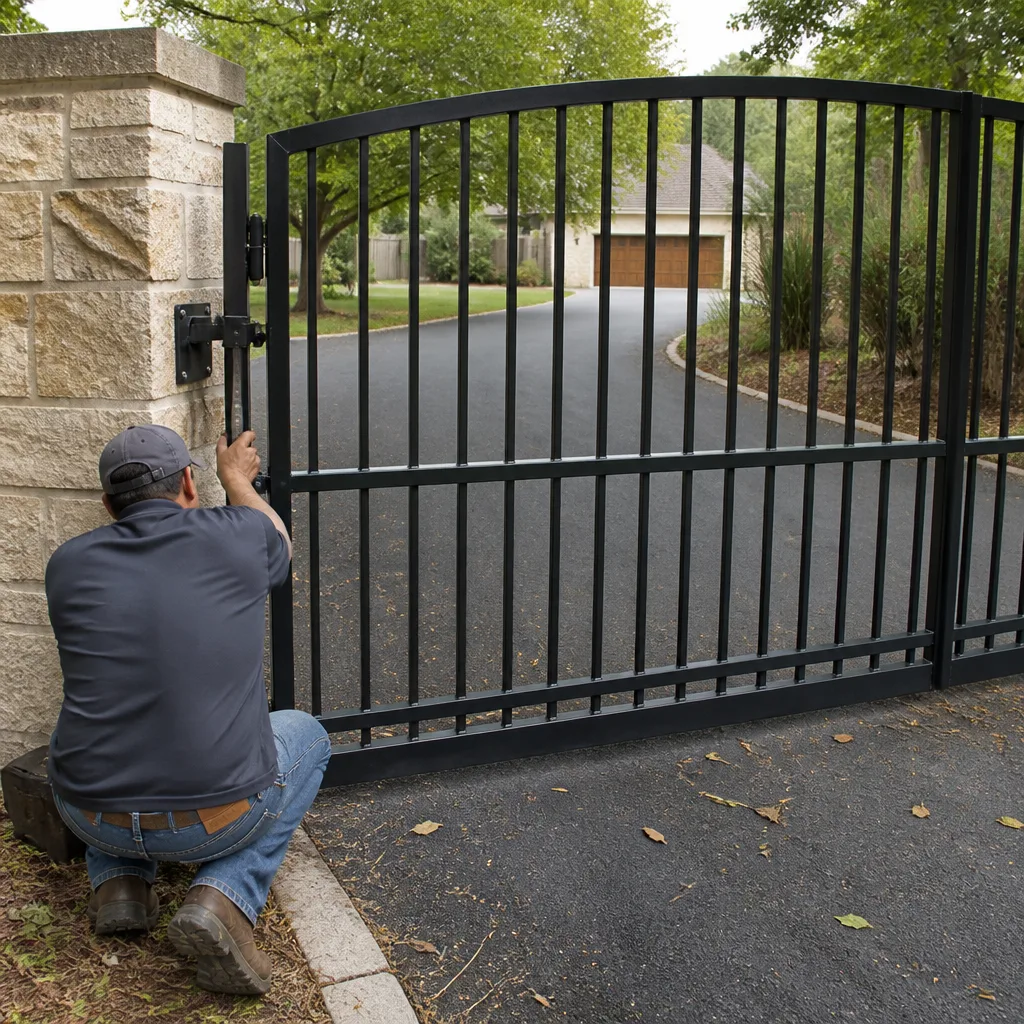 After
After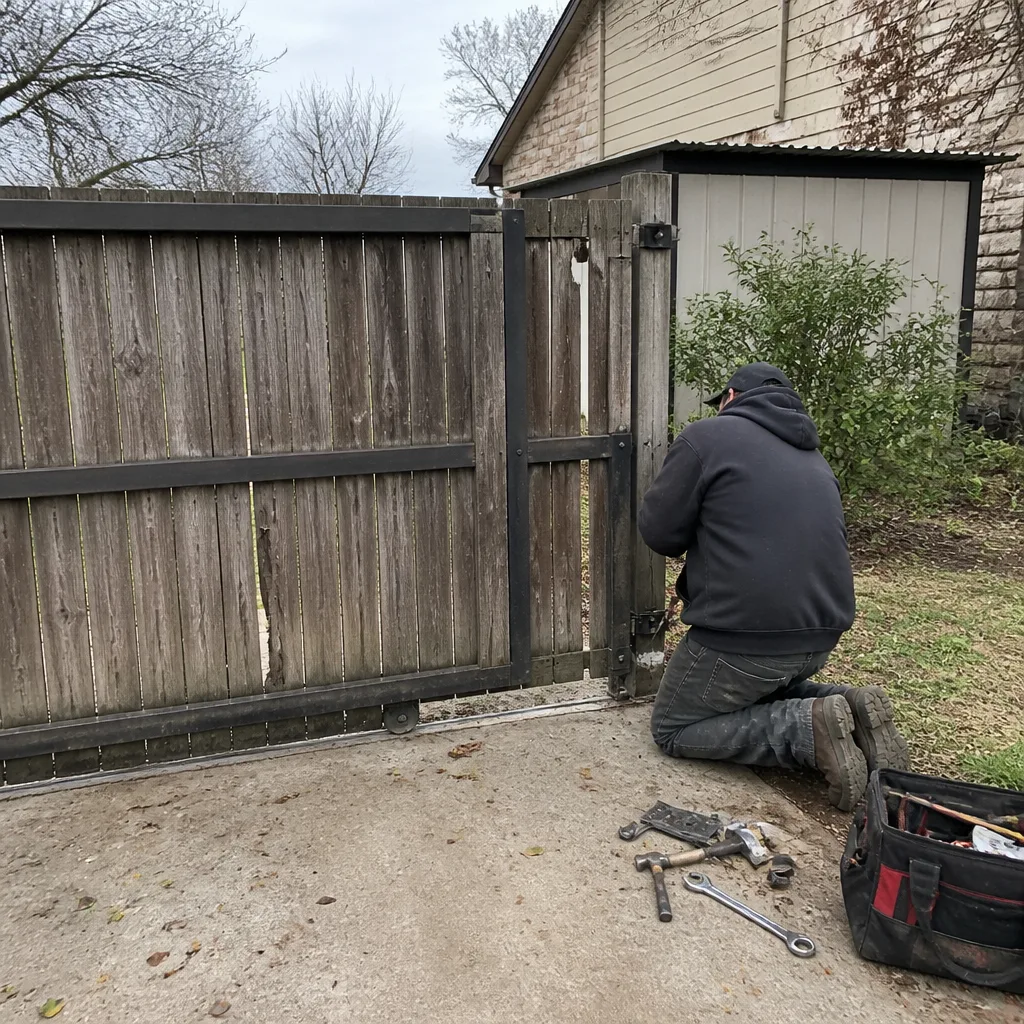 Before
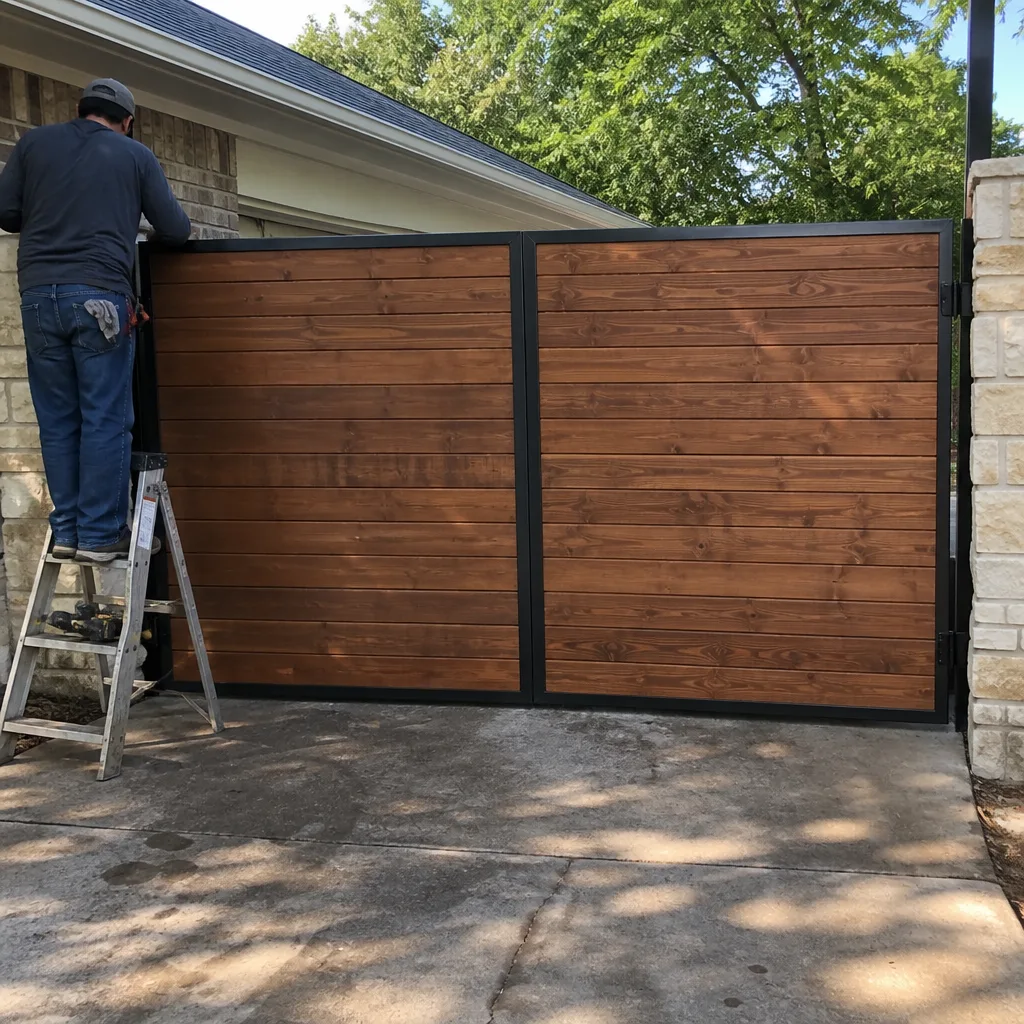 After
After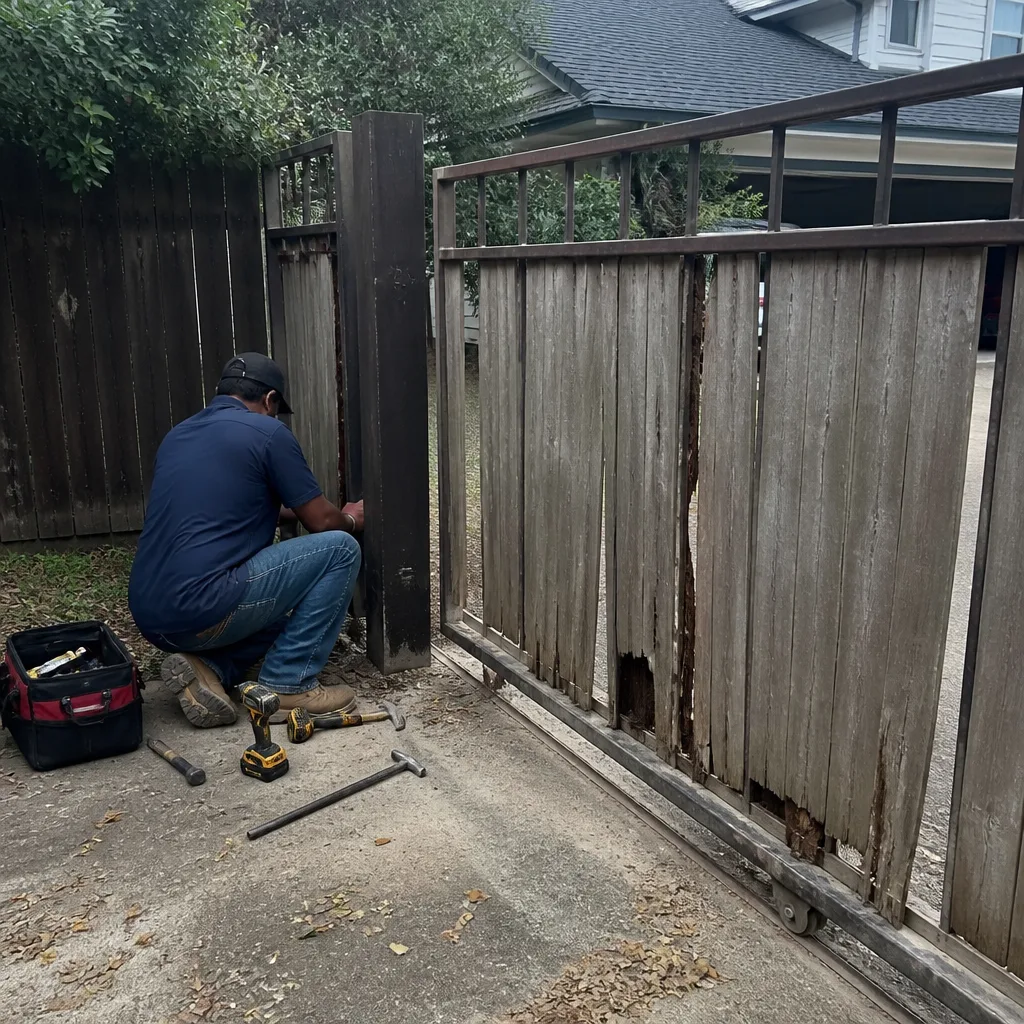 Before
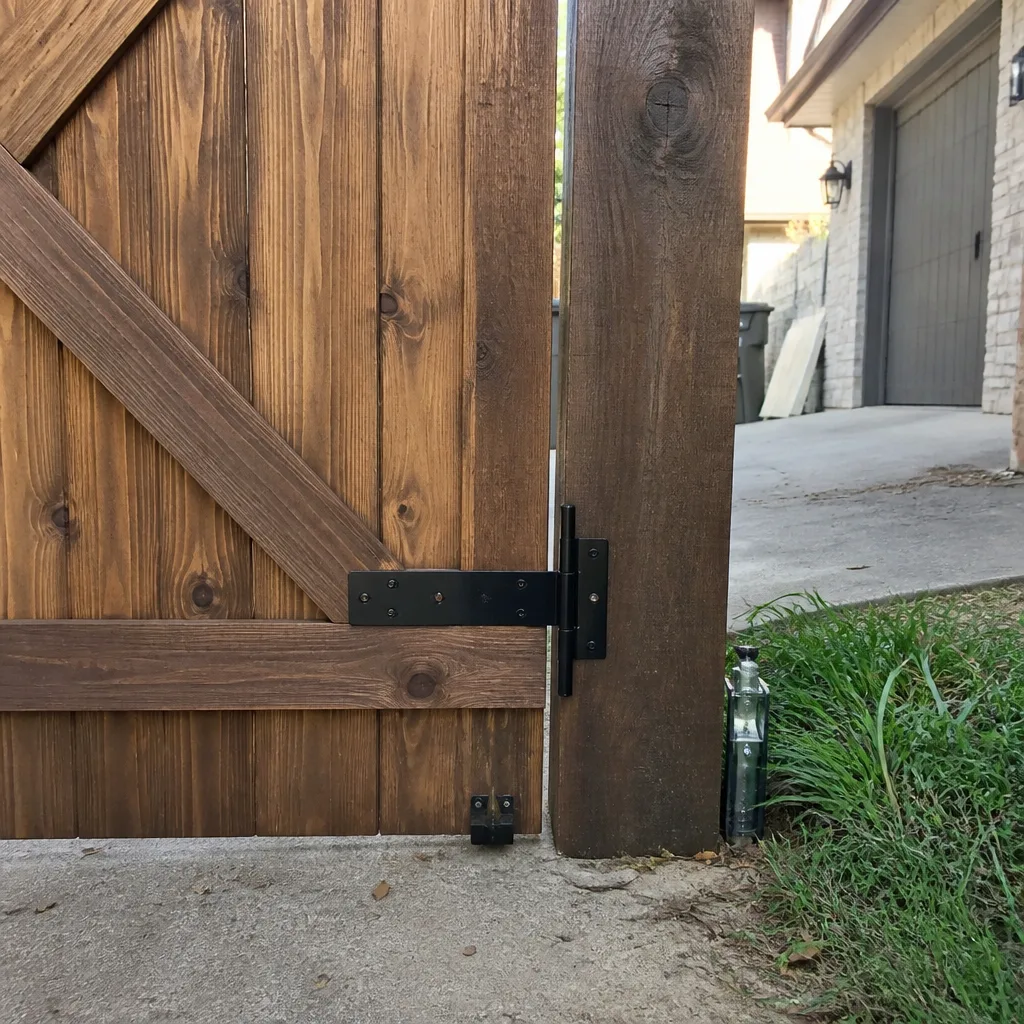 After
AfterDIY or Call Us?
Here’s the honest split. You can do the diagnosis yourself: take photos of the crack, note which direction the gate leans, and check whether the post itself is still plumb. That kind of information helps us quote faster. But actually welding a LiftMaster support bracket or hinge is not a Saturday-afternoon project. The steel on these gates is typically 11-gauge or thicker, and a weak weld gives out with zero warning. A gate is a heavy steel panel moving under motor power. If a hinge weld fails while someone is standing near it, the whole gate can drop or swing free. That’s not a scare line, it’s just physics with a steel frame attached to it.
If you do want to tackle something, the only safe pre-repair step is cleaning and inspecting the joint so we can see what we’re working with. After that, call us at (361) 268-6253 and we’ll come out, measure, quote, and weld it right. The price is written down before we touch it, and you’ll know exactly who’s showing up, by name and photo, before we arrive.
FAQs
A properly welded and sealed hinge or bracket repair typically lasts 7 – 12 years in central Texas, matching the lifespan of the original weld when it was done right. We coat the finished weld with cold-galvanize or zinc-rich paint to give it a fighting chance against Austin’s humidity and the moisture that wicks up from the post base. If the gate is already 15 years old and showing corrosion everywhere, the weld will outlast the surrounding steel, so we’ll tell you up front whether a fix is worth it or whether a new gate frame is the smarter money.
Most cracks and mild bends can be repaired, especially if we catch them before the weld tears fully through. A simple crack in a hinge plate just gets ground out, welded, and reinforced. A bent operator arm can sometimes be pressed back to straight, though we’re picky about that. If the arm’s lost more than about 20% of its original cross-section to rust or prior repairs, we recommend refabricating it fresh. Call (361) 268-6253 and we’ll give you a straight answer with a photo and a measurement.
Most single-joint repairs are done in 60 – 90 minutes once we’re on site. A full bracket refabrication or operator arm replacement runs 2 – 3 hours including removal, fab, install, and testing the gate through a full cycle. We carry common LiftMaster mounting plates, clevis brackets, and steel stock on the truck, so we’re not driving back and forth to a supplier while your gate sits open.
Yes. We carry standard LiftMaster LA400 and SL3000-series bracket dimensions, 5/8-inch clevis pins, hinge plates in common sizes, and square tubing for arm repairs. We also keep parts for the other brands Austin owners call us about: Mighty Mule, Ghost Controls, and DoorKing. If your gate needs a custom bracket or an unusual plate, we measure, cut, and weld it on site or at our shop, usually same week.
Call for a Free Estimate
If your LiftMaster gate has a crack, a bend, or a bracket that’s letting go, call Warden Gate Repair Austin at (361) 268-6253. We’ll ask what the gate’s doing, give you a real price range over the phone, and schedule a visit with a technician you’ll know by name and photo before the truck pulls up. The price you get is the price you pay, in writing, before any weld goes down. And when we leave, the gate works like it’s supposed to. That’s the whole job.
Written by Cole Rafferty, Owner & Lead Technician, Warden Gate Repair Austin at Warden Gate Repair Austin, serving Austin and nearby areas.