
Last updated October 16, 2026
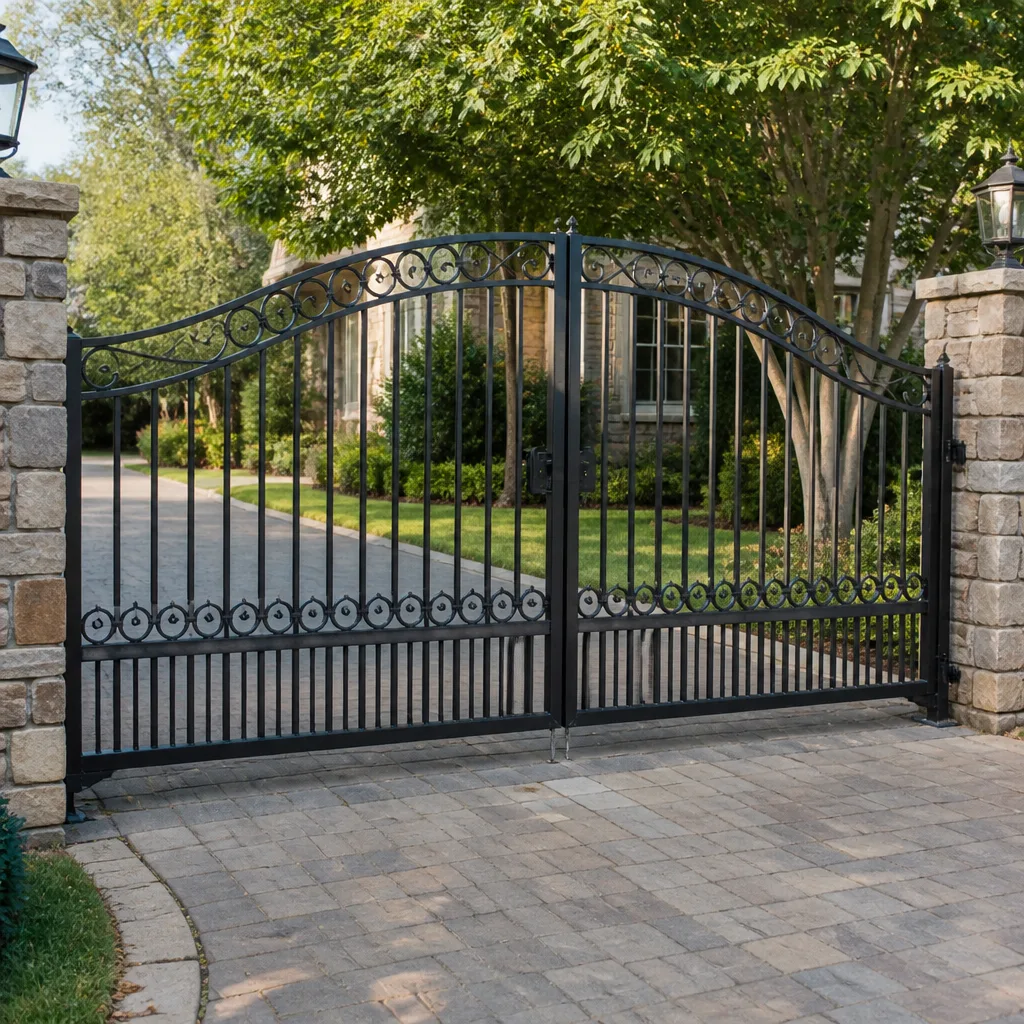 Wrought iron
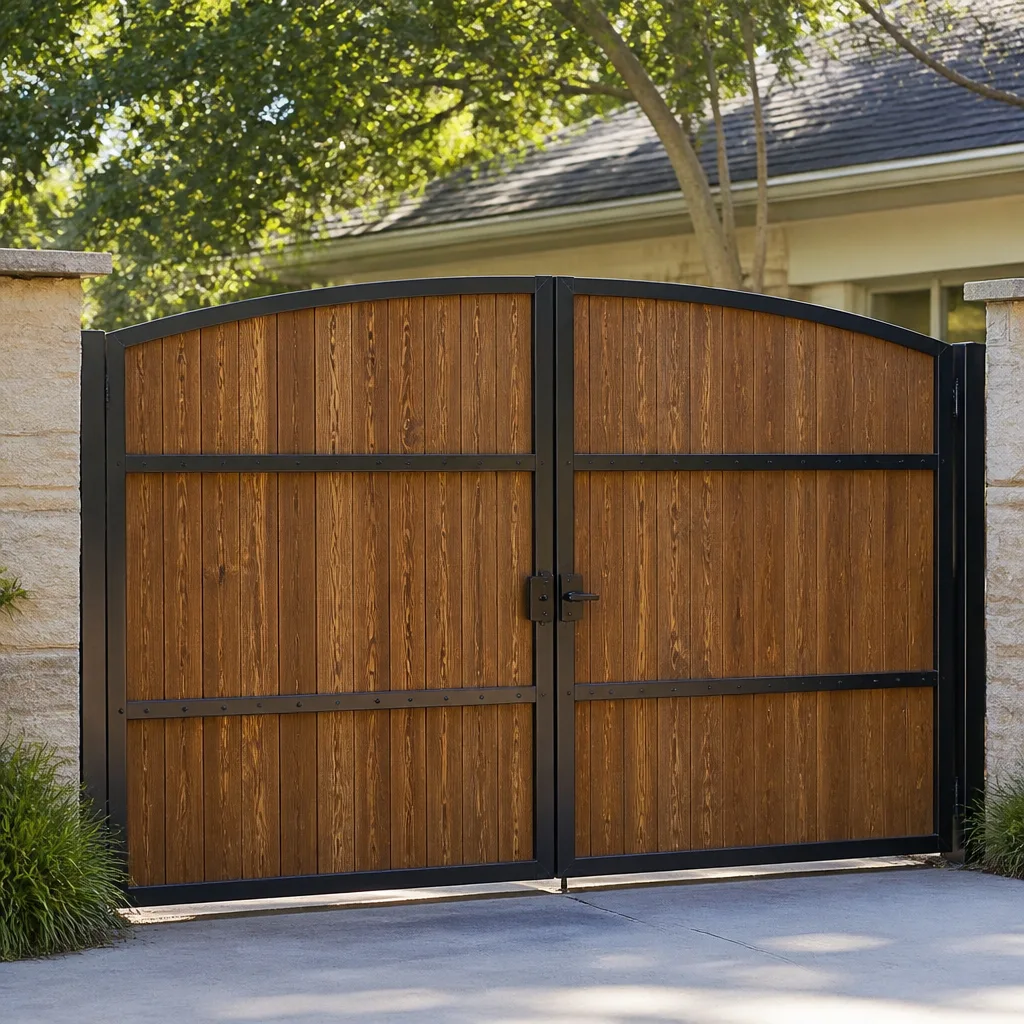 Wood & steel frame
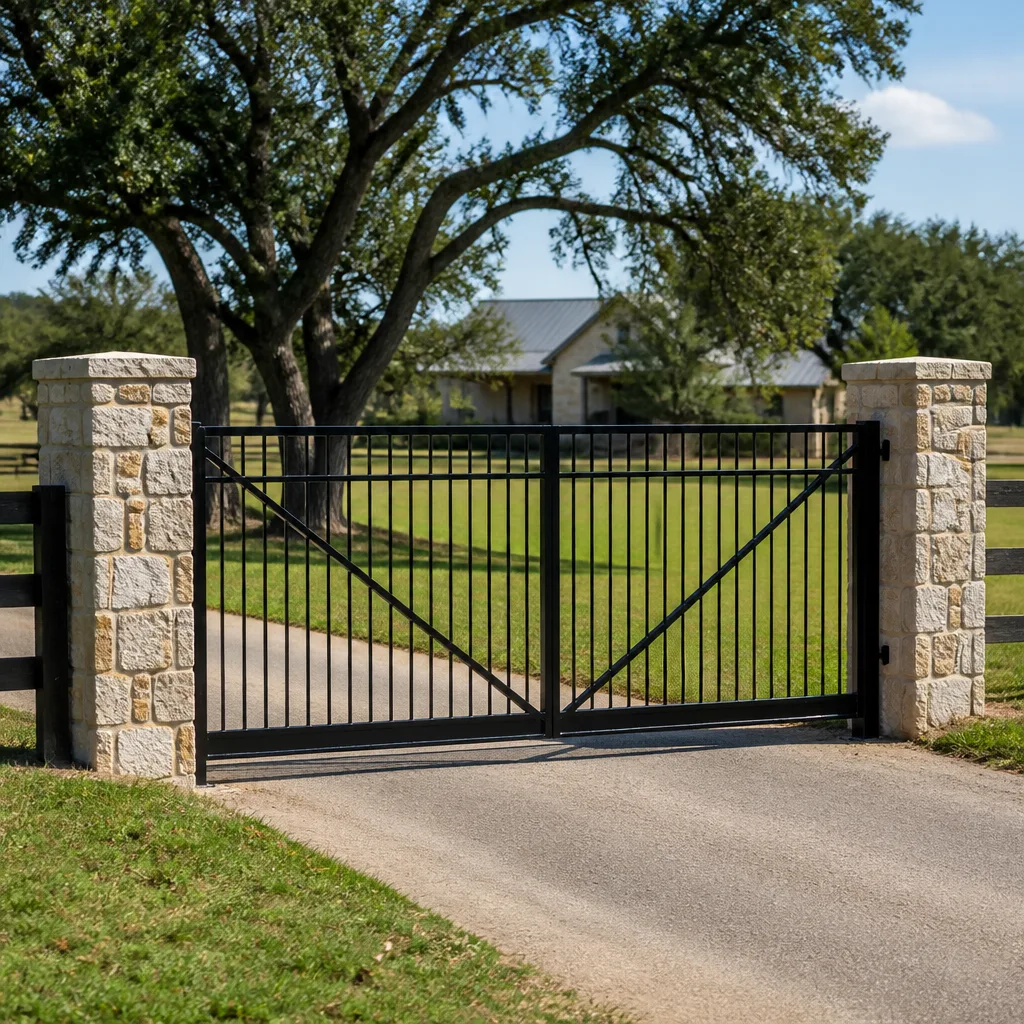 Farm & ranch
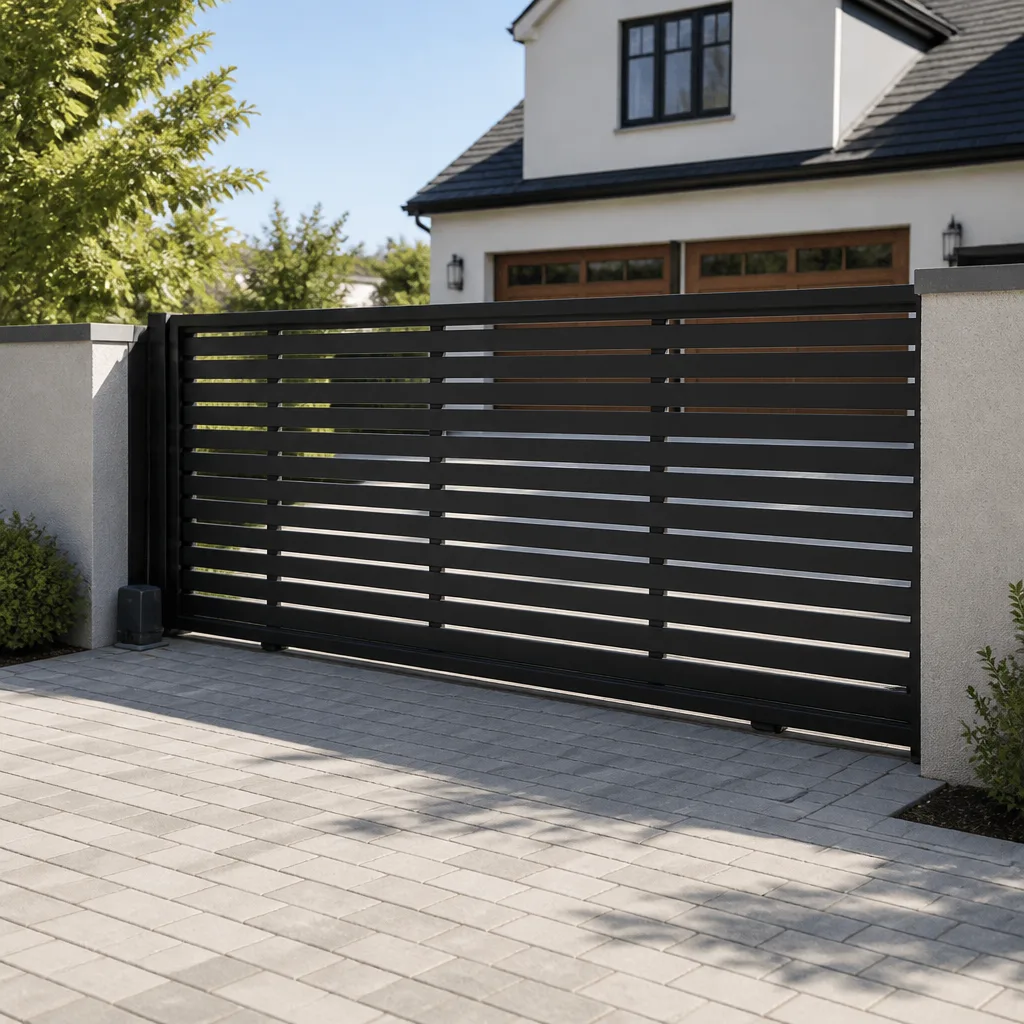 Sliding driveway gates
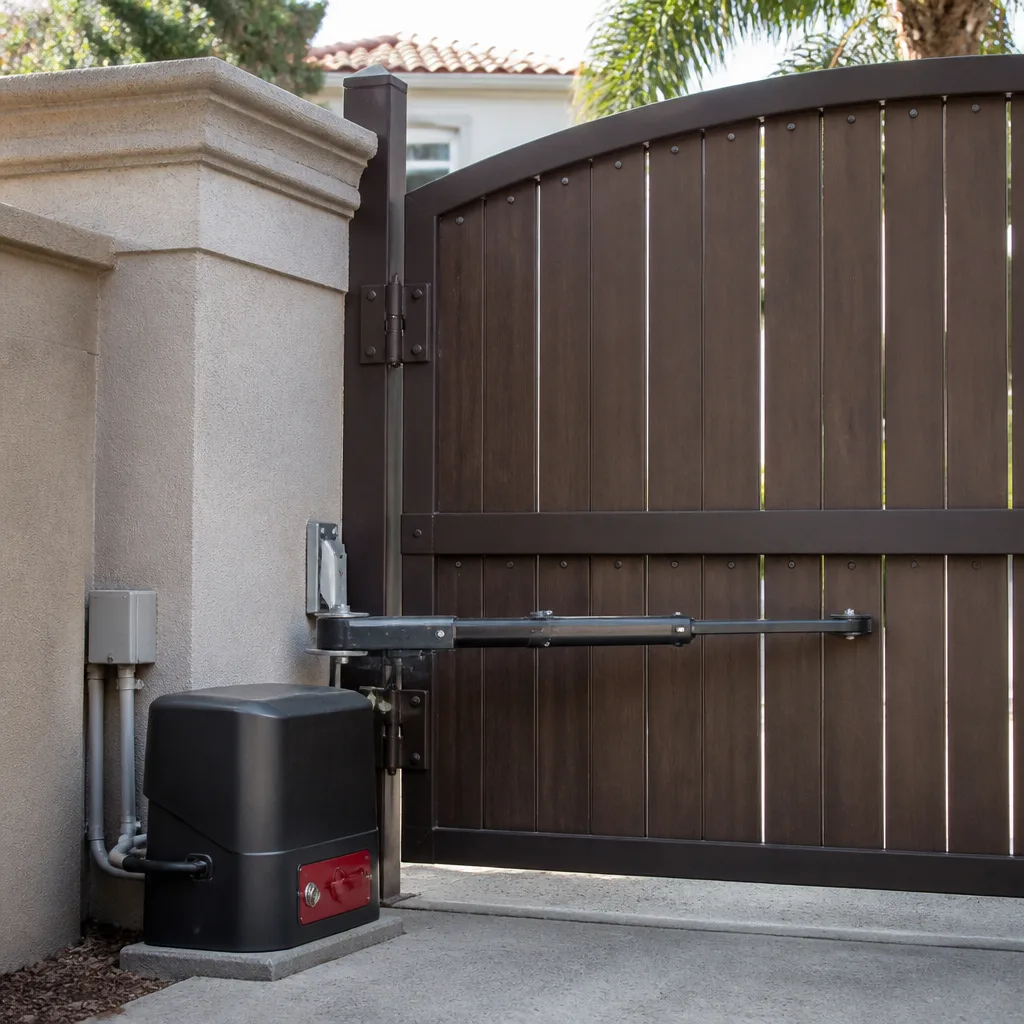 LiftMaster operators
Free on-site gate assessment - hinges, posts, and your LiftMaster or Nice gate operator checked before anything is quoted
The assessment is free and the quote is the invoice.
Get your free estimateSeasonal Gate Repair Care for Austin: Year-Round Homeowner’s Guide
Here’s something most Austin homeowners don’t realize until it’s too late: the single most damaging day for your gate isn’t the hottest August afternoon. It’s the first 28°F night after a humid fall, when water trapped in unsealed post bases expands as it freezes and cracks the concrete footings from the inside. You won’t see the damage that night. You’ll discover it in March, when the gate suddenly won’t close. This guide walks you through Austin’s five real gate-stressing events, what each one does to your equipment, and the specific maintenance tasks that prevent about 80% of the emergency calls we see every year.
Styles & brands we work with
Quick Answer
Seasonal gate care in Austin means organizing maintenance around five climate events rather than four calendar seasons: cedar pollen season (December – February), spring flash-flood season (March – May), triple-digit summer (June – September), the October false-fall that dries out wood joints, and the occasional hard freeze (November – January). The highest-impact tasks are sealing post bases before freeze season, clearing photo-eye sensors during pollen months, checking motor ventilation before summer, and documenting gate condition quarterly so warranty claims and insurance filings have the photographic baseline they need.
Table of Contents
- Austin’s Five Gate Seasons – Not the Four You Learned in School
- Post Base Sealing: The Freeze-Season Task That Saves Your Footings
- Cedar and Oak Pollen Season: Why Your Gate Won’t Close in March
- Flash-Flood Season: Drainage Checks for Austin’s Clay Soil
- Triple-Digit Summer: Motor Care for LiftMaster, Mighty Mule, and Other Units Above 95°F
- The October False-Fall: Wood Joint Drying and Hinge Care
- Seasonal Documentation: Building the Photographic Baseline for Warranties and Insurance
- Common Mistakes to Avoid
- When to Call a Professional
- Frequently Asked Questions
- The Bottom Line
Austin’s Five Gate Seasons – Not the Four You Learned in School
If you’ve lived in Austin for more than a year, you know the calendar seasons don’t line up with what actually happens outside. We don’t really get a gentle spring thaw or a crisp autumn. We get cedar pollen that coats everything in a yellow film from December through February, violent downpours in April that dump three inches in an hour, a June-through-September stretch where the pavement radiates heat well after sunset, an October that looks like fall but behaves like late summer with single-digit humidity, and a freeze event that arrives with little warning and leaves burst pipes and cracked concrete in its wake.
Each of these events stresses your gate differently.
- Cedar and oak pollen season (December – February): Pollen and dust coat photo-eye sensors, accumulate in gate tracks, and clog motor ventilation slots. This is the number-one cause of “gate won’t close” calls we see in Austin during late winter and early spring.
- Spring flash-flood season (March – May): Intense rain on clay-heavy soil causes ground movement. Gate posts shift, concrete footings heave, and water pools around post bases. Poor drainage here shortens the life of every component attached to the gate.
- Triple-digit summer (June – September): Gate motors run hot when ambient temperatures pass 95°F. Thermal shutoff circuits trip more often. Plastic components get brittle. Capacitors – the electrical components that give a motor its starting jolt – fail at higher rates in sustained heat.
- October false-fall: The temperature drops, the humidity plummets, and wood gates that swelled during humid months suddenly dry out and shrink. Hinges loosen, joints separate, and gates that operated fine in September start to sag by November.
- Hard freeze (November – January): Water trapped anywhere in the gate system – post bases, hinge barrels, motor housings – freezes and expands. This is when small cracks become structural failures. Most freeze damage isn’t discovered until months later.
When you schedule maintenance around these five events instead of the standard four seasons, you address the actual environmental stresses your gate faces in Austin. The rest of this guide walks through the specific tasks for each.
Post Base Sealing: The Freeze-Season Task That Saves Your Footings
The most expensive gate repair we perform in Austin is not a motor replacement or a new gate leaf. It’s footing repair. When a post base fails, the fix often involves breaking out the old concrete, resetting the post, and repouring – a multi-day job that costs several times what a simple maintenance task would have.
The mechanism is simple. Austin’s clay soil expands when wet and contracts when dry. This constant movement creates micro-gaps between the steel post and the concrete footing. Water finds its way in. When a hard freeze hits, that water freezes and expands by about 9% in volume. The expansion cracks the concrete from the inside. After a few freeze-thaw cycles, the footing is compromised and the post starts to lean.
Prevention starts in October, before the first freeze.
- Inspect the post base annular gap. Look for any visible crack or separation between the post and the concrete footing where it meets the ground. Even a hairline gap admits water.
- Clean the gap. Use a stiff brush to remove dirt, grass clippings, and debris. The sealant won’t bond to a dirty surface.
- Apply a polyurethane sealant rated for exterior concrete-to-metal joints. Products like SikaFlex or Loctite PL S30 work well in Austin’s climate. Silicone-based sealants don’t hold up to foot traffic and UV exposure as well. Avoid the cheapest caulk at the hardware store – this is the one place where the $12 tube beats the $4 tube.
- Tool the sealant into the gap. Press it in with a gloved finger or a caulk tool. You want it to fill the void, not just bridge the surface.
- Check the weep holes on hollow steel posts. If water enters a hollow post through the top cap or bolt holes, it needs a way to drain. Weep holes at the base should be clear. If you don’t have weep holes, drill two 1/4-inch holes at the lowest point of the post, angled slightly downward.
For wood posts – common on older Austin gates in neighborhoods like Hyde Park and Travis Heights – sealing works differently. Apply a penetrating wood sealer to the above-ground portion, but leave the bottom 6 inches unsealed so the wood can breathe. Trapped moisture rots wood posts from the inside faster than anything else.
If you see a post that’s already leaning more than 1/4 inch out of plumb, or a footing with visible cracks wider than a credit card, sealing alone won’t fix it. That post needs to be reset by a professional offering our Gate Repair services before the next freeze cycle makes it worse.
Cedar and Oak Pollen Season: Why Your Gate Won’t Close in March
Every March and April, our phones light up with the same call: “My gate opens fine but it won’t close.” In most cases, the problem isn’t the motor and it isn’t the control board. It’s the photo-eye sensors.
Photo-eye sensors are the small paired devices mounted near the bottom of the gate opening, typically a few inches off the ground on each side. They project an invisible infrared beam between them. If anything interrupts that beam – a child, a pet, a car bumper – the gate stops closing and reverses. It’s a safety feature required by code on any automated gate in Austin.
Here’s the problem: cedar and oak pollen don’t just coat your car and patio furniture. They settle on the sensor lenses. A fine yellow film builds up over a few weeks. Eventually, the beam can’t pass through, and the gate interprets it as a permanent obstruction. It refuses to close.
During peak pollen months – typically mid-December through early March in Austin – we recommend a monthly cleaning protocol:
- Locate the photo-eye sensors. They’re small plastic devices, usually black or gray, mounted on brackets near the bottom of the gate posts or on separate stanchions.
- Wipe both lenses with a dry microfiber cloth. Don’t use glass cleaner or water. The lenses are often coated, and chemical residues attract more dust. A dry wipe removes pollen film in seconds.
- Check the alignment. Most photo-eyes have small indicator lights. When the beam is aligned and unobstructed, both lights glow steady. If one is blinking or dark, the beam is interrupted or misaligned.
- Clear debris from the sensor path. Weeds, leaves, and windblown mulch can creep into the beam path over time. Trim anything that has grown within 6 inches of the beam line.
- Test the gate. Close it once. If it reverses for no reason, clean the lenses again and check for anything in the path. If it still reverses, the sensors may need professional adjustment or replacement.
This simple protocol prevents the majority of “gate won’t close” calls we field in Austin during pollen season. It takes five minutes. It costs nothing. And it’s the single highest-value maintenance task most homeowners skip.
If your gate is operated by a LiftMaster or Mighty Mule system, the photo-eye behavior may vary slightly. LiftMaster units often flash an error code on the control board when the sensors are blocked. Mighty Mule systems typically chirp or beep. Knowing your system’s signal makes diagnosis faster. If you’re not sure what your gate motor is trying to tell you, the team at Gate Motor Repair in Austin can walk you through it over the phone.
Flash-Flood Season: Drainage Checks for Austin’s Clay Soil
Austin sits on a patchwork of Blackland Prairie clay and limestone shelf. The clay is expansive – it swells dramatically when wet and cracks when dry. This movement is a constant background stress on every gate installation, but it accelerates during spring flash-flood season when the soil goes from bone dry to saturated in a matter of hours.
The most common problem we see after heavy spring rain is not the gate itself. It’s the ground around the gate.
Water pooling around post bases softens the soil, which allows posts to shift. Even a shift of 1/2 inch changes the gate’s geometry. The latch no longer lines up. The gate drags on the ground. The motor strains against misaligned tracks. Left uncorrected, each of these problems compounds into more serious failures.
Here’s what to check after every major rain event during March through May:
- Stand water within 3 feet of any gate post. Water should drain away from the posts within a few hours. Puddles that persist for more than a day indicate a grading problem.
- Erosion channels. Austin’s flash floods move a lot of water fast. Look for small trenches carved in the soil around the gate track or post bases. These channels direct future water right where you don’t want it.
- Silt and debris accumulation. Flood water deposits silt and organic material in the gate track. If the gate makes a grinding noise or hesitates when opening, check the track for debris before calling a technician.
- Post plumb. Sight down the post from two sides. A leaning post is a structural problem that will not correct itself.
Fixing drainage doesn’t require major landscaping work in most cases. Add soil to create a gentle slope away from the posts. Install a simple French drain if the area naturally collects water. For gates on a slope – common in West Austin and the Hill Country – make sure runoff from above is diverted around the gate area, not through it.
If you have an electric gate with an underground conduit running from the house to the motor, check the conduit entry point for standing water after heavy rain. Water in the conduit can wick into the motor housing, and that’s a failure waiting to happen. Seal any gaps at the conduit entry with duct seal or conduit putty – the gray clay-like compound available at any hardware store.
Triple-Digit Summer: Motor Care for LiftMaster, Mighty Mule, and Other Units Above 95°F
Every gate motor generates heat. The motor’s stator windings, the gearbox, the capacitor – they all produce thermal load whenever the gate cycles. On a 98°F July afternoon in Austin, the ambient temperature alone puts significant stress on these components before the motor even runs.
The most common heat-related failure we see is thermal shutoff: the motor’s internal protection circuit trips when temperatures exceed a safe threshold. The gate opens fine. Partway through closing, it stops. Wait ten minutes, it works again. This is not a broken motor. It’s a motor protecting itself.
But repeated thermal trips shorten component life. A motor that thermal-trips 20 times a summer is accumulating internal stress that leads to premature capacitor failure or winding damage. Here’s what to check before and during the worst heat:
- Ventilation openings. Every motor housing has vents or louvers for airflow. Check that they’re clear of dust, spider webs, and pollen. Use a vacuum with a narrow attachment or a can of compressed air – never a leaf blower, which can force debris deeper into the housing.
- Direct sun exposure. If your motor housing sits in unshaded afternoon sun, consider a simple shade panel. Even a few degrees of temperature reduction inside the housing extends component life. Don’t enclose the housing – that traps heat. Just block the direct rays.
- Duty cycle limits. Most residential gate motors are rated for 10 to 15 cycles per hour under normal conditions. In extreme heat, that duty cycle shrinks. If you’re opening and closing the gate frequently – a pool party, a busy morning with contractors – give the motor a rest between cycles.
- Capacitor age. Capacitors have a typical service life of 5 to 7 years in Austin’s heat. If your motor hums but doesn’t start, or starts slowly on hot days, the capacitor is the likely culprit. It’s a $20 to $80 part, but labor to diagnose and replace it correctly is the real cost.
- Thermal shutoff resets. If your gate stops mid-cycle on a hot day, check whether the motor is hot to the touch. If it is, let it cool for 15 to 20 minutes before resetting the breaker or pressing the reset button. Repeatedly resetting without allowing cool-down can damage the windings.
LiftMaster and Mighty Mule units handle heat differently. LiftMaster’s residential swing and slide gate motors include thermal protection circuits that auto-reset when temperatures normalize. Mighty Mule’s battery-powered systems are less affected by ambient heat but their control boards can overheat if exposed to direct sun. If you own either brand and notice erratic behavior that appears only on the hottest days, the problem is usually thermal – and usually survivable if addressed before the component hard-fails.
When a motor genuinely fails in Austin, it tends to fail in July and August. We schedule more motor replacements in those two months than in the other ten combined. If your motor is more than seven years old and you’re noticing heat-related symptoms, a proactive replacement in the spring will save you from a dead gate on a 102° day when you least want to wait for a service call. For a deeper look at your options, see DIY vs Professional Gate Repair: The Austin Homeowner’s Decision Guide.
For a deeper look at motor-specific issues, our guide to Electric Gate Repair in Austin covers the full range of symptoms and solutions.
The October False-Fall: Wood Joint Drying and Hinge Care
October in Austin is deceptive. The temperature drops into the 70s, humidity falls to near-desert levels, and the air feels like autumn. But the soil is still parched from summer, and wood responds to the sudden dryness by shrinking – fast.
Wood gates that swelled during humid months now contract. Joints that were tight in August open up. Hinge screws lose their grip in dried-out wood. Gates that cleared the ground by half an inch in September start to drag in November.
This is the best time of year to address wood gate maintenance, because the wood is at its most stable. The tasks are straightforward:
- Tighten every hinge screw and bolt. Check all four hinge points (or more, on a heavy gate). If a screw spins without tightening, the hole is stripped. The fix is to remove the screw, tap a wooden dowel or golf tee coated in wood glue into the hole, let it set, and re-attach. This is a permanent repair, not a temporary one.
- Check gate alignment. A gate that sags or drags in October will only get worse in the wet spring. Adjust hinge tension or reposition the gate on the hinges while conditions are dry.
- Seal exposed wood surfaces. Apply a penetrating exterior-grade sealer to all six sides of the gate leaf, including the top and bottom edges. End grain absorbs more moisture than any other surface and is the point where rot starts.
- Inspect for insect activity. Carpenter ants and termites become more visible in wood as it dries. Look for small holes, fine sawdust, or mud tubes. Treat early.
- Lubricate metal-on-metal contact points. Hinge barrels, latch mechanisms, and the gate track. Use a dry lubricant like graphite or a light machine oil – not WD-40, which washes out too quickly in Austin’s occasional October rain.
Steel and aluminum gates don’t shrink, but they do expand and contract with temperature swings. The October cool-down can cause slightly different movement patterns than the gate hardware is adjusted for. If your metal gate starts to stick or rub when the temperature drops, the track or hinge alignment probably needs a minor adjustment. Don’t force it.
Seasonal Documentation: Building the Photographic Baseline for Warranties and Insurance
Most homeowners don’t think about documenting their gate until something goes wrong. Then they’re trying to remember what the gate looked like six months ago, which is nearly impossible, or filing an insurance claim with no photographic evidence of the before condition.
The solution is a simple quarterly documentation routine. It takes less than five minutes and creates a permanent record that protects you in warranty disputes, insurance claims, and even when you eventually sell the home.
Here’s the protocol we recommend to every Austin homeowner with an automated gate:
- Schedule it. Put a recurring reminder in your phone for the first week of January, April, July, and October. Tying it to the five climate events we described earlier means you’ll catch issues at the right moment.
- Photograph six views. Full front of the gate, full back of the gate, close-up of each hinge or pivot point, close-up of the motor housing, close-up of the post bases where they meet the ground, and the photo-eye sensors.
- Video-record one full cycle. Open the gate fully and close it fully while recording. Listen for unusual sounds. Watch for hesitation or binding. Note the date in the video file name.
- Measure the gate-to-ground clearance. Use a tape measure at three points: hinge end, middle, and latch end. Record the numbers. This is the single most useful metric for tracking gate sag over time.
- Log everything in a note app or spreadsheet. Date, observations, measurements, photos, video. Five minutes per quarter, four times per year.
This documentation serves three purposes. First, if a component fails within its warranty period, you can show exactly when the problem appeared and what the gate looked like before it. Second, if storm damage or vandalism requires an insurance claim, your adjuster has a clear before-and-after comparison. Third, if you notice gradual changes – a gate that’s dropping 1/8 inch per quarter – you can address the cause early instead of discovering a structural problem after it has become expensive.
When you do need professional service, that documentation also helps the technician. We can diagnose problems faster when we can see what the gate looked like before the failure. A thirty-second video of the gate operating normally from last October is genuinely useful diagnostic information.
Common Mistakes to Avoid
- Waiting for a visual problem to do maintenance. By the time a gate sags visibly or makes noise, the underlying issue has been developing for months. Seasonal maintenance is about catching problems before they become visible.
- Using the wrong lubricant. WD-40 is a solvent, not a long-term lubricant. It strips existing lubrication and evaporates. Use a dry graphite lubricant or a light machine oil appropriate for the component.
- Ignoring photo-eye cleanliness in winter. Austin’s cedar season is the worst photo-eye period of the year. A five-minute monthly wipe prevents the most common no-close complaint we see.
- Sealing post bases with the wrong product. Household caulk fails quickly in Austin’s swelling clay soil. Use a polyurethane sealant rated for exterior concrete-to-metal joints.
- Forcing a misaligned gate. If the gate sticks, binds, or drags, forcing it to open or close transfers stress to the motor, the hinges, and the control board. A misaligned gate is a warning sign, not a test of strength.
- Skipping the breaker check. Some heat-related motor failures look like a dead motor but are actually a tripped GFCI breaker on the outdoor outlet. Check the breaker before assuming the gate motor has failed.
- Assuming all gate motors are equally heat-tolerant. Residential units are not built for Austin’s sustained 100-degree summers at full duty cycle. Running the gate more than 10 to 12 cycles per hour on hot days accelerates wear on any brand.
When to Call a Professional
Some maintenance tasks are safely DIY: wiping photo-eye lenses, tightening hinge screws, clearing debris from the track, sealing a post base. Others require a professional. If your gate post is leaning more than 1/4 inch, the footing is compromised and needs to be reset. If your motor thermal-trips more than twice in a single day, the problem is likely more than just the heat. If your gate reverses for no reason despite clean photo-eyes and a clear path, the safety circuit or control board may be failing. And if you hear grinding, grinding is never normal.
For any of these situations in Austin, Gate Repair in Austin is available. Warden Gate Repair Austin offers free estimates in Austin – call (361) 268-6253. Every visit includes a written price before any work starts, so you’ll know the number before you decide.
Frequently Asked Questions
We recommend a professional inspection once per year, ideally in October before freeze season, with homeowner maintenance tasks performed quarterly. Austin’s climate is harder on gates than most parts of the country, and yearly inspections catch problems that quarterly homeowner checks miss. If your gate is used heavily – more than 20 cycles per day – consider twice-yearly professional service.
Thermal shutoff on gate motors is the most common summer issue. When ambient temperatures exceed 95°F, motors with restricted ventilation or aging capacitors trip their internal protection circuits more frequently. The fix is usually improved ventilation, reduced duty cycle, or capacitor replacement – not a new motor. Call (361) 268-6253 for a diagnosis before assuming the worst.
The most common cause is cedar and oak pollen coating the photo-eye sensor lenses. The sensors interpret the blocked beam as an obstruction and refuse to close the gate for safety reasons. Clean both lenses with a dry microfiber cloth, check alignment, and test again. If it still won’t close, the sensors or wiring may need professional attention.
Sealing post bases is a DIY-friendly task if the posts are plumb and the footings are intact. Clean the gap between post and concrete, apply an exterior-grade polyurethane sealant, and tool it into the joint. If the post is leaning or the footing is cracked, sealing won’t help – that requires professional post resetting.
A thorough seasonal service in Austin includes checking motor function and thermal protection, testing photo-eye alignment, lubricating all moving parts, inspecting and tightening hinges, checking post stability, testing the safety reverse system, and documenting the gate’s condition. For the full picture, read The Complete Guide to Gate Repair in Austin. Most services take 45 to 90 minutes. Warden Gate Repair Austin provides a written report with recommendations after every visit.
Common gate repairs in Austin run between $150 and $450 depending on the component. Photo-eye cleaning or minor hinge adjustments sit at the low end. Capacitor replacement, track realignment, and control board repairs run higher. Full motor replacement typically ranges from $450 to $900 installed for residential units. Every Warden Gate Repair job includes a written price before work begins – call (361) 268-6253 for an exact quote on your specific system.
The Bottom Line
Austin’s gates fail in patterns, not at random. The freeze that cracks a footing was preceded by months of water intrusion. The motor that dies in August was showing thermal stress in June. The gate that won’t close in April has been accumulating pollen on its photo-eyes since December. When you align maintenance with Austin’s actual climate events – pollen season, flood season, summer heat, October dryness, and freeze risk – you address the root causes before they become symptoms. Five minutes of seasonal care, four times a year, prevents most of the expensive emergency repairs we see. Explore more guides & resources to keep your gate in top shape. And when something does go wrong, the documentation you’ve built makes the repair faster, the warranty claim stronger, and the insurance filing simpler.
Warden Gate Repair Austin is the Warden Gate Repair Austin home for gate service in the area – we specialize exclusively in gate repair, electric gate repair, and gate motor repair, and we’ve been serving Austin since 2008. If your gate needs professional attention at any point in the year, call (361) 268-6253 for a free estimate. A real person answers, every time, day or night.
Written by Cole Rafferty, Owner at Warden Gate Repair Austin, serving Austin since 2008.
See the difference
 Before
 After
After Before
 After
After Before
 After
After