
Last updated October 16, 2026
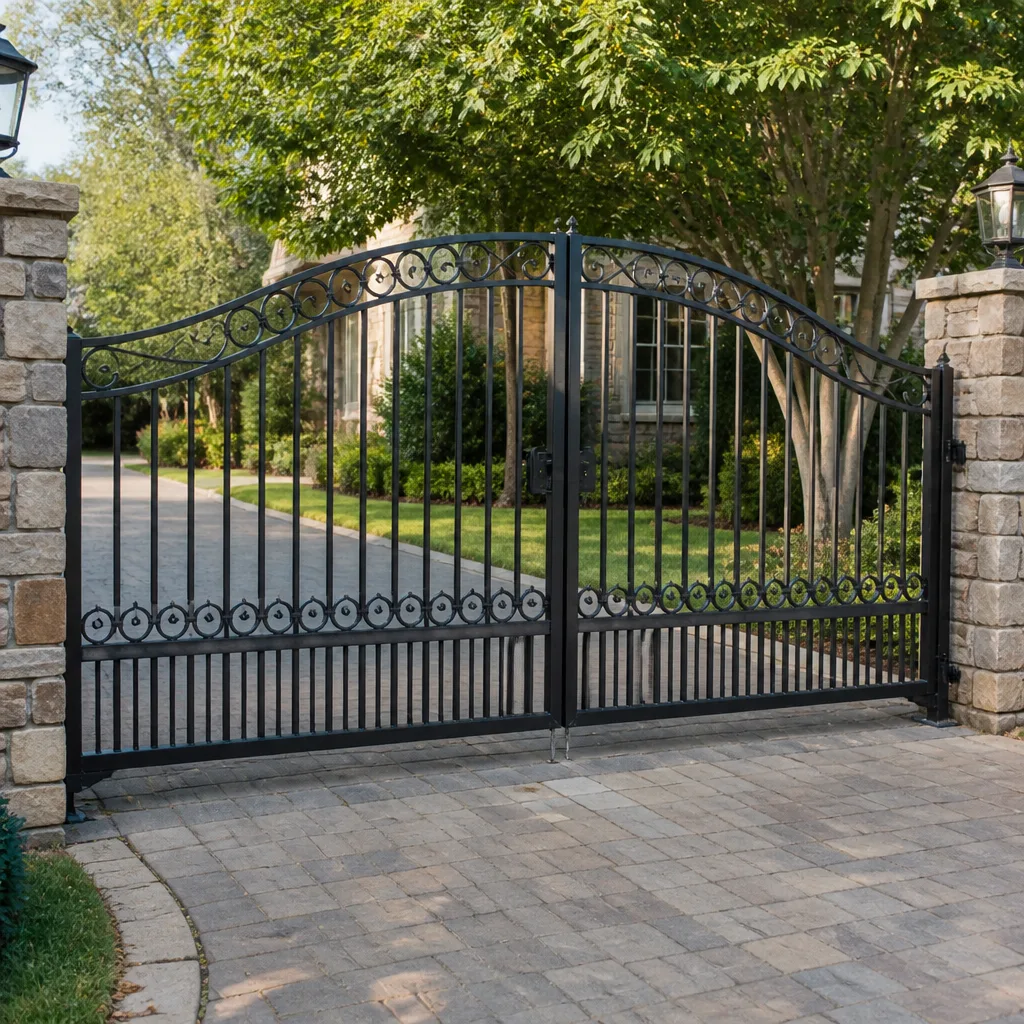 Wrought iron
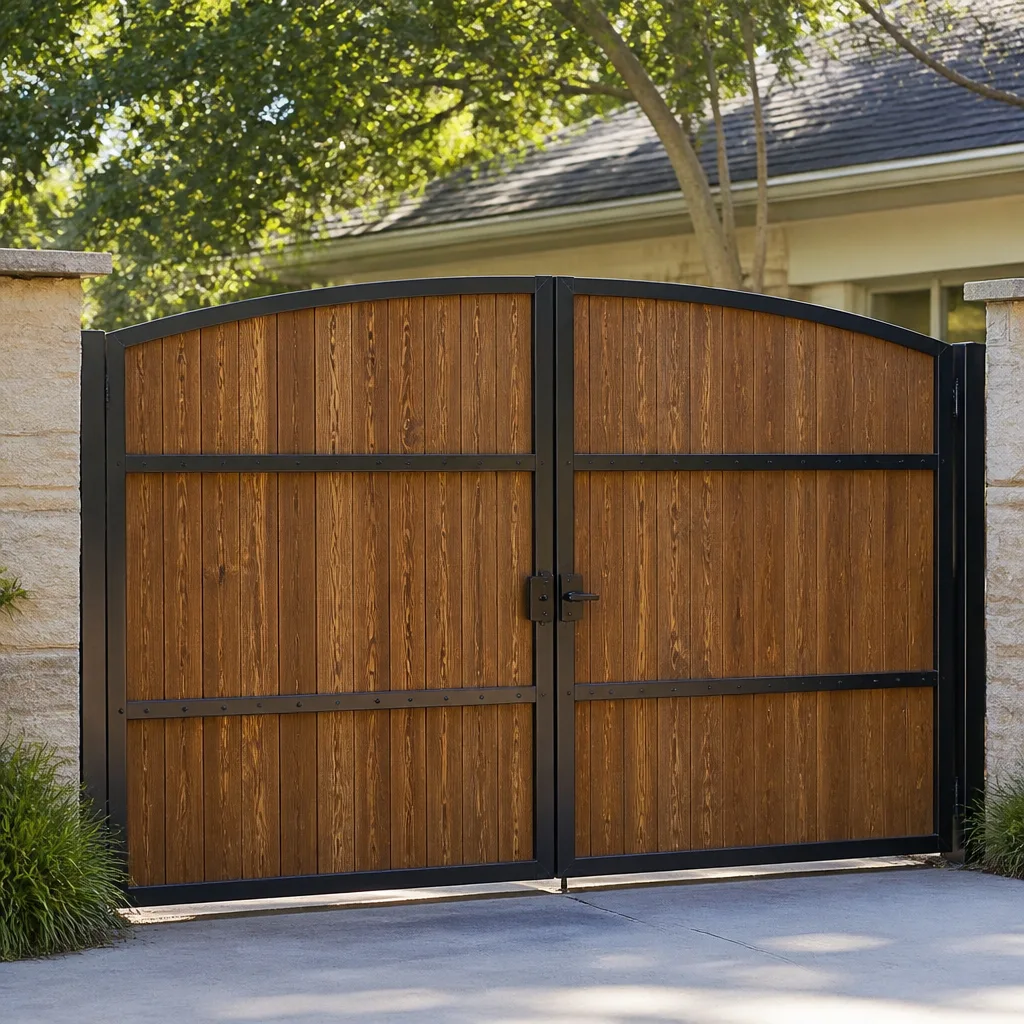 Wood & steel frame
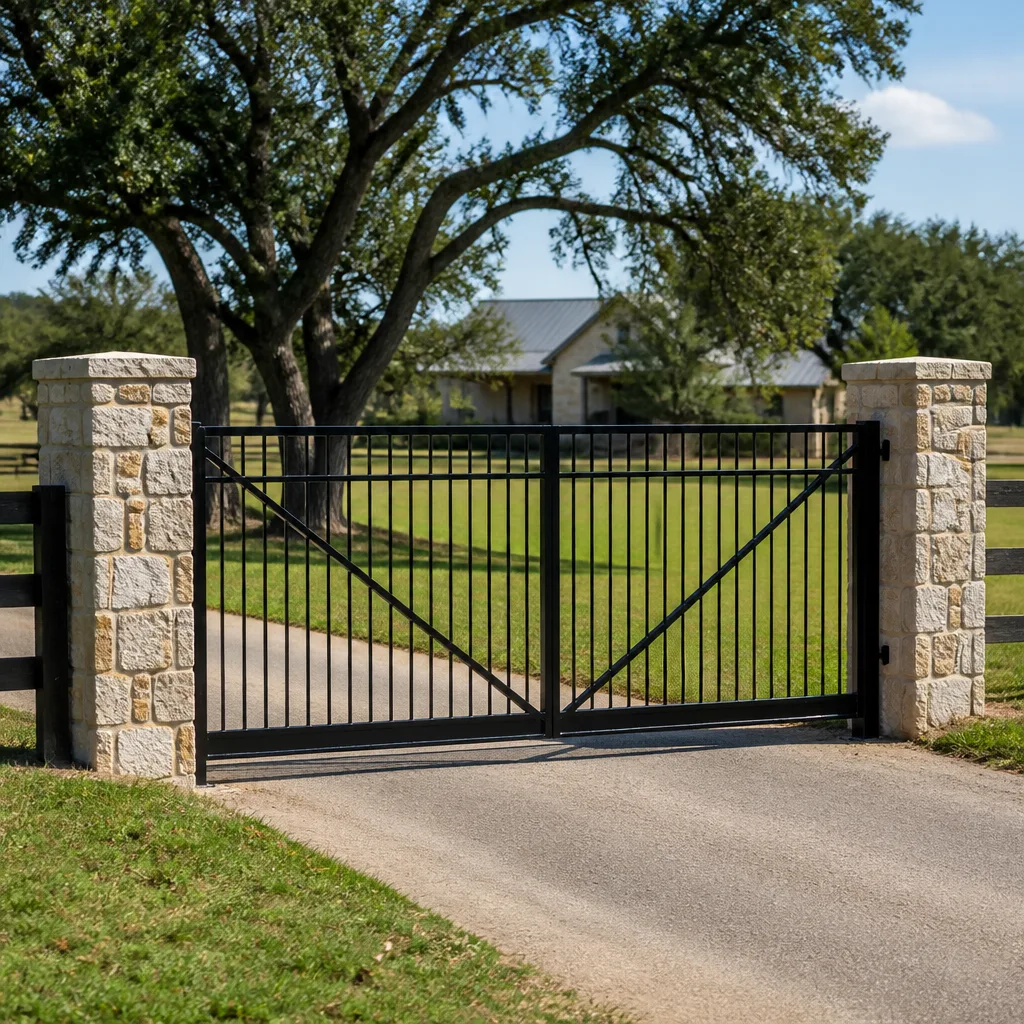 Farm & ranch
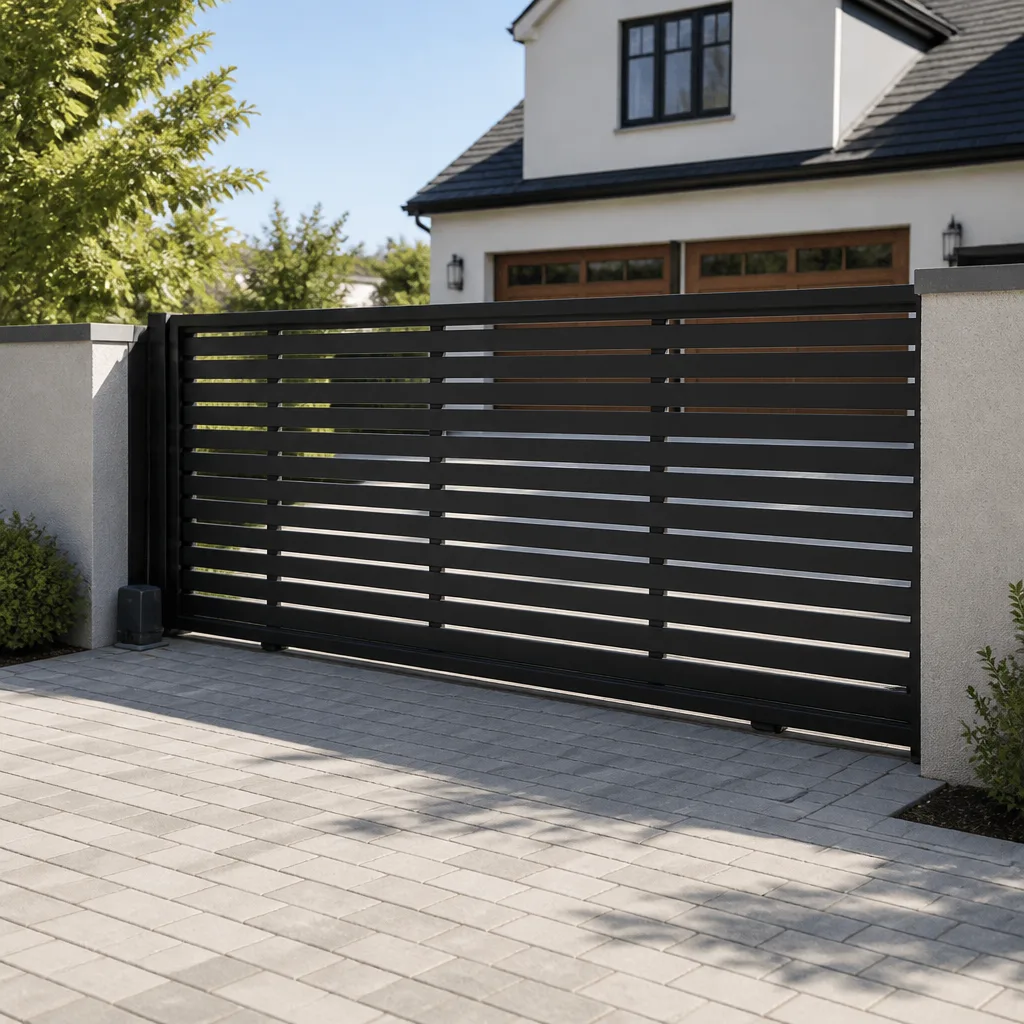 Sliding driveway gates
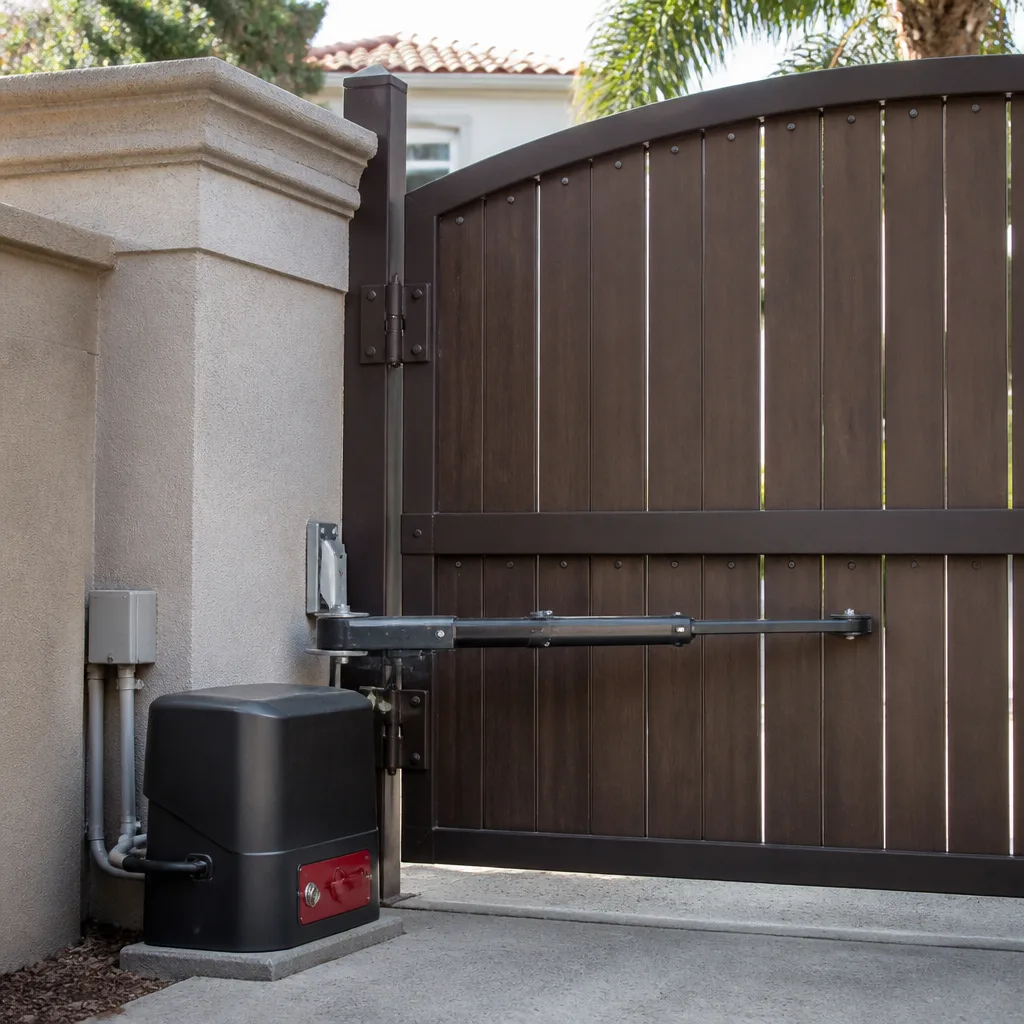 LiftMaster operators
Free on-site gate assessment - hinges, posts, and your LiftMaster or Nice gate operator checked before anything is quoted
The assessment is free and the quote is the invoice.
Get your free estimateGate Repair Warning Signs: A Austin Homeowner’s Reference Guide
A gate that hesitates for two seconds before moving isn’t being “slow to warm up.” It’s telling you the motor is drawing excess current to overcome a mechanical resistance that’s getting worse. Ignoring that two-second lag is how a $140 roller replacement becomes a $600 motor replacement. Austin’s clay soil, summer heat, and stop-and-go usage patterns create a specific set of failure signals that don’t appear in gate manuals written for other climates. This reference guide walks through the warning signs that homeowners in Austin routinely miss, the quiet ones, and what each one costs if you catch it early versus what it costs if you wait.
Quick Answer
The most common gate repair warning signs in Austin are a gate that hesitates before moving, a grinding or clicking sound at specific positions, a gate that reverses mid-cycle without obstruction, and a motor that runs but the gate barely moves. In our experience, most of these start as minor mechanical issues that cost between $120 and $350 to fix. Left alone for 60 to 90 days, they become motor or board failures that run $600 to $1,400.
Styles & brands we work with
Table of Contents
- How to Tell a Mechanical Problem From an Electronic One
- The Sound Dictionary: What Specific Noises Mean
- Visual Inspection Points You Walk Past Every Day
- How Austin Heat Changes What “Normal” Sounds Like
- The 30-Second Monthly Check That Catches 70% of Problems
- The Cost Timeline: What Waiting Actually Costs
- Common Mistakes to Avoid
- When to Call a Professional
- Frequently Asked Questions
How to Tell a Mechanical Problem From an Electronic One
Most gate failures fall into one of two buckets, and the repair path for each is completely different. A mechanical problem means something physical is worn, bent, misaligned, or obstructed: a roller, a hinge, a track, a wheel, a post that has shifted. An electronic problem means the motor, control board, sensor, or wiring is sending or receiving the wrong signal. The gate moves when it shouldn’t, or refuses to move when it should.
Here’s how to tell them apart quickly:
- Mechanical problems show up as resistance. The gate slows down, shudders, scrapes, or binds at a specific point in its travel. The motor sounds like it’s working harder than it used to. These problems build gradually over weeks, and they’re almost always cheaper to fix than electronic failures.
- Electronic problems show up as unpredictability. The gate opens but won’t close. It closes but reverses for no reason. The remote works sometimes and not others. The keypad accepts the code but nothing happens. These problems can appear overnight, and they rarely fix themselves.
- The overlap zone: A mechanical problem left alone long enough will burn out a motor or trip a board. That’s why the two-second hesitation matters. The hesitation itself is mechanical, but the eventual $600 motor replacement it causes is electronic. You fix the first problem for a fraction of the second one.
In Austin we see a specific pattern: during the summer months, mechanical failures accelerate because heat softens lubricants and expands metal parts. A gate that was slightly binding in March becomes fully seized by August. If you hear a new sound or feel a new hesitation, note when it started. That timing often tells us whether we’re looking at a wear problem or a heat-exacerbated alignment issue. Both are fixable, but the approach differs. For a full breakdown of what Gate Repair in Austin covers, we walk through the major component groups on that page.
The Sound Dictionary: What Specific Noises Mean
Gates make noise. Not all noise is bad. But certain sounds are specific to certain failing components, and once you know the dictionary, you can diagnose a lot from your kitchen window. Here’s what we listen for when a homeowner calls us and says, “It’s making a sound.”
- Grinding during reversal: When the gate changes direction and you hear a metallic grind, the rack and pinion gear are misaligned. The gear teeth aren’t meshing cleanly. This is a common post-Austin-storm issue, because clay soil shifts and posts lean a half inch. Fixing the alignment costs around $180 to $300. Ignoring it wears the gear teeth flat, which means a new gear set at $450 to $700.
- Clicking at full-open or full-close position: A rhythmic click-click-click when the gate reaches its limit usually means the limit switch is failing or the travel settings have drifted. The motor keeps trying to drive past the physical stop. On LiftMaster and FAAC openers, this is often a $120 to $200 limit-switch replacement. Wait two months and the motor burns itself out against the post.
- A low hum with no movement: The motor is receiving power and trying to run, but the gate isn’t moving. This is either a failed capacitor (electronic, $80 to $150) or a broken drive belt or chain (mechanical, $150 to $250). In Austin we see a lot of capacitor failures in July and August, because sustained heat degrades the capacitor dielectric.
- Squealing while moving: The bearings in the rollers or hinge pins are dry or worn. A squeal that stays constant through the whole travel is generally a roller bearing. A squeal that peaks mid-travel is often a hinge pin under load. Lubrication may quiet it temporarily, but a squeal that returns within two weeks means the bearing surface is done.
- Clunking at startup: A single clunk or thud when the gate first moves suggests play in the drive mechanism: a worn sprocket, a loose chain, or a damaged drive coupler. It’s the mechanical equivalent of a car transmission hesitating before it engages.
These sounds map to specific parts. When you call us, describing the sound you’re hearing helps us bring the right parts on the first truck. For more on what Gate Motor Repair in Austin involves across brands like Mighty Mule and LiftMaster, that page covers the component-level work.
Visual Inspection Points You Walk Past Every Day
Most homeowners look at their gate every day without seeing it. Here are the five visual checkpoints worth a real glance, because each one catches a problem that is still cheap to fix.
1. Post lean angle
A gate post that leans just a few degrees changes the entire geometry of the gate’s travel. The latch no longer lines up. The gate drags on the drive side. The motor works against gravity. Austin’s expansive clay soil swells when wet and contracts when dry, and that cycle pushes posts out of true over a period of three to five years. Stand at the property line and sight down the post against a known vertical, like your fence line or a utility pole. Any visible lean is worth measuring. A post that leans more than 1.5 degrees needs resetting before the hinge plates bend or the gate frame twists. Post resetting runs $400 to $900 depending on concrete work, but a gate panel twisted from sagging off a leaning post is a $1,200 to $2,500 replacement.
2. Hinge gap measurement
Look at the gap between the gate frame and the post at the hinge side. On a new gate, that gap is uniform top to bottom. On a wearing gate, the gap opens wider at the top hinge or the bottom hinge, which means one hinge is carrying more load than its mate. Over time that hinge deforms, and the gate drops. If you can fit a fingertip in the gap at the top hinge but not the bottom, call for a hinge adjustment before the sag binds the latch.
3. Concrete collar cracking
Most gate posts in Austin are set in concrete collars at the base. Walk around the post and look at where the concrete meets the soil. A hairline crack running radially away from the post means the post is shifting, even if you can’t see the lean yet. Small cracks are informational. Wide cracks, or cracks with displaced soil on one side, mean the post has moved. In Austin’s freeze-thaw cycles and heavy rain periods, water enters the crack, expands, and accelerates the failure. A $40 tube of concrete sealant applied at the first crack can buy you two extra years. An ignored crack becomes a leaning post becomes a gate replacement.
4. Track wear marks (sliding gates)
On a sliding gate, look at the V-track on the ground and the wheels that ride in it. A polished, bright strip down the center of the track is normal. A groove that looks chewed, or a track that’s shiny on one side only, means the gate is tracking crooked. Also check for debris: Austin’s oak leaves and gravel work into the track and act as an abrasive. Clean the track once a month during leaf-drop season. It takes sixty seconds and saves the wheel bearings from grinding themselves flat.
5. Weather seal gaps
The rubber or brush weather strip along the bottom or leading edge of the gate does more than seal the gap. It also protects the gate frame from water intrusion. Austin’s thunderstorms come fast, and a gate with a missing bottom seal lets water splash up into the frame channels. Over a couple of seasons, that trapped moisture rusts the frame from the inside. Look for missing, torn, or curled weather seals and replace them proactively. They’re under $30 per section.
How Austin Heat Changes What “Normal” Sounds Like
Every gate has a baseline: what it sounds like on a Tuesday in February. But Austin’s climate means that baseline shifts with the season, and knowing what’s heat-related versus what’s failing can save you a service call, or make you place one sooner. For seasonal gate repair care in Austin, tracking these patterns is essential.
Summer heat (June through September): Sustained 95-degree-plus days cause three things. First, the hydraulic fluid or grease in the operating system thins and moves faster, which actually makes some gates run quieter in July than they do in December. That’s not a repair need. Second, the metal gate panel itself expands. A gate that clears its latch post by a quarter inch in January may just kiss the post in July. That’s expansion, not misalignment, and it resolves in the evening when the panel cools. Third, the motor’s thermal protection is more likely to trip. If your gate stops working at 4 p.m. on a 102-degree day and works again at 9 p.m., the motor is overheating. That’s a warning sign worth logging, because thermal trips accelerate motor wear. In some cases, the motor has been overheating for weeks but only trips when the ambient temperature pushes it over the threshold.
Cold fronts and winter: When the temperature swings 40 degrees in a day, as Austin winters often do, the gate frame contracts unevenly. The latch that caught fine yesterday needs a shove today. If a gate binds on cold mornings but frees up by noon, the post alignment is marginal, and the cold is just exposing it. That’s the time to address alignment, before the spring growth season shifts the soil again.
Here’s the practical line: tune out seasonal noise, tune in to changes that don’t reverse with the temperature. A gate that squeaks only when it’s hot is a lubrication issue. A gate that grinds every morning regardless of weather is a mechanical failure in progress. That distinction determines whether you spend $120 or $600.
The 30-Second Monthly Check That Catches 70% of Problems
We’ve refined this check over seventeen years of service in Austin. It takes thirty seconds, requires no tools, and catches the majority of developing failures before they become emergency calls. Run through it once a month, ideally on the first Saturday, so it becomes a habit.
- Listen to one full cycle (10 seconds). Open the gate, then close it. Note any sound that wasn’t there last month: a new squeal, a grind, a click, a hum. If nothing is new, move on. If something is new, note where in the cycle it happens.
- Watch the travel speed (5 seconds). Does the gate move at a constant speed throughout its travel, or does it slow down mid-way? A mid-travel slowdown means resistance. A constant but slower overall speed can be a voltage issue. Both are worth a call.
- Check the safety reversal (10 seconds). While the gate is closing, hold a hand near the leading edge (stand to the side, never in the path of the gate). The gate should reverse before it touches you. On a swing gate, the same test applies. If the gate doesn’t reverse, that’s a safety issue, not a maintenance issue, and it moves to the top of your priority list. Austin has specific safety requirements for gate operators under local building codes, and a non-reversing gate is a liability exposure.
- Sight the posts (5 seconds). Look at each post from the side. Any new lean, any new crack at the base, any new gap at the hinge. If the post looks different from last month, it has moved.
That’s it. Four observations. The key is consistency: it’s the change month to month that signals trouble, not the absolute condition. Before you run this check, make sure you’re familiar with how your specific operator should behave. If you have a BFT, FAAC, or Ghost Controls system installed by a previous owner, a quick review of the Electric Gate Repair in Austin page will orient you to the component names so you can describe what you’re seeing accurately.
The Cost Timeline: What Waiting Actually Costs
Austin homeowners tend to wait on gate issues because a slow gate feels like a future problem, not a today problem. Here’s what the waiting actually costs, based on the repair sequences we see most often in this market:
| Symptom | If fixed now | If ignored for 60-90 days |
|---|---|---|
| Gate hesitates two seconds before moving | Roller or bearing replacement: $120-$250 | Motor replacement from excess current draw: $500-$900 |
| Grinding during reversal | Rack and pinion alignment: $180-$300 | Gear set replacement: $450-$700 |
| Clicking at full-open position | Limit switch replacement: $120-$200 | Motor burnout: $600-$1,000 |
| Low hum, no movement | Capacitor: $80-$150, or drive belt: $150-$250 | Control board: $350-$600, plus belt |
| Post leaning 1-2 degrees | Post reset: $400-$900 | Twisted gate panel: $1,200-$2,500 |
| Safety reversal not working | Sensor or loop repair: $150-$350 | Liability exposure; possible full operator replacement |
These are ranges based on typical Austin service calls, not quotes. Every job is different, which is why we give the written price before any work starts, always. You’ll know the number before we turn a wrench. But the pattern holds: a $150 fix in month one becomes a $600 fix in month three. The gate tells you early. You just have to listen.
Common Mistakes to Avoid
- Lubricating a noise instead of diagnosing it. A can of white lithium grease quiets a failing bearing for about a week. The noise comes back because the bearing surface is gone, not dry. By the time the grease stops working, the bearing has scored the shaft it rides on, and you’ve moved from a $120 repair to a $400 repair.
- Adjusting travel limits to compensate for a sagging gate. If your gate won’t close fully and you “fix” it by adjusting the travel limits on the opener, you’re teaching the operator to push against a physical obstruction. That’s how motors burn out. The limit setting is a symptom-reliever, not a fix.
- Ignoring a gate that reverses by itself, especially in summer. A gate that reverses mid-cycle on a hot afternoon is often showing early signs of an overheating motor or a heat-distorted safety sensor. It’s intermittent, so it’s easy to write off. It won’t be intermittent by August.
- Never cleaning the sliding gate track. Austin’s gravel, decomposed granite, and oak leaves pack into the V-track and grind down the wheels. The track is designed to be cleaned. Skipping it for a year is the equivalent of never changing your car’s oil and then being surprised at the engine.
- Using the wrong remote for a multi-gate property. If you have a main driveway gate and a separate pedestrian gate, and you program a single remote to both, you may be triggering both operators every time you press one button. That doubles the duty cycle on both motors and shortens their life. Use separate remotes, or map the buttons explicitly.
- Assuming a warranty covers everything. Most gate opener warranties cover manufacturing defects, not installation flaws, not post shifts, and not damage from Austin soil movement. Read the warranty terms before assuming that “it’s covered.”
- Waiting until the gate fails to research a repair company. When the gate is stuck open at 11 p.m., you don’t have time to vet a technician. That’s the moment homeowners end up with whoever answers first. The better approach is to pick your gate company before you need one. For the Warden Gate Repair Austin home page, you can see our full approach to technician vetting and upfront pricing before an emergency forces the decision.
When to Call a Professional
Some gate issues are safe to monitor. Others need a call today. Call a gate professional immediately if: the safety reversal is not working, the gate has come off its track or support wheels, a hinge or weld shows a visible crack, the gate falls noticeably when you release the manual release handle, or the gate moves under its own weight without the operator being engaged. These are structural and safety failures, not maintenance items. If the gate is simply noisy, slow, or intermittent, document the symptom and call during business hours for a scheduled visit. See How to Hire a Gate Repair Contractor in Austin: A Step-by-Step Guide to know what to ask when you call. Warden Gate Repair Austin offers free estimates throughout the Austin area. Call (361) 268-6253 and describe what you’re seeing. We’ll give you a written price before any work starts, every time.
Frequently Asked Questions
A gate motor replacement in Austin typically runs $500 to $900 for the motor itself, plus $150 to $300 in labor, depending on the brand and the condition of the existing mounting hardware. LiftMaster and Mighty Mule motors sit at the lower end of that range; FAAC and BFT motors tend to run higher. The final number depends on the motor model, the gate’s weight and usage pattern, and whether the existing mounting plate can be reused. Call (361) 268-6253 for a written quote, and you’ll have the price before any work starts.
A grinding noise on reversal usually indicates that the rack and pinion gear are misaligned, meaning the gear teeth are not meshing cleanly when the drive direction changes. This happens most often after Austin’s clay soil shifts a post out of alignment by even half an inch. Realigning the rack and pinion costs around $180 to $300. If you ignore the grinding, the gear teeth wear flat and the gear set needs replacement at $450 to $700.
Yes, gate operators overheat in Austin’s sustained summer heat, especially when the motor is already drawing extra current to overcome a mechanical resistance. If your gate stops working in the late afternoon on a hot day and works again after dark, that’s thermal protection tripping. It’s a warning sign that the motor is running hot, and it accelerates internal wear. Address the underlying resistance or the heat load, and the thermal trips usually stop.
A gate repair addresses the physical gate itself: the hinges, rollers, track, panel, posts, and latch. A gate operator repair addresses the motor and its electronics: the control board, limit switches, remote receivers, safety sensors, and the motor itself. Many symptoms overlap, which is why a proper diagnosis matters. A gate that moves slowly could be a mechanical binding (gate repair) or a failing capacitor (operator repair). Getting the diagnosis wrong means paying for parts that don’t fix the problem.
We recommend a professional inspection once a year for a residential gate in Austin, with the inspection scheduled in early fall, before the leaves drop and before winter’s temperature swings begin. The annual inspection catches post shift, hinge wear, track damage, and operator adjustment drift while they’re still small. Between inspections, the 30-second monthly check above catches the faster-moving failures.
First, check for a physical obstruction: a branch, a rock, a pile of leaves in the track or in the swing path. Second, check whether the safety sensors are clean and aligned, because dirty or misaligned sensors will stop the gate from closing. Third, look at the hinge-side gap to see if the gate has sagged enough to bind on the latch post. If none of those resolve it, the limit settings or the control board may need attention. A gate that won’t close is also a security issue, so don’t let it ride for a weekend. Call (361) 268-6253 for a same-week diagnosis.
The Bottom Line
Austin gates fail on a predictable schedule: mechanical wear in the first three years, post shift from clay soil in years four through seven, and operator failures in years seven and beyond. The warning signs for each stage are legible if you know what to listen for and what to look at. Explore more guides & resources to stay ahead of gate problems. A two-second hesitation, a grind on reversal, a click at the limit, a post with a new hairline crack, all of these are the gate telling you something specific. Caught early, most repairs cost between $120 and $350. Caught late, they cost $600 to $1,400. The gate will tell you. The question is whether you’re listening. We’re glad to help either way, and the written price always comes before the work.
Written by Cole Rafferty, Owner at Warden Gate Repair Austin, serving Austin since 2008.
See the difference
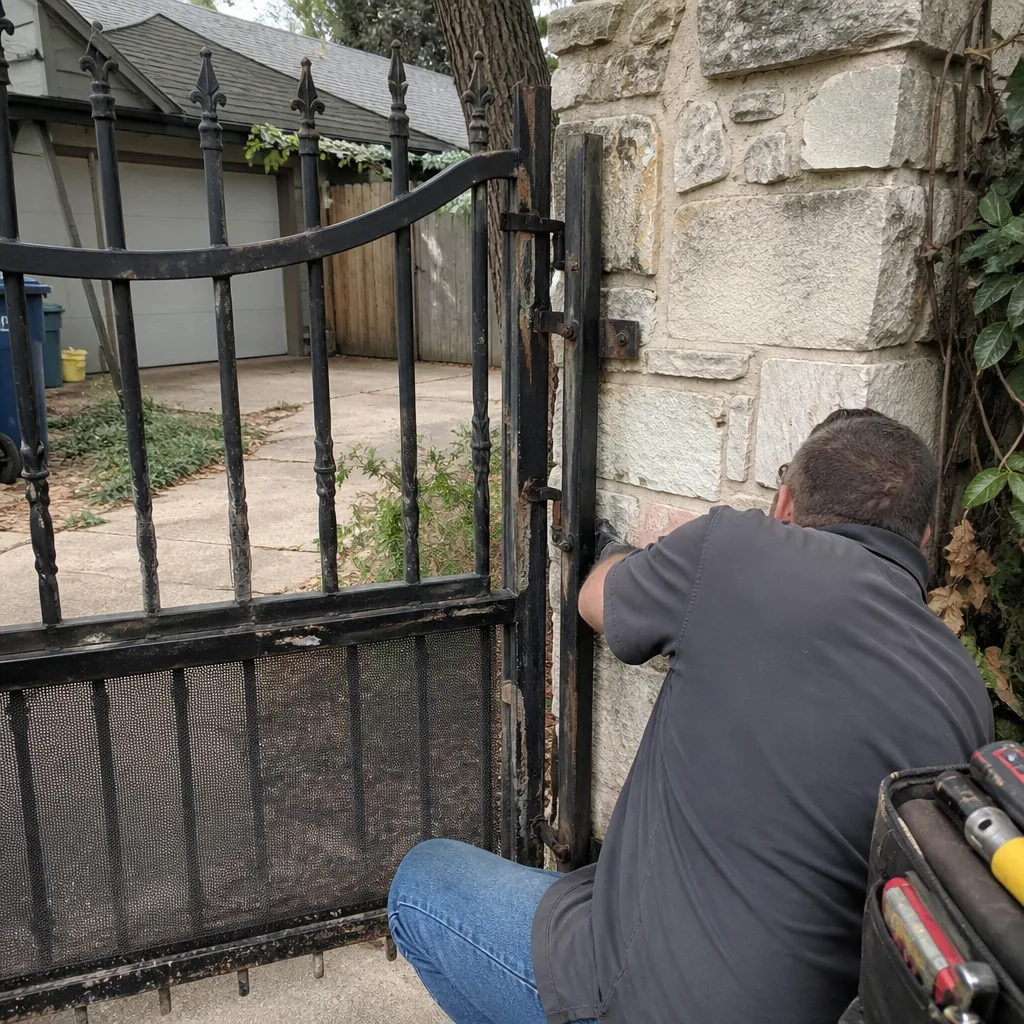 Before
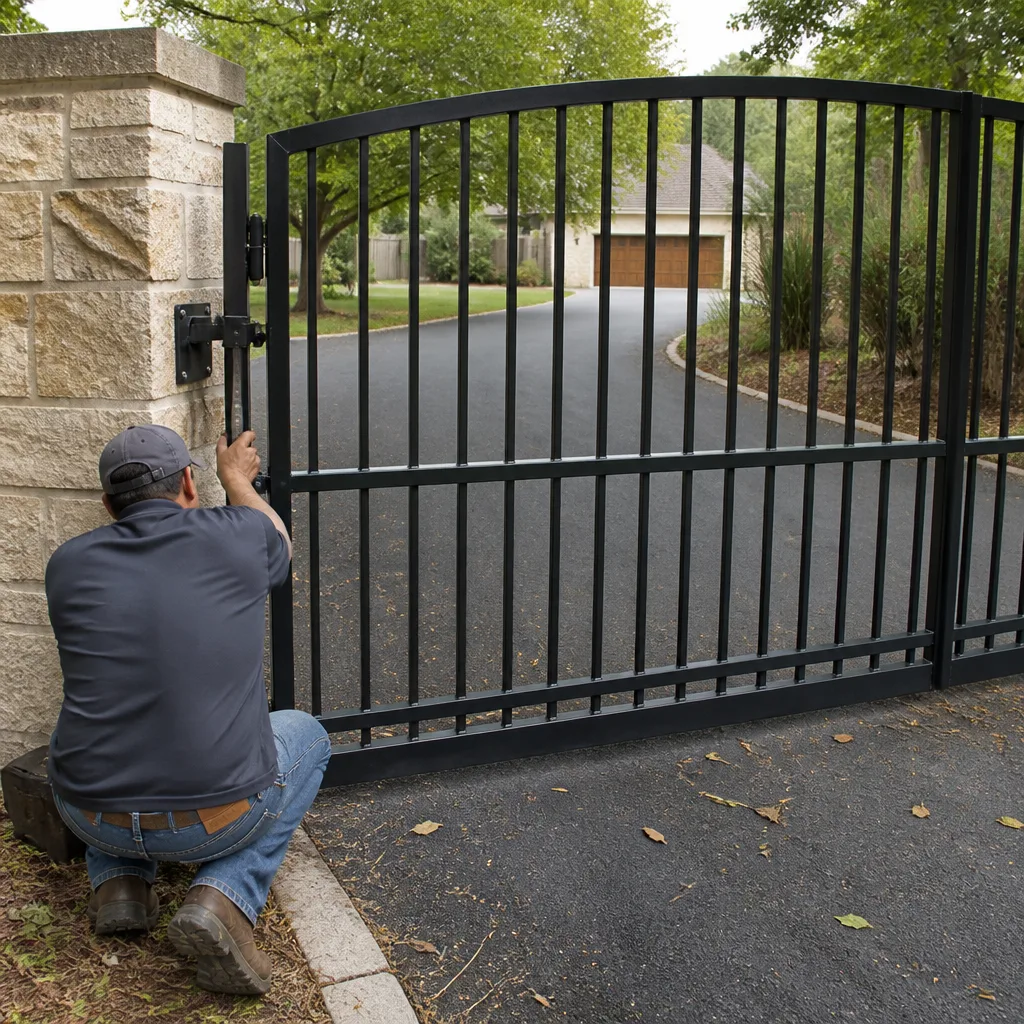 After
After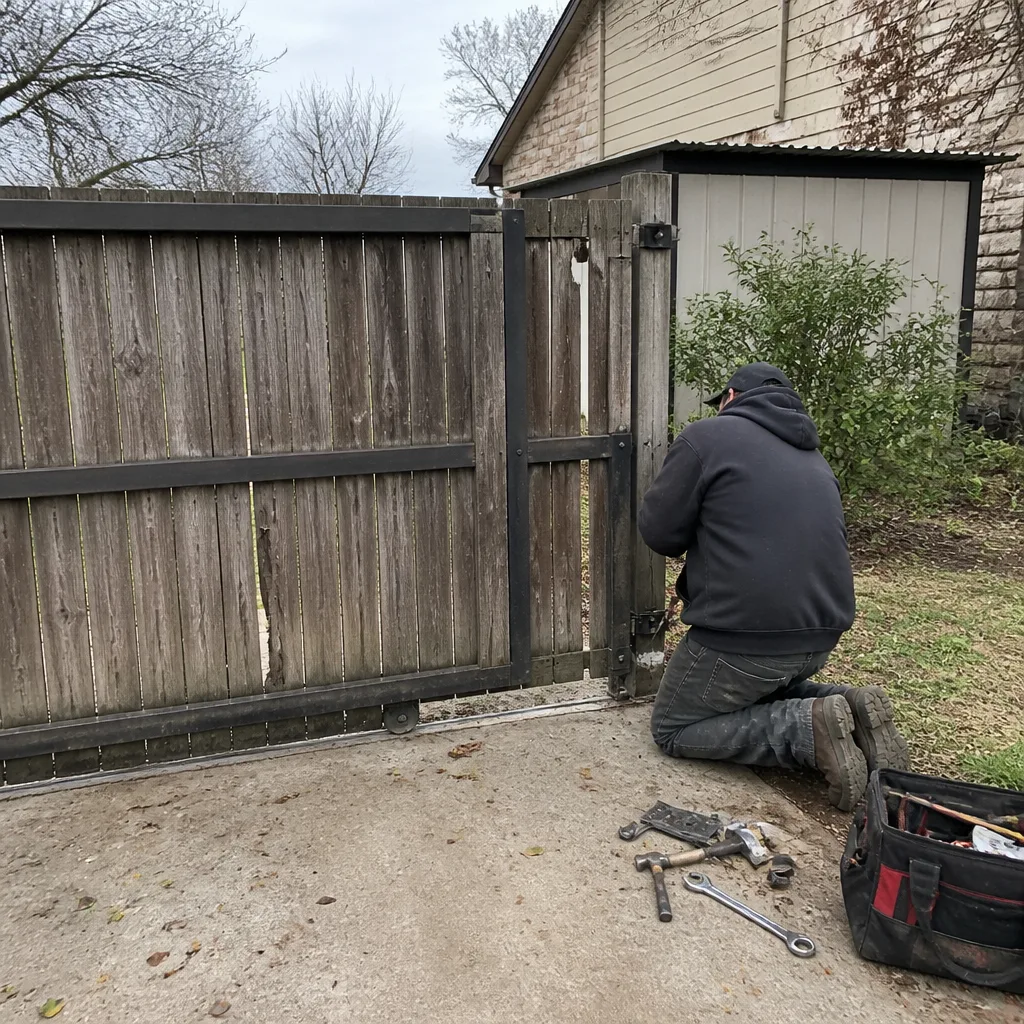 Before
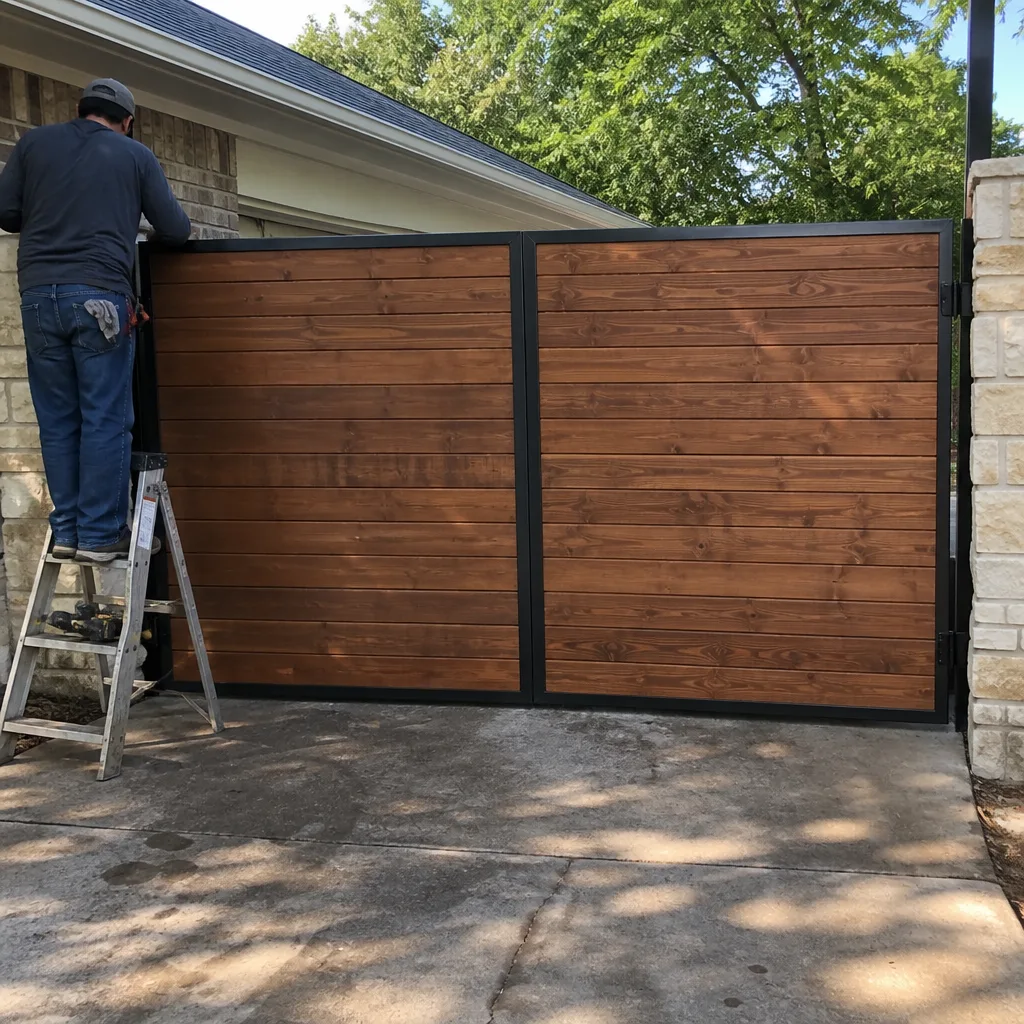 After
After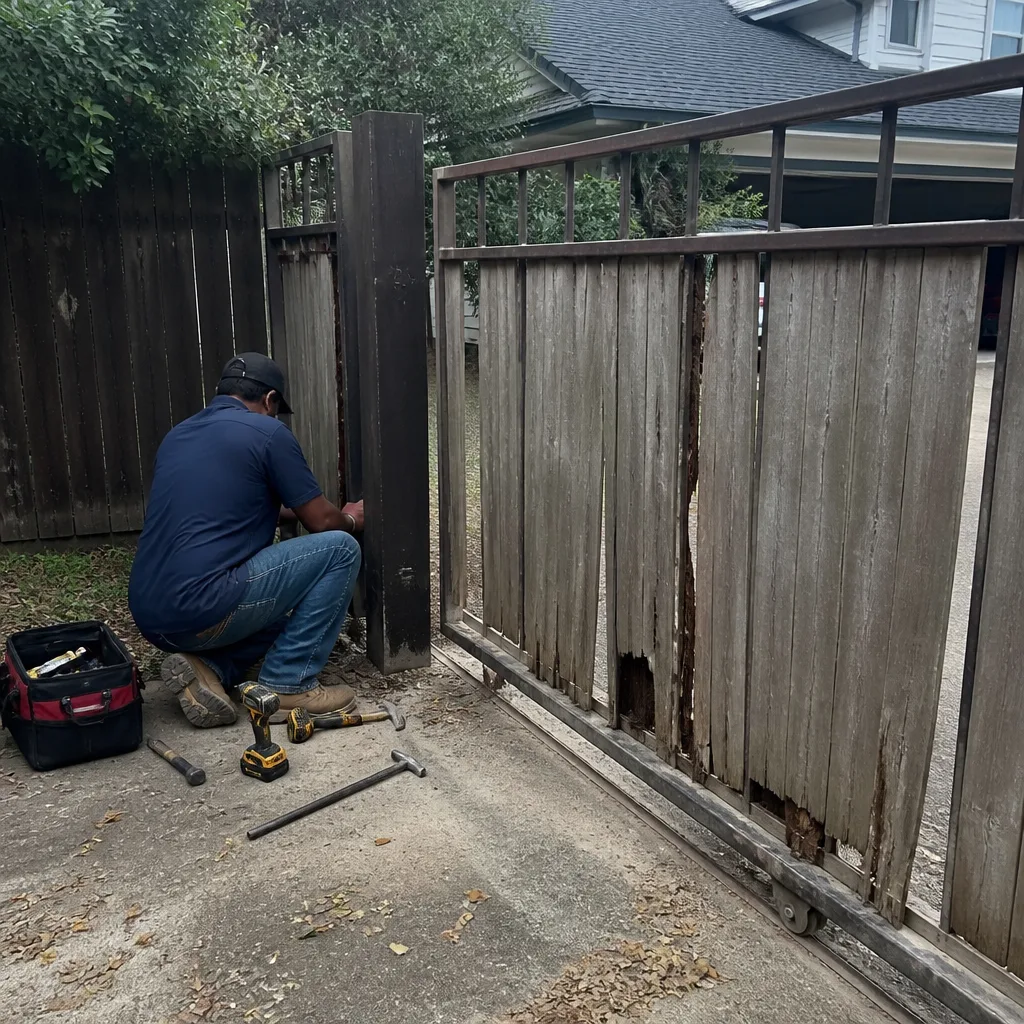 Before
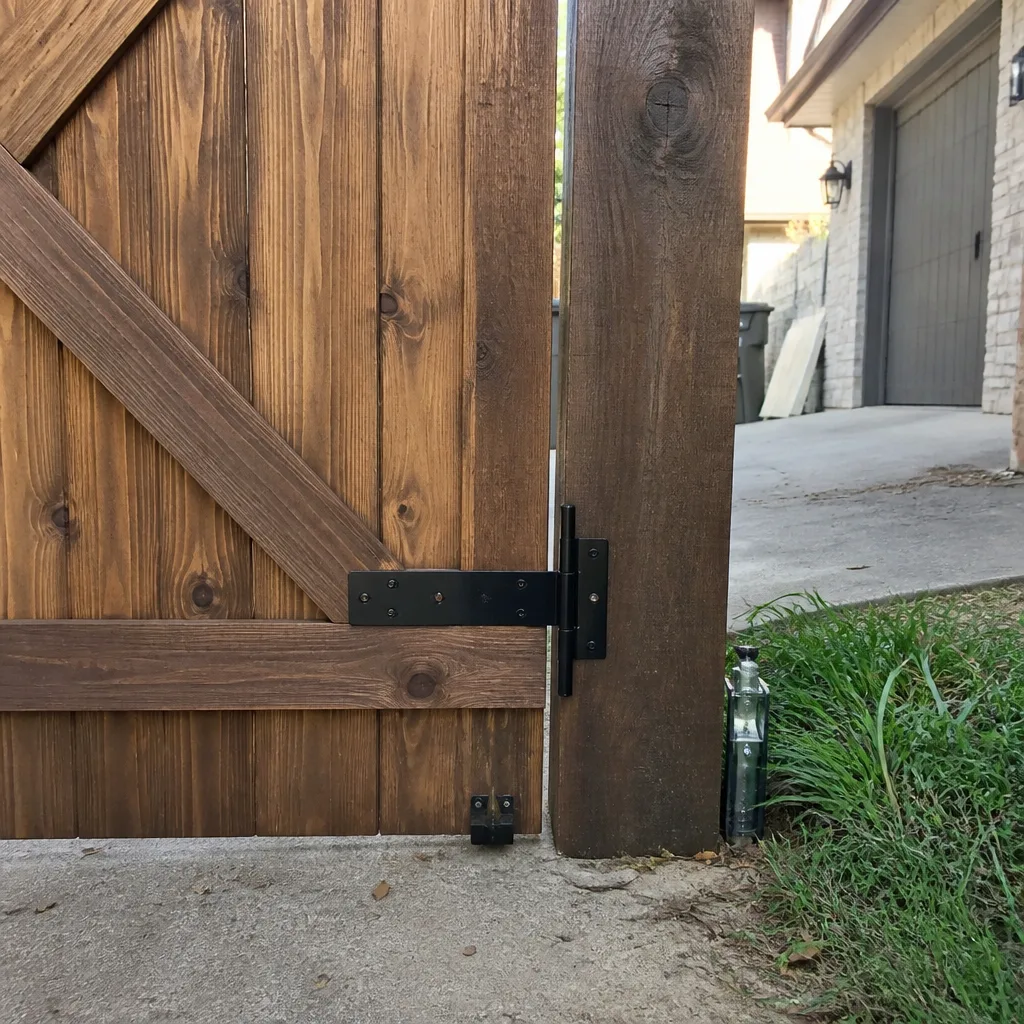 After
After